More and more people are purchasing air conditioning units as UK temperatures soar up to 37°C in some regions. British houses, built to retain warmth with heavy-duty bricks, thick insulation, and double or triple glazing, are notoriously ill-equipped for extreme heat. An estimated four million homes in the UK now have air conditioning—double the figure from just three years ago. But before you splash out, there are important considerations. Industry experts Ian Brown, senior commercial manager of AC Installations at British Gas, and Will Jones, home expert at Currys, provide the lowdown.
Are Air Conditioning Units Necessary in the UK?
"Air conditioning is becoming more popular in the UK as summers get warmer," notes Ian. "While it's not essential for every home, it can help make your living space more comfortable by keeping rooms cool, reducing humidity and improving air circulation. Many modern systems can also provide heating during colder months." Will agrees: "Air conditioning was once seen as a luxury in the UK, but as heatwaves become more frequent and homes retain more heat, it's becoming an increasingly practical investment for many households." Portable air conditioners are particularly popular because they don't require permanent installation and can be used wherever cooling is needed most.
How Much Do They Cost to Buy?
According to Ian, the upfront cost depends on the type of system and home size. "Portable units are usually the cheapest option, while wall-mounted systems require installation but offer a more permanent solution." Will adds: "Portable air conditioners start from around £269 for entry-level models such as the Logik LAC07C25, while premium smart models like the Meaco MeacoCool range cost up to around £529. If you're looking for a permanent solution, professionally installed wall mounted systems from brands such as Toshiba typically start at around £2,500 and can exceed £3,200, including installation."
What Are the Different Types?
Portable units can be moved from room to room and don't require installation. Wall-mounted split systems are permanently fixed and designed to cool or heat a room efficiently. Multi-room systems can control temperature in several rooms at once. Will explains: "Portable units are flexible, simple to set up and ideal for renters, flats or homes where permanent installation isn't practical. Fixed split systems provide more powerful, quieter cooling and often greater energy efficiency, but they require professional installation and a higher upfront investment."
How Much Do They Cost to Run?
According to independent testing by Which?, the average portable air conditioner costs 22p per hour on its highest setting. The cheapest tested cost about 17p per hour, while the priciest hit 31p per hour. Data from MoneySuperMarket notes that running costs depend on the unit’s efficiency rating, usage level, and electricity tariff. On average, a modern A-rated split system costs between 10p and 50p per hour to run for cooling. Will calculates a real-world estimate: a typical 1,200-watt portable unit running for eight hours a day costs around £2.50 per day, adding £75 a month to your bill. Wall-mounted split systems generally cost between 20p and 54p per hour to run.
How Effective Are Portable Units?
"Portable air conditioners are very effective at cooling individual rooms when they're correctly matched to the size of the space," Will says. The key is choosing the right BTU rating. Ian notes: "They're often popular with renters or people looking for a lower-cost way to stay comfortable during warmer weather. However, if you're looking for cheaper long-term running costs and heating, wall-mounted air conditioning is a no-brainer." For room sizing: up to 14m² (small bedrooms) needs a 7,000 BTU unit; up to 20m² (standard bedrooms/small living rooms) needs a 9,000 BTU unit; 20m² and above (large living rooms) requires 12,000 BTU or more.
Practically, What Do Portable Ones Need?
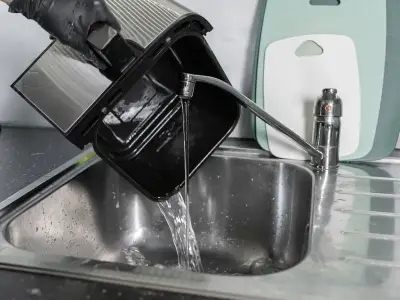
"They're straightforward to set up," Will confirms. "Simply plug the unit in, position the exhaust hose through an open window using the supplied window kit, and you're ready to go." In very humid conditions, some models may occasionally need the water tank emptied, although many modern units use self-evaporating technology. Modern air conditioning systems are typically much quieter than many people expect, according to Ian. Portable units are louder because the compressor sits inside the room, operating between 50 and 65 decibels. Will recommends choosing a model with a dedicated sleep or night mode for overnight use.
Which Is Better: Portable or Wall-Mounted?
Both Ian and Will agree it depends on needs. "Portable units are more affordable upfront and can be moved around the home, while wall-mounted systems tend to be quieter, more efficient and better suited to people looking for a long-term heating and cooling solution," Ian said. Will added: "If you're looking for a long-term solution with quieter operation and stronger performance, a professionally installed wall mounted system is likely to be the better option."
What Should Buyers Look Out For?
"Room size should always be the starting point, followed by the correct BTU rating, energy efficiency and noise levels," Will says. Look for Energy Class A or A+ models, along with features such as eco mode, programmable timers, and sleep settings. Many models also double as dehumidifiers and fans, while some offer heating and smart app controls. Will recommends three standout models: best overall MeacoCool MC12000RPRO Smart Air Conditioner & Dehumidifier; premium option De'Longhi Pinguino EX130CST Smart Air Conditioner & Dehumidifier; and best multi-tasker Igenix IG9909WIFI 4-in-1 Portable Air Conditioner. British Gas recommends and stocks Bosch air conditioning units.
Could Air Conditioning Add Value to a Home?
"There's no guarantee that installing air conditioning will increase a property's value, but buyer expectations are changing as hotter summers become more common," Will says. Portable units offer a simple, non-permanent way to improve comfort, while professionally installed systems can make a home more appealing to buyers looking for year-round climate control.
Do I Need Planning Permission?
In most cases, you do not need planning permission if the system meets all criteria: it must provide both heating and cooling; the external compressor unit must not exceed 0.6 cubic metres in volume; it cannot be installed on a pitched roof; if on a flat roof, it must be at least 1 metre from the edge; the external unit must be at least 1 metre from the property boundary; and it should not face a public road. You will need planning permission if your property is a flat or apartment, a listed building, in a conservation area or designated land, or if installing multiple or oversized units. All installations must comply with strict electrical, safety, and energy efficiency building regulations.