Ukraine's Frontline Drone Labs: Innovation in the Face of Adversity
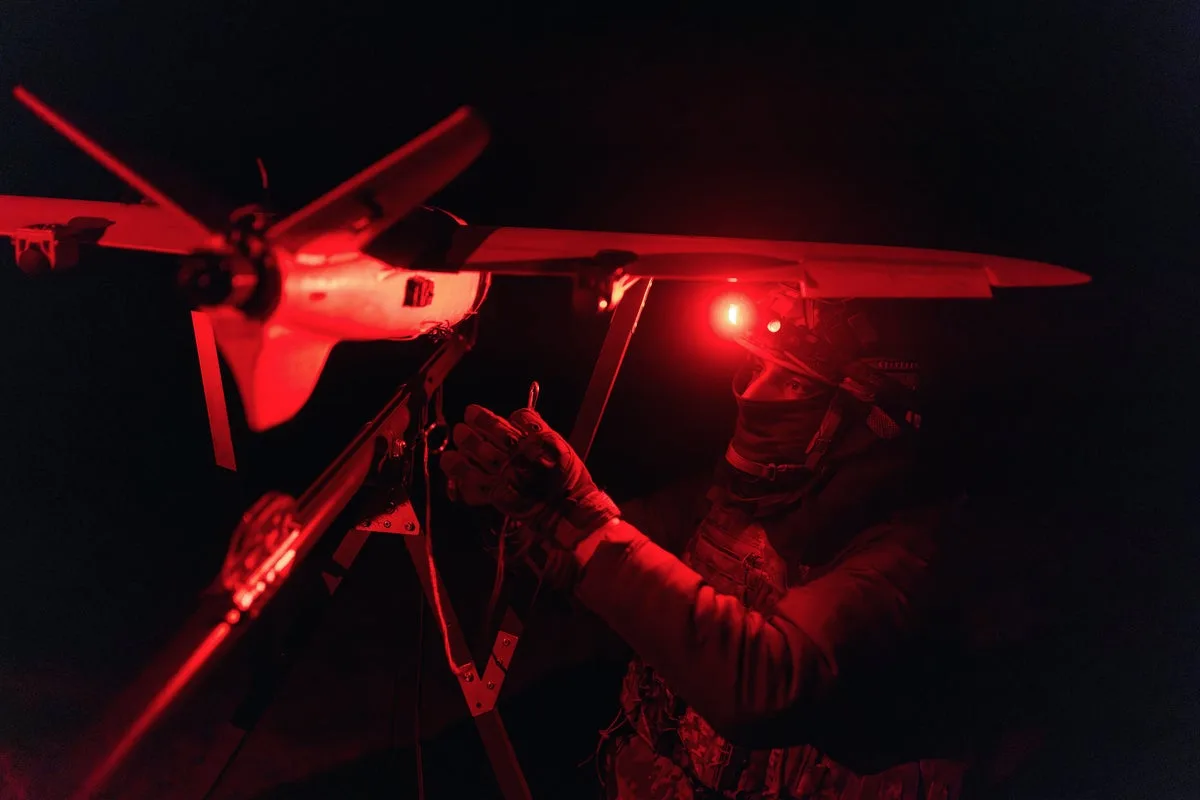
In the crisp night air of eastern Ukraine, a small crew of soldiers from the 127th Brigade scans the starry sky, vigilant for the ominous buzz of Iranian-designed Shahed drones launched by Russia in relentless waves. These teams are part of a nationwide, constantly evolving effort to counter low-cost loitering munitions that have become a deadly staple of modern warfare, from Ukraine to the Middle East.
Grassroots Technology Born of Necessity
While on watch, the crew tests and fine-tunes their self-made interceptor drones, searching for flaws that could compromise performance when threats emerge. When Shahed drones first appeared in autumn 2022, Ukraine had few defenses. Today, drone crews intercept them mid-flight with technology that adapts continuously. In recent years, Ukraine's domestic drone interceptor market has flourished, with key players showcasing products at international arms shows. However, it is on the front line where small teams have become laboratories of rapid military innovation—grassroots technology driven by battlefield necessity, now attracting global interest.
President Volodymyr Zelenskyy notes that U.S. allies in the Middle East have sought Ukraine's help in defending against Iranian drones, the same type Russia has fired by the tens of thousands in the four-year-old war. Iran has also deployed these drones in retaliation for joint U.S.-Israeli strikes, at times overwhelming sophisticated Western air defenses and underscoring the need for cheaper, more flexible countermeasures.
The Evolution of Drone Warfare
"It's not like we sat down one day and decided to fight with drones," said a pilot with the 127th Brigade, speaking anonymously due to military rules. "We did it because we had nothing else." Moments earlier, he carefully landed his interceptor drone to avoid damage. Despite being designed as disposable, limited resources compel Ukrainian crews to preserve every tool, often reusing single-use drones to study weaknesses and enhance them.
"Just imagine—a Patriot missile costs about $2 million, and here you have a small aircraft worth about $2,200," the pilot explained. "And if it doesn't hit the target, I can land it, fix it a bit and send it back into the air. The difference is huge. And the effect? Not any worse." The 127th Brigade is building an air defense unit centered on interceptor drone crews, a model increasingly adopted across the military.
From Ineffective Missiles to Drone Solutions
Leading this effort is a 27-year-old captain, who recalls a pivotal moment about two years ago when everything changed. Assigned to intercept Russian reconnaissance drones with shoulder-fired missiles, he quickly found the approach ineffective. Agile drones with cameras easily evaded the slower, less-flexible weapons. Determined to find a better solution, he sought alternatives from fellow soldiers and volunteers.
The answer was simple: another drone. He vividly remembers a day when a Russian Orlan reconnaissance drone hovered above a Ukrainian position, guiding artillery fire. A pilot from his unit downed it using another drone. "That's when I realized—this is a drone war. It had begun," he said. "We had been moving toward it for some time, but that was the moment I saw it with my own eyes." The wreckage burned upon impact, never recovered.
Intercepting Shahed Drones
Another challenge soon emerged: intercepting hundreds of fast, durable Shahed drones flying beyond the front line. The captain's search led him to the 127th Brigade in Kharkiv and collaboration with a local defense company. Their joint efforts produced aircraft-style interceptor drones capable of matching Shahed speeds. Kharkiv, where their families live, regularly faces Shahed attacks, making real-world testing crucial.

Working with the company allows soldiers to test drones in combat conditions and refine technology through direct feedback. The company's Skystriker drone, resembling a small aircraft with wings for longer flight times, differs from systems like Sting or P1-Sun, which are based on modified first-person view drones. "Yes, this is a joint effort," said the company director, speaking anonymously for security. "It's not enough just to build it. It has to work—and work properly—and perform real combat tasks. That's why communication with the military is so important. They give us feedback and help us improve it every time."
Nonprofits and Volunteers Fuel Innovation
In Ukraine, cooperation extends beyond the military and manufacturers, with volunteers often acting as intermediaries. The Come Back Alive Foundation, a nonprofit think tank and charity, launched the "Dronopad" project in summer 2024. Inspired by battlefield reports of FPV drone pilots intercepting aerial targets, the project aimed to scale these early successes into a systematic capability.
"At that moment it wasn't clear whether this was even a scalable solution or just isolated incidents," said Taras Tymochko, who leads the project. "Our goal was to turn it into a system—to help units that already had their first successful cases build the capability and scale what they had achieved." The foundation collaborated with manufacturers to understand soldiers' needs, leading to interceptor drones reaching speeds over 200 kilometers per hour, enabling Shahed interceptions.
Tymochko emphasized close cooperation between manufacturers and the military for rapid feedback from battlefield tests. "It's always action and counteraction," he noted, describing a cycle that drives drone warfare evolution. "The technology itself is not especially difficult to copy. The real value lies in how it is used—and in the experience of the pilots who have learned to operate it effectively."
Initially, skepticism abounded. "People were very skeptical about the technology," Tymochko recalled. "Some thought it wouldn't work, that within a month the Russians would come up with countermeasures and the drones would become useless." Nearly two years later, results prove otherwise. "Many people called it air defense for the poor," he said. "But it turns out that air defense for the poor can sometimes be more effective than air defense for the rich."