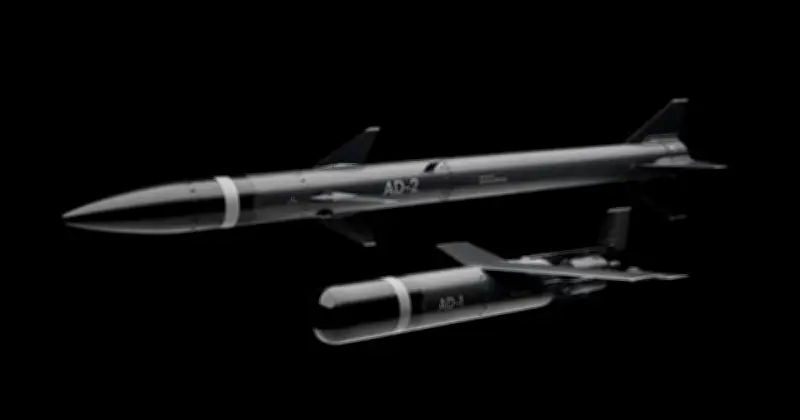
British technology specialists are developing artificial intelligence missiles designed to generate protective shields for European cities against potential Russian drone strikes, at a significantly lower cost than American equivalents. The weapons were unveiled on Monday by defence company Helsing as part of its new Contra air defence system.
AI-Driven Interception System
The programme aims to counter Russia's most advanced jet-powered drones and cruise missiles at a time when such munitions have been used against Ukraine in recent weeks. Advanced AI, connected to radars and sensors, can rapidly identify aerial threats before deciding whether to deploy one of two new interceptor missiles: the AD-1 Inferno and AD-2 Ambush.
This approach is similar to Israel's "Iron Dome" system, which places a virtual bubble of protection over key elements in the country.
Addressing Russia's Drone Production
Russia's production of Geran-4 and Geran-5 jet-powered drones has increased, with Moscow now capable of manufacturing 4,000 units a month, according to intelligence reports. The country can deploy hundreds of the aircraft simultaneously, presenting threats to vital infrastructure, defence companies, and military installations across Europe.
According to Helsing, its new system could address this challenge, with the artificial intelligence capable of detecting and coordinating interceptions against hundreds or even thousands of incoming drones and cruise missiles at the same time.
Cost-Effective Missiles in Final Trials
Significant portions of the two new missiles' development have been carried out in the UK, the Daily Mail reports. Both missiles are priced at under £100,000, in contrast to more sophisticated systems such as US-made Patriot missiles, which exceed £3 million each.
They can be deployed from containers mounted on the rear of a lorry, a vessel, or in open terrain. Helsing also stated it would have the capacity to manufacture thousands of missiles monthly at facilities throughout Europe. The missiles are currently undergoing final trials and will become operational later next year.