UK's AI Investment Drive Exposed as 'Phantom' with Essex Supercomputer Site Still a Scaffolding Yard
A Guardian investigation has placed the UK government's ambitious artificial intelligence plans under intense scrutiny, revealing that multibillion-pound investment announcements are built on what critics term 'phantom investments'. The probe centres on two companies backed by chipmaker Nvidia – Nscale and CoreWeave – which are central to Britain's AI strategy. It found that large promised sums do not represent real investments into the UK economy, that new datacentres are not actually new, and that a giant supercomputer scheduled to be operational later this year remains a construction company's scaffolding yard in Essex.
Essex Supercomputer Site Still Operating as Scaffolding Yard
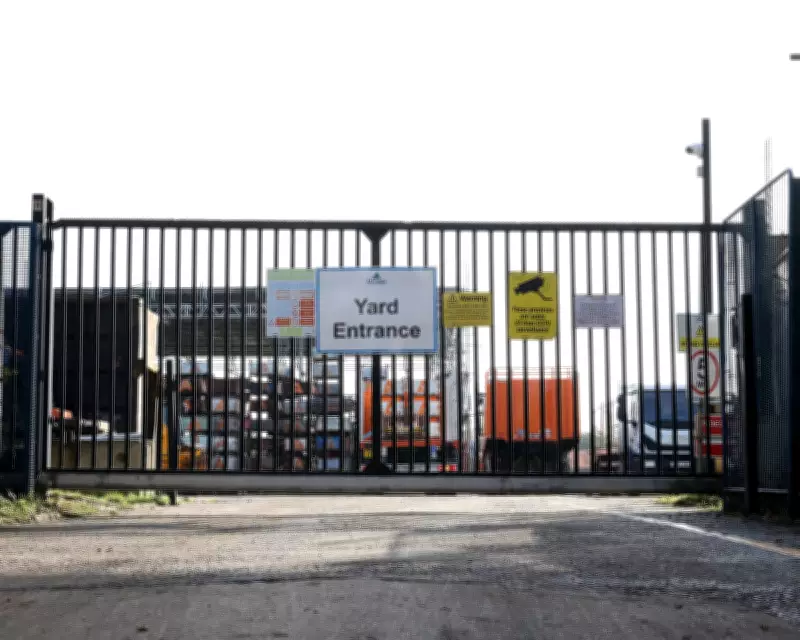
The Guardian visited a site in Loughton, Essex, that is supposed to host what the government and Nscale describe as "one of the most powerful AI computing centres ever built". This supercomputer was promised to be operational by the end of this year. However, the location is still being used as a scaffolding yard by a different company. While Nscale claimed over a year ago that it had already purchased the site, land records appear to show that it is not registered as the owner. Experts suggest it is very unlikely that Nscale will complete construction of a "top tier" supercomputer at this location within the current year.
Government Admits No Verification of AI Investment Figures
When questioned about key AI investments worth billions of pounds involving Nscale and CoreWeave, the UK government acknowledged that these numbers came directly from the companies themselves. Officials admitted they have no mechanism in place to audit these figures and could not specify what the investments actually involve – whether equipment, capital, or other components. Regarding a contract supposedly signed to build the supercomputer in Loughton, the government did not provide details. Instead, they clarified that the entire related investment of $2.5 billion does not involve a formal contract but rather an intention to commit capital.

'Investments' Often Mean Relocated Computer Chips, Not Economic Injection
Both Nscale and CoreWeave have indicated that a significant portion of their massive investments will take the form of Nvidia chips purchased and placed inside datacentres in the UK. From there, these chips will be rented out to users including US tech companies. For instance, Nscale's $2.5 billion "investment" may largely consist of buying a massive number of chips from Nvidia – chips manufactured in Taiwan by a US company – placing them in a UK datacentre, and renting them to Microsoft. This does not equate to $2.5 billion being injected into the British economy.
Similarly, in 2024, CoreWeave and the government announced a £1 billion investment that was described as bringing two new datacentres to the UK with job creation. However, new datacentres were not built. Instead, CoreWeave placed Nvidia chips into existing UK datacentres, claiming these chips and associated logistical and personnel costs constitute the bulk of their investment, describing this as an "industry-standard" approach.
Lanarkshire AI Hub Requires Nuclear Reactor-Level Power
In January, the government announced that CoreWeave would partner with Scottish firm DataVita to build an "AI growth zone" requiring between 500MW and 1GW of private wire renewable energy, with CoreWeave's investment here being £1.5 billion – another figure the government has not verified. 1GW of renewable energy equals the output of an entire nuclear reactor or Scotland's largest offshore windfarm, covering approximately 1,100 square miles. DataVita stated this would be private wire energy, bypassing the public grid. There are no filed plans for DataVita to construct a nuclear reactor or gigantic windfarm in Lanarkshire.

Companies with Spotty Records Could Make Fortunes from AI Hype
CoreWeave was one of the biggest tech IPOs last year, with its share price nearly quadrupling in months following its market float amid soaring AI rhetoric. However, the company is now being sued by shareholders who allege it concealed vital information about delays in its datacentre buildout, causing the stock to fall when this information emerged. CoreWeave said it is aware of the lawsuit, adding that the claims are without merit and it will defend itself vigorously. Regardless of the allegations, some of CoreWeave's early pre-IPO investors likely made fortunes after it went public.
Meanwhile, Nscale allocated shares at 1p each in October. Today, after raising a $2 billion funding round at a $14.6 billion valuation, these shares are worth many times that amount. An analyst who examined the figures told the Guardian: "It's kind of a 350,000% return on investment." Shareholders could make substantial profits when Nscale conducts a public offering, with the amount depending on AI hype at that time.