The Risk of Historical Distortion in the Digital Age
In an era where unreliable narrators wield immense influence through smartphones and social media, the question of how today's events will be remembered looms large. Kevin Ashton, the innovator who coined the term "Internet of Things," delves into this pressing issue in his latest work, The Story of Stories: The Million-Year History of a Uniquely Human Art. He warns that without traditional gatekeepers, viral falsehoods could shape tomorrow's historical narratives, potentially casting figures like Donald Trump in a dangerously favourable light.
Trump's Contradictory Narratives on Iran and Global Alliances
Recent weeks have seen US President Donald Trump offer a constantly evolving assessment of the conflict with Iran, a war that has disrupted global energy markets. At various points, he has described the war as "very complete, pretty much," framed it as a liberation effort for the Iranian people, denied seeking regime change, insisted on influencing Iran's next leader, and claimed it aims to dismantle nuclear threats. Over a weekend, Trump asserted Iran was ready for a ceasefire, only for Iranian Foreign Minister Abbas Araghchi to deny any such request within 24 hours.
Adding to the confusion, Trump has warned NATO allies of a "very bad future" if they refuse to assist the US in opening the Strait of Hormuz, a maritime chokepoint under Iranian control since the war began. This threat follows earlier remarks where he dismissed NATO's necessity and even jeopardised the alliance by threatening an invasion of Greenland. Such erratic statements highlight the challenge of pinning down a coherent narrative from a leader known for transactional relationships with facts.

The Assault on Reality and the Rise of Far-Right Narratives
Throughout his presidency, Trump has recast the violent insurrectionists of January 6, 2021, as "patriots," persistently claimed the 2020 election was stolen despite contrary evidence, and baselessly alleged that undocumented immigrants commit crimes at record levels, ignoring FBI and academic data showing lower crime rates among immigrants compared to native-born citizens. This phenomenon isn't confined to America; across Europe, far-right movements have surged by casting immigrants as existential villains in crafted dramas.
Ashton's book raises an unsettling question: in a world where curated feeds replace evening news, who gets to tell the story of our time? Will future history books view Trumpism as a chaotic aberration, or will right-wing narratives edit the first draft of history so thoroughly that truth is erased? Ashton argues that the smartphone has democratised storytelling, allowing nearly seven billion people to act as their own publishers, but this comes with a cost: stories that travel fastest often aren't true, playing into our biological wiring for clear heroes and villains.
The Evolution of Storytelling and Its Modern Dangers
Born in London in 1967, Ashton studied Scandinavian literature before working at Procter & Gamble, where he developed the concept of the Internet of Things. His previous book challenged myths about creativity, and in The Story of Stories, he concludes that the smartphone represents a radical shift in storytelling history. For millennia, storytelling was controlled by few—tribal elders, monks, editors—but today, everyone can broadcast globally, leading to unprecedented spread of misinformation.
Ashton notes that storytelling predates language, evolving from proto-communication around firepits to drive the development of complex language. He emphasises that stories form the foundation of human cognition, with most knowledge coming from mediated testimonies rather than direct experience. The digital age has transformed who can tell stories and to whom, enabling both progressive movements, like LGBTQIA+ advocacy, and regressive propaganda.

Algorithms, Propaganda, and the Future of Historical Record
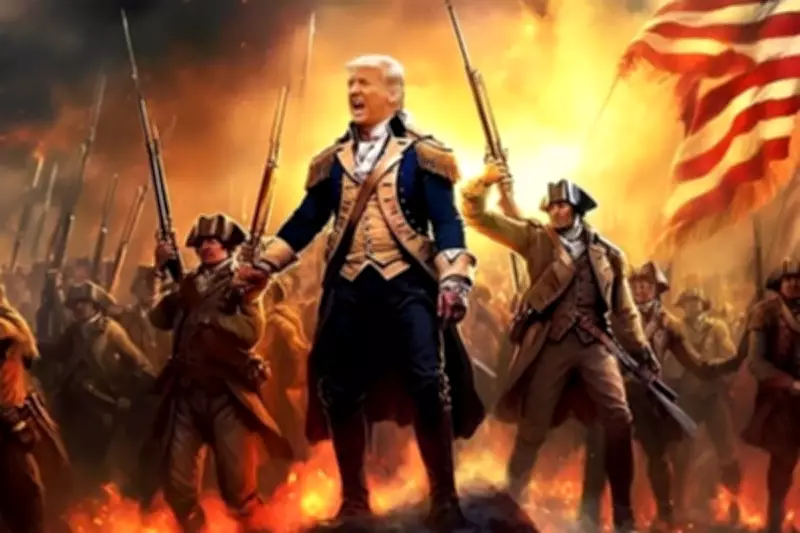
Ashton highlights how social media algorithms, such as Facebook's reinforcement learning, prioritise engagement over truth, boosting compelling but false stories. This creates a dystopian backdrop where history risks being cherry-picked to support present narratives, erasing marginalised groups and events, like the genocide of indigenous populations in the Americas. He warns that if right-wing ideologies dominate in coming decades, Trump could be remembered as a hero of revolution, rather than a chaotic figure.
However, Ashton remains optimistic, pointing to digital repositories like the Internet Archive, which preserve deleted content and datasets to safeguard against historical erasure. He believes younger generations, adept at using technology for kindness and fairness, can drive progressive storytelling and counter misinformation. Ultimately, the real casualty if history is distorted isn't just the record of events, but our collective ability to agree on reality itself.