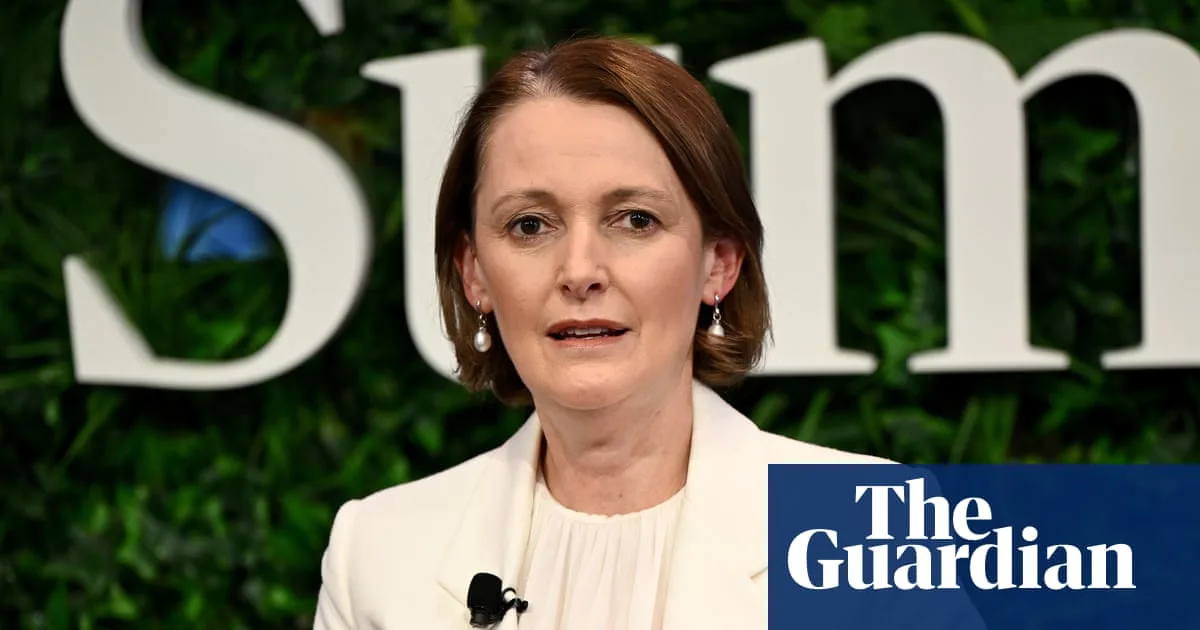
Telstra has told investors it expects to shrink its workforce by 2030 as it embraces artificial intelligence, with potential efficiencies in customer service, software development and autonomous AI agents. The telco's chief executive, Vicki Brady, said at the annual investor day on Tuesday that AI 'will be a significant unlock when it comes to enabling our workforce'.
'We will embrace AI, as every business will need to, and we expect the pace of change over the next five years to be extraordinary,' Brady said, adding that while the exact shape of the business in 2030 is uncertain, 'we expect our workforce to be smaller than it is today'. As of December 2024, Telstra employed more than 31,000 full-time equivalent staff.
Brady noted that Telstra has not yet deployed agentic AI – which acts autonomously without human guidance – but is working on several initiatives and expects to discuss its use alongside staff in the coming months. For now, AI agents are not expected to deal directly with customers. Telstra already uses generative AI to summarise customer calls, a task previously done manually.
Chief financial officer Michael Ackland said the company is 'leaning in hard' on AI, with the greatest opportunity in customer engagement, where Telstra spends over $2bn annually on sales, contact centres, activation, billing and customer management. He also identified software development and IT, costing more than $1bn in capital and operating expenditure, as areas where AI could fundamentally change operations, along with networks that can self-heal or proactively identify issues.
Analysts have cautioned about job cuts driven by AI. Aaron McEwan of Gartner expressed scepticism, saying 'the productivity gains that we expect to see from AI just aren't flowing through'. Telstra's comments came as part of its Connected Future 30 strategy, which aims for cost discipline and efficiency, targeting top 25% global rankings for employee engagement and AI maturity by 2030.