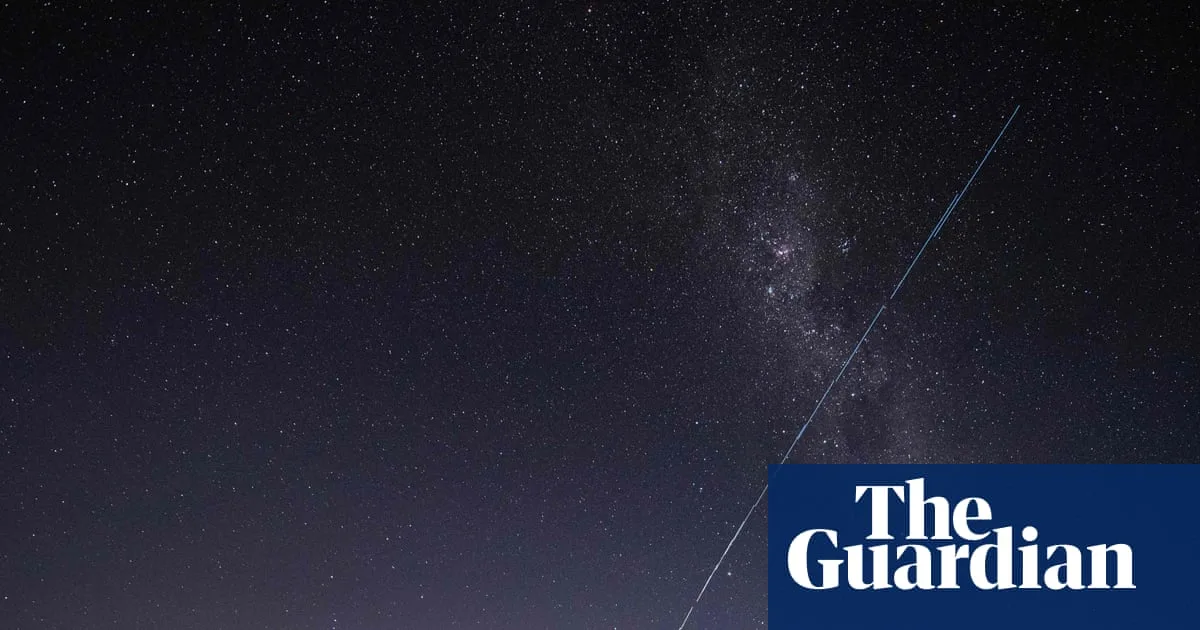
Leading sleep and circadian rhythm researchers have raised alarms over proposals to deploy reflective mirrors and up to one million additional satellites in low Earth orbit, warning of far-reaching consequences for human health and ecosystems. In letters to the US Federal Communications Commission (FCC), presidents of four international scientific societies representing about 2,500 researchers from over 30 countries urged regulators to conduct a full environmental review and set limits on satellite reflectivity and cumulative night sky brightness.
The societies, including the European Biological Rhythms Society and the Society for Research on Biological Rhythms, said altering the light-dark cycle could disrupt biological clocks that regulate sleep and hormone secretion in humans and animals. They also warned of impacts on nocturnal species' migration, seasonal cycles in plants, and marine phytoplankton rhythms that underpin ocean food webs. Prof Charalambos Kyriacou, a geneticist at the University of Leicester and president of the European Biological Rhythms Society, said: 'We’re saying, please think before you go through with this, because this could have global implications for things like food security. Plants need the night. You can’t just get rid of it.'
The FCC is considering plans by start-up Reflect Orbital to use reflective satellites to illuminate areas roughly 5km to 6km wide 'on demand', with brightness adjustable 'from full moon to full noon'. The company claims the system could extend solar energy production and aid construction, disaster response, and agriculture. Meanwhile, SpaceX has proposed launching up to one million satellites to create a solar-powered computing network for AI workloads, which it says could reduce terrestrial datacentre energy demands.
Ruskin Hartley, chief executive of DarkSky International, which also wrote to the FCC, said: 'While ideas like mirrors on satellites beaming “sunlight on demand” to Earth or mega-constellations of up to 1m satellites for AI datacentres may sound like science fiction, these proposals are very real.' He noted that existing satellites have already increased diffuse night sky brightness by roughly 10%.
Dr Miroslav Kocifaj of the Slovak Academy of Sciences said satellites affect the night sky through streaks in telescope images and overall sky glow from reflected sunlight. His modelling suggests current objects add 3 to 8 microcandela per square metre to night sky brightness, which could rise to 5 to 19 microcandela by 2035, approaching thresholds for preserving naturally dark skies. He stated: 'The phenomenon is real, global, and cannot be escaped by moving to a more remote location.'
Prof Tami Martino of the University of Guelph, president of the Canadian Society of Chronobiology, emphasised that biological systems are sensitive to light levels far below human perception. 'If the night sky becomes permanently brighter, the consequences could be profound,' she warned.