Bernie Sanders Demands AI Data Centre Moratorium to Protect Workers
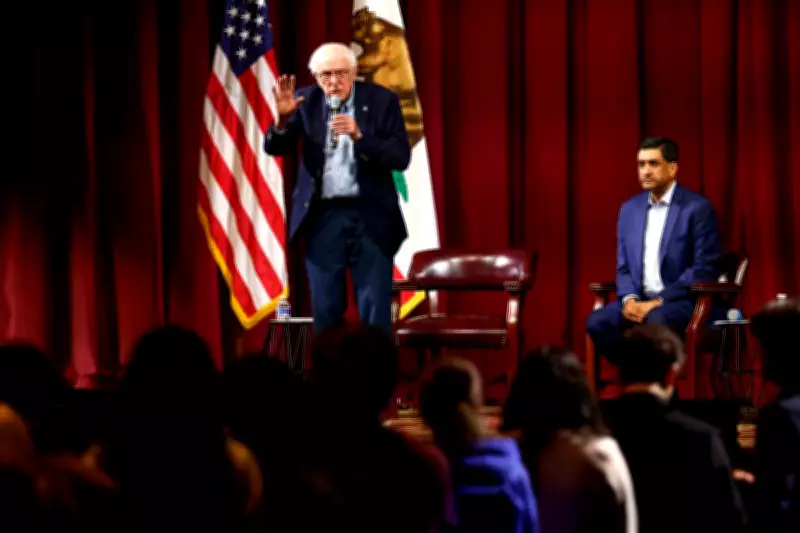
Bernie Sanders has issued a stark warning that the United States Congress and the general public have "not a clue" about the rapid pace and immense scale of the impending artificial intelligence revolution. Speaking at Stanford University on Friday, the senator pressed for urgent policy measures to "slow this thing down" as technology companies aggressively develop increasingly powerful AI systems.
Unprepared for the AI Tsunami
During his address, Sanders described the current moment as the "most dangerous in the modern history of this country", emphasising that lawmakers and citizens are ill-equipped to handle the coming changes. He was joined by congressman Ro Khanna, a progressive Democrat representing Silicon Valley, who echoed these concerns, labelling the era a "new gilded age" dominated by tech billionaires with ambitions of historical conquest.
Khanna noted that these sentiments were directly conveyed to him by industry leaders, though neither he nor Sanders disclosed the identities of the executives met during the senator's California visit. The discussions involved "senior leaders" at major tech firms, aimed at bridging perspectives between Silicon Valley and working-class Americans.

Call for a Moratorium and Alternative Approaches
Sanders reiterated his demand for a moratorium on the expansion of AI data centres, arguing it is necessary to decelerate the technological revolution and protect workers while policymakers develop adequate regulations. In contrast, Khanna opposes a full halt, advocating instead for a guided approach inspired by Singapore's model, which prioritises renewable energy and water efficiency in data centre growth.
Khanna outlined seven principles to prevent "oligarchic capture and dominance" of wealth from AI innovation, urging Silicon Valley to contribute more broadly to national interests. He is reportedly considering a presidential bid in 2028, adding political weight to his stance.
Broader Impacts on Society and Economy
Sanders highlighted not only job losses but also profound effects on personal wellbeing and social interactions. He cited a humorous example of a Washington DC restaurant offering a Valentine's Day special for people and their "AI buddies", but stressed the serious implications of growing emotional dependence on technology. "What is the long-term impact if we lose work as an important part of our lives?" he questioned, pointing to projections that AI could eliminate tens of millions of jobs across various sectors in the next decade.
Public concern is high, with a 2025 Pew survey revealing that 64% of Americans believe AI will reduce job opportunities over 20 years, and only 17% view its impact as positive. While tech CEOs argue AI will boost productivity and create new employment, critics like Sanders warn that its unprecedented speed risks enriching billionaires and exacerbating inequality without timely public response.
Urging National Dialogue and Action
Sanders called for a serious public debate on AI's future, emphasising that the technology itself is neutral but its benefits must be widely shared. "Will a handful of billionaires benefit from it, or will the general public benefit?" he asked, urging colleagues in Washington and citizens to engage proactively. His visit to California, including rallies and a proposal for a wealth tax on billionaires, underscores his commitment to addressing economic disparities amplified by technological advances.