The 61st Venice Biennale opened its preview on Tuesday, described as its most chaotic edition to date, following the unprecedented resignation of its jury. The move, prompted by the participation of Israel and Russia, has undermined the foundational structure of the world’s oldest contemporary art exhibition.
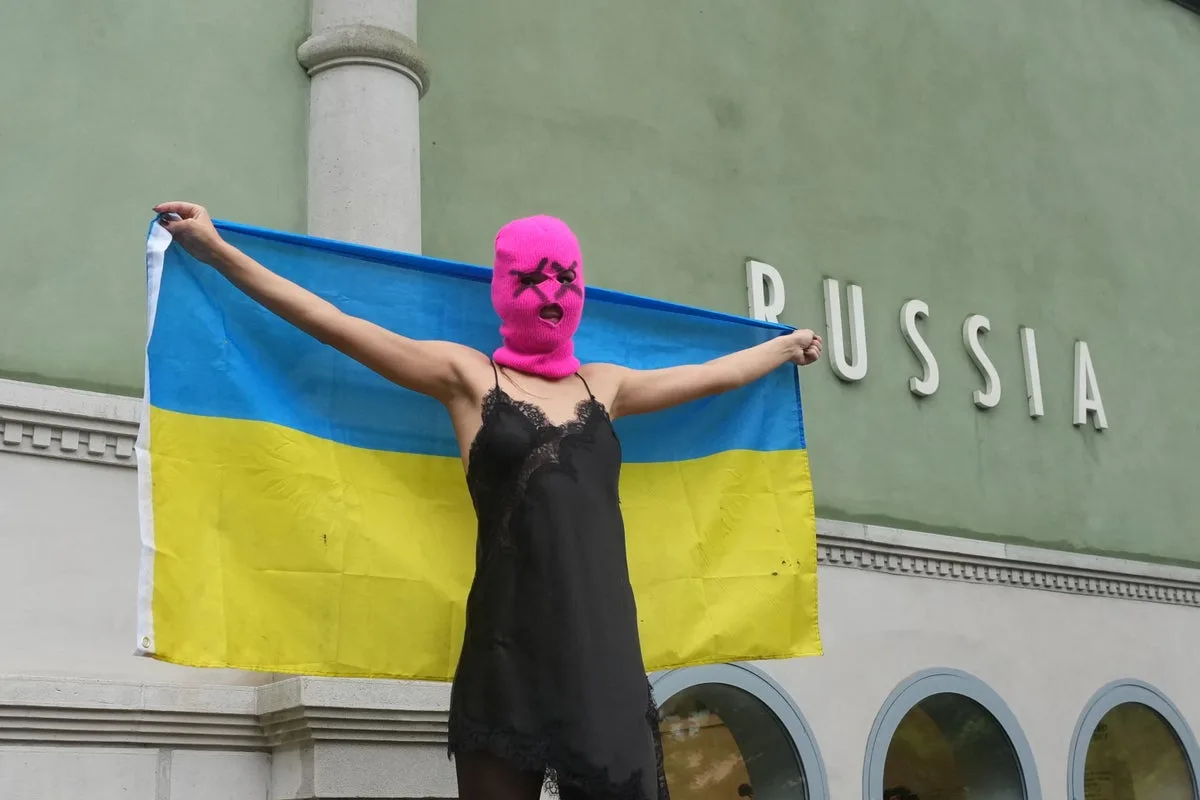
Tensions were immediately evident within the Giardini. Ukrainian artists stood beside a truck that had transported an origami deer sculpture from the war-ravaged eastern front. Just metres away, a small group of participants at the Russian Pavilion danced to house music provided by an Argentine DJ. Concurrently, a group of Palestinians marched through the grounds, displaying the names of artists killed in Gaza.
Marie Helene Pereira, one of five curators of the main exhibition “In Minor Keys,” said the turmoil shows that “the existence of the nation state within the space of the exhibition” is now contested. “We can see how much that can bring tension, especially in the midst of the political chaos we find ourselves,” she added.

Ahead of its resignation, the jury had said it would not award prizes to countries whose leaders were under investigation by the International Court of Justice, singling out Russia and Israel. Without a jury, there will be no Golden Lion for best national pavilion or best participant in the main exhibition.
Israeli artist Belu-Simion Fainaru welcomed the resignation, saying he should be treated as an equal artist and not discriminated against because of his nationality. Ukrainian co-curator Ksenia Malykh fiercely opposed the Biennale’s decision to allow Russia to open its pavilion, calling it “a false attempt to stay neutral.”
The Russian Pavilion will only be open during previews and not to the public. Russia’s participation cost the Biennale 2 million euros ($2.3 million) in EU funding over three years. The Biennale has defended the decision, saying any country with relations with Italy was free to open a pavilion.