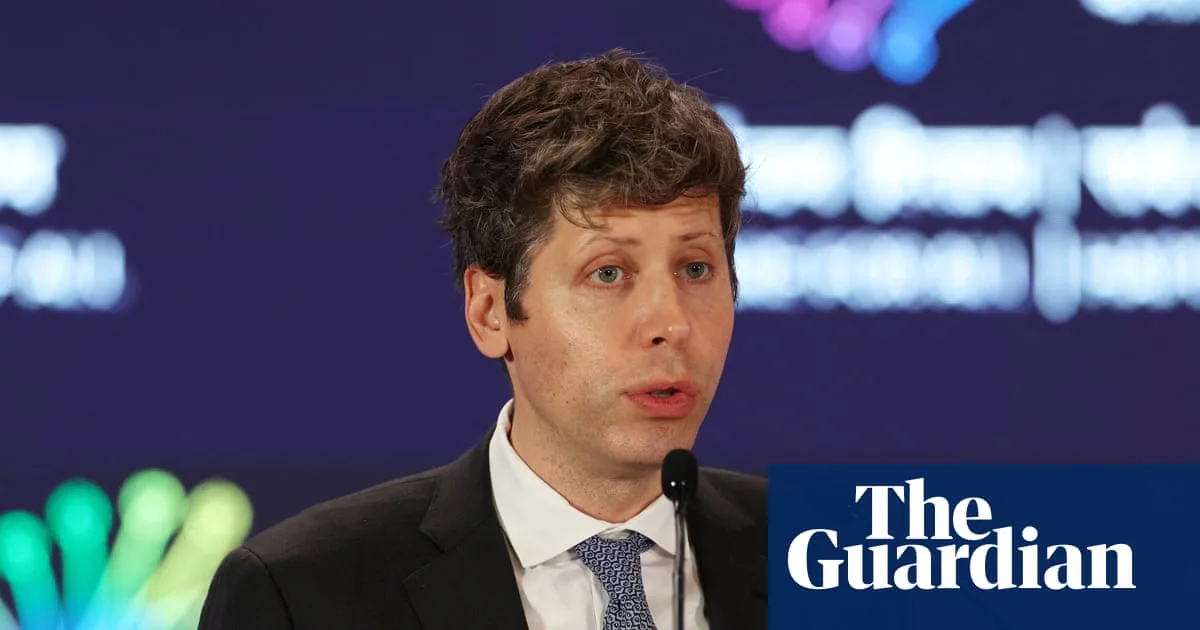
OpenAI CEO Sam Altman has ignited a firestorm of controversy after making comments that appeared to equate the energy consumption of artificial intelligence with the resources required to "grow" a human being. The ChatGPT chief has been branded "sickeningly evil" and an "anti-human human" following his defence of AI's environmental footprint at a major summit event.
Altman Dismisses Claims as "Totally Insane"
Speaking at an event hosted by The Indian Express, Altman vehemently rejected widespread reports that each ChatGPT query consumes approximately 17 gallons of water. He labelled these allegations "completely untrue" and "totally insane," insisting they have "no connection to reality." Altman acknowledged that older data centres utilised evaporative cooling systems, which are notoriously water-intensive, but maintained that OpenAI has moved beyond such practices.
The Core of the Controversy
Altman's most contentious remarks came when he argued that the energy debate surrounding AI is often framed unfairly. He pointed out that critics frequently highlight the substantial energy required to train an AI model, while overlooking the comparable costs associated with human development.
"It also takes a lot of energy to train a human," Altman stated. "It takes like 20 years of life and all of the food you eat during that time before you get smart. And not only that, it took the very widespread evolution of the 100 billion people that have ever lived and learned not to get eaten by predators and learned how to figure out science and whatever, to produce you. AI has already caught up on an energy efficiency basis."
Fierce Backlash from Technologists and Public
The comparison between artificial intelligence and human life has provoked intense criticism across social media platforms and within the technology community. Scientist and technologist Sridhar Vembu expressed grave concerns on X, writing: "I do not want to see a world where we equate a piece of technology to a human being. I work hard as a technologist to see a world where we don't allow technology to dominate our lives; instead, it should quietly recede into the background."
On Reddit, users delivered even harsher assessments. One commenter described Altman's statements as "one of the most frightening things I've ever seen a techbro say," adding: "He literally doesn't seem to understand that human life has value beyond whatever cost/benefit analysis he applies to implementing lines of code." Another user declared: "They're anti-human humans. The most sickeningly evil thing imaginable."
Broader Environmental Concerns
Despite his controversial comparisons, Altman did acknowledge legitimate environmental concerns surrounding AI's expansion. He stated: "It's fair to be concerned about the energy consumption — not per query, but in total, because the world is now using so much AI. The world needs to move towards nuclear, wind, and solar very quickly."
Currently, no legal mandate requires technology giants to publicly disclose their precise energy and water consumption figures. This lack of transparency presents significant challenges for scientists attempting to accurately measure the real-world environmental impact of the ongoing AI boom. Critics have warned that clustering vast server farms can place considerable strain on local power grids and, in certain instances, contribute to rising electricity prices for surrounding communities.
Specific Energy Claims Debated
Altman also addressed specific claims regarding ChatGPT's energy usage, particularly pushing back against assertions that a single query could consume energy equivalent to charging 1.5 iPhone batteries. "There's no way it's anything close to that much," he asserted, though he provided no alternative figures to substantiate his rebuttal.
The OpenAI CEO's comments have sparked a broader conversation about how society evaluates technological progress against human values. As artificial intelligence systems become increasingly integrated into daily life, the ethical frameworks governing their development and deployment face renewed scrutiny. The controversy highlights growing tensions between technological advancement and fundamental humanistic principles in the rapidly evolving digital age.