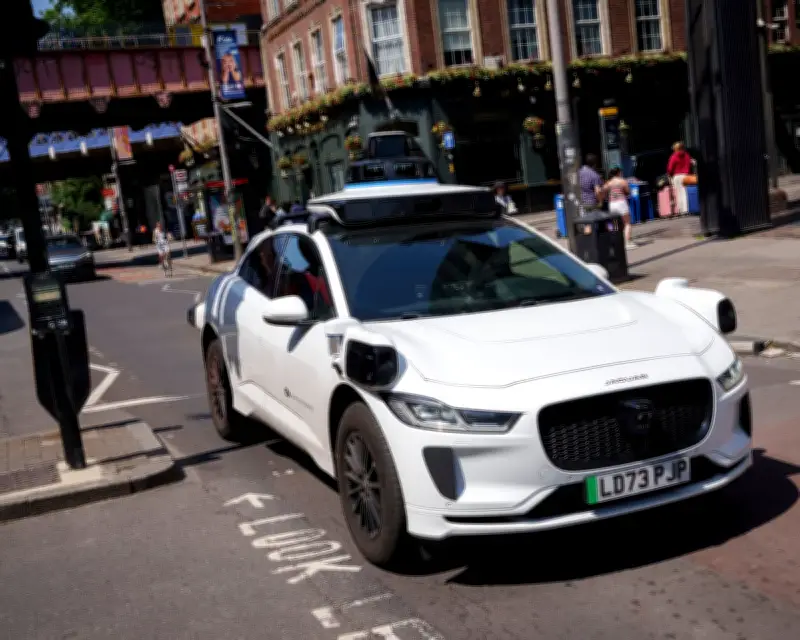
Waymo, the Silicon Valley-based autonomous vehicle company, has been testing self-driving cars on London's streets this summer, sparking both excitement and controversy. While initial tests have seen vehicles getting stuck in cul-de-sacs and driving into crime scenes, the potential benefits for disabled people are significant, argues Gabriel Stewart, a freelance writer with poor vision.
Disabled People Face Major Transportation Barriers
Stewart, who cannot drive due to his visual impairment, highlights that transportation barriers severely limit employment and social opportunities for disabled people. According to 2022 analysis by the Royal National Institute of Blind People (RNIB), only 42% of those with difficulty seeing and 54% of those with other disabilities are employed in the UK. With about one in four people in the UK living with a disability, autonomous vehicles (AVs) could be a crucial tool for social inclusion.
Safety Data Shows Promise
Despite publicized mishaps, safety data suggests self-driving cars are less prone to crashes than human drivers. A recent analysis by the nonprofit news site LA Reported found that over almost 38 million driverless miles in Los Angeles between March 2024 and December 2025, Waymo vehicles were involved in only 28 crashes with injuries, with just one where the robotaxi was at fault. Humans driving the same distance would have had about 60 such crashes, meaning Waymos had 64% fewer injury crashes.

Concerns Over Jobs and Surveillance
However, Stewart acknowledges legitimate concerns. A 2025 report from rideshare data company Gridwise found that hourly pay for taxi drivers fell in all cities with AVs from July 2024 to July 2025, with sharpest drops in Austin (-5.3%) and San Francisco (-6.9%), compared to a 1% national increase for rideshare drivers. He calls on the government to work with trade unions to protect affected workers. Additionally, surveillance from car sensors and potential misuse of data by tech firms require proper regulation.
Call for Disability Representation
Stewart emphasizes that disabled people must be part of the conversation. He urges the government to set up an accessibility advisory panel with representation from across the disability spectrum. While robotaxis may not solve all rural accessibility issues, they offer a roadmap towards wider self-driving car adoption that could transform lives. 'The robotaxis are coming! Think what that could do for you; think what that could do for me and millions like me,' he concludes.