Labour Government Abandons Controversial AI Copyright 'Opt-Out' Proposal
In a significant policy reversal, the Labour Government has completely scrapped its plans to require creative professionals to actively 'opt out' of having their work mined by Artificial Intelligence systems. This dramatic U-turn follows an intense backlash from prominent figures across the creative sector, including music icons Sir Elton John and Dua Lipa, who vehemently opposed the original proposals.
From 'Opt-Out' to Complete Reconsideration
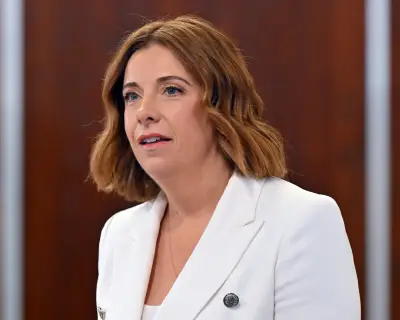
Technology Secretary Liz Kendall confirmed the Government's change of direction, stating unequivocally that ministers had listened to widespread concerns. "We have listened," Kendall declared, emphasizing that the Government must now take the necessary time to "get this right" for all stakeholders involved.
The original controversial approach would have established an exemption to copyright law, allowing technology giants to train their AI systems using creative works without obtaining licenses or providing compensation to rights holders. Under that framework, creators would have been forced to proactively object to prevent their intellectual property from being utilized.
Creative Industry Opposition Proves Decisive
Kendall acknowledged that the proposed 'opt-out' mechanism was "overwhelmingly rejected by the vast majority of the creative industries." The Government's consultation report now states explicitly that ministers "no longer have a preferred option" regarding copyright exceptions for AI training purposes.
This represents a complete departure from their previous position, which favored creating a copyright exemption that would have benefited large technology corporations at the expense of individual creators and smaller creative enterprises.
Industry Leaders Welcome Policy Shift
News Media Association chief executive Owen Meredith, representing news publishers across the country, expressed relief at the Government's reconsideration. "We are pleased that the government has listened to concerns and taken the unworkable opt-out copyright exception off the table," Meredith stated, adding that "giving away our goldmine of creative content is not the way to drive UK growth."
Mandy Hill, President of the Publishers Association, characterized the backtrack as a significant victory "over the self-interest of a handful of large corporations" that had been pushing for more lenient copyright regulations.
Music Industry Expresses Relief
The UK music industry responded with particular enthusiasm to the policy reversal. Dr. Jo Twist, chief executive of the British Phonographic Industry (BPI), stated she was "pleased" with the Government's changed position, while UK Music Chief Executive Tom Kiehl said he was "delighted" that ministers had scrapped what would have been a "deeply damaging change" to copyright protections.
Future Copyright Reform Remains Possible
While abandoning the immediate 'opt-out' proposal, the Government's report suggests that copyright law reforms could still be considered in the future. However, any such changes would need to ensure proper compensation and protection for creative professionals. The report emphasizes that "we will not introduce reforms to copyright law until we are confident that they will meet our objectives for the economy and UK citizens."
New Focus on AI Transparency and Digital Replicas
Alongside the copyright policy reversal, ministers announced several new initiatives regarding AI regulation. Technology Secretary Kendall revealed plans to launch a consultation on digital replicas—instances where someone's likeness is replicated without their permission—and establish a dedicated taskforce to develop proposals for labeling AI-generated content.
"It can be helpful to consumers to understand whether content has been made using AI," Kendall explained. "It may also help protect against disinformation and harmful deepfakes."
Parliamentary Committees Support Cautious Approach
Baroness Keeley, chair of the Lords Digital Committee, welcomed the Government's report as a "welcome step" toward a "more evidence-based approach" to AI regulation. She noted that her committee's recent findings had clearly recommended against any weakening of copyright protections.
Similarly, Dame Caroline Dinenage, chair of the Commons culture committee, stated that the Government was "right to halt its proposed copyright reforms" while urging ministers to take appropriate action moving forward.
The Government's comprehensive reconsideration represents a significant victory for creative professionals who had mobilized against what they perceived as a threat to their intellectual property rights and livelihoods in the rapidly evolving AI landscape.