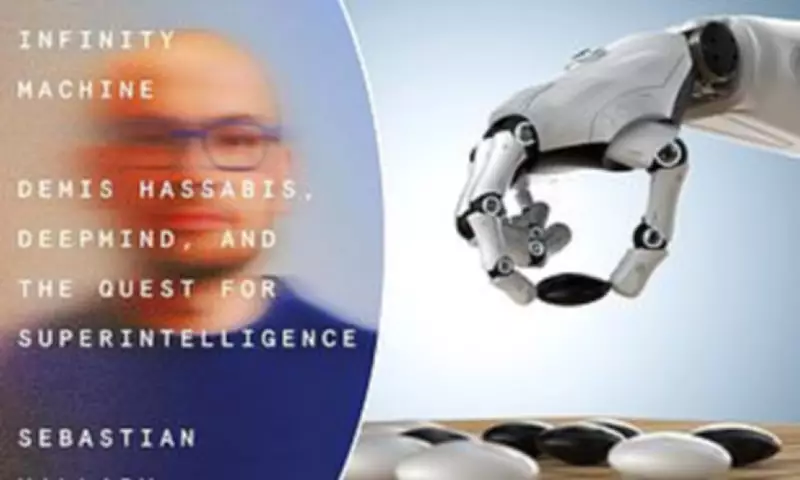
Demis Hassabis, the central figure in this illuminating biography, possesses ambitions that are anything but modest. His long-term objective, as he boldly states, is "solving physics and the nature of reality." In his early professional life, he developed a computer game titled Evil Genius, a moniker that rivals might occasionally apply to him, while admirers simply regard him as a "genius."
Early Life and Chess Mastery
Born in north London in 1976, Hassabis demonstrated exceptional talent from a young age. By five years old, he was already competing in chess tournaments, often defeating opponents much older than himself. To reach the board, he had to sit on chairs stacked with telephone directories, bringing him face-to-face with taller competitors. As an adult, his prowess earned him the title of five-time world champion at the International Mind Sports Olympiad.
Academic and Entrepreneurial Journey
After graduating from Cambridge University, Hassabis ventured into the computer gaming industry, founding and managing his own company, Elixir. However, his passion soon shifted toward artificial intelligence research. In 2010, he co-founded DeepMind with two colleagues, driven by the belief that powerful AI would surpass the impact of the Industrial Revolution.

The Google Acquisition and Ambitious Goals
Within a few years, at a unique gathering for Elon Musk's birthday where attendees dressed as samurai warriors and a world sumo wrestling champion was present, Hassabis engaged in a pivotal conversation with Google's Larry Page. This discussion led to Google acquiring DeepMind for $650 million, with Hassabis personally netting $136 million. Despite the financial windfall, Hassabis remained focused on the opportunities it provided, famously remarking, "I just thought, look, I'll go to Google. I'll get a s***load of computers and then I'll solve intelligence."
DeepMind's Breakthrough with AlphaGo
True to his fascination with games, DeepMind achieved its first major triumph by developing a machine to master the ancient Chinese game of Go. This game is renowned for its staggering complexity, with possible board states estimated to exceed the number of atoms in the universe. Hassabis confidently predicted that within two years, they would create a computer capable of defeating a world champion.
This prediction came to fruition in South Korea, where DeepMind's AlphaGo defeated champion Lee Sedol, leaving him "quite speechless" and prompting his retirement from professional play. This victory marked a significant milestone in AI development.
AI Evolution and Ongoing Challenges
Since AlphaGo's success, artificial intelligence has rapidly advanced, exemplified by ChatGPT becoming the fastest-growing computer application in history. DeepMind has faced intense competition, striving to maintain its innovative edge. Hassabis has received numerous accolades, including a knighthood and a Nobel Prize, yet his drive remains undiminished.
Concerns and Optimism in AI Development
As AI grows more powerful, concerns have emerged about the potential dangers of creating intelligence superior to humans. Some researchers even suggest a high likelihood of AI eventually posing existential threats. Despite these warnings, Hassabis maintains an optimistic outlook. While he has not yet solved the nature of reality, his relentless pursuit continues, embodying the spirit of a visionary determined to reshape our understanding of intelligence and existence.