Cherie Blair: Women's AI Distrust Is Not Foolish, But Technology Must Be Used Better
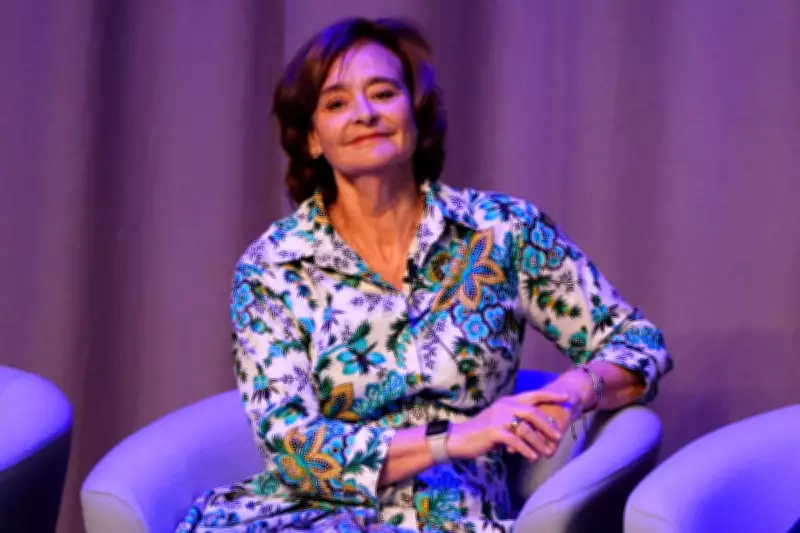
The barrister and wife of former prime minister Sir Tony Blair has declared that women are "not foolish" to distrust artificial intelligence, given documented harms such as the creation of non-consensual sexualised images. However, Cherie Blair has simultaneously urged female entrepreneurs globally to move beyond mere experimentation and harness AI's full potential for substantial business growth.
Rapid Adoption But Superficial Use
According to comprehensive research conducted by the Cherie Blair Foundation for Women, AI adoption among women entrepreneurs in low and middle-income countries has experienced a dramatic surge. The data reveals usage more than doubled within a single year, skyrocketing from 38% in 2024 to an impressive 82% in 2025. The foundation's survey engaged 3,000 female business owners across more than 100 nations identified by the Organisation for Economic Co-operation and Development.
Despite this rapid uptake, Lady Blair emphasised that the "real story isn't just about adoption, it's about depth." The survey findings indicate a significant skew towards superficial applications. Approximately 69% of women reported saving time as a key benefit, with around two-thirds of frequent users deploying AI primarily for marketing and communication activities. In stark contrast, only about a third reported using AI for core business operations, and a mere 35% applied the technology to critical functions like bookkeeping and finance.

Barriers to Deeper Integration
Lady Blair identified a critical gap between experimentation and true integration. "Many women are using AI for quick wins on marketing and communication," she observed, "but may lack the time, the confidence and the support to move from experimenting with AI to truly integrating it into their business." This challenge is compounded by the overwhelming care-giving responsibilities shouldered by almost all the women surveyed, which encompass childcare, elderly care, emotional support, and comprehensive household management.
The human rights lawyer noted a poignant irony: many women who use AI to save time are "probably just using the time saved to do a bit more housework or maybe just catch up on some sleep." This dynamic, she warned, risks widening existing inequalities. "What you find is that those who are already fortunate enough to have that time or those resources... they're going to move forward more quickly than the ones that don't."
Roots of Distrust in a Male-Dominated Industry
Lady Blair provided a powerful rationale for women's inherent caution towards AI technology. She pointed to specific, harmful applications, such as the Grok AI chatbot embedded in social media platform X, which gained notoriety for features allowing users to generate sexualised imagery. "What possessed them to think that having these programmes that allowed you to undress pictures... did anyone pause to think about how that would feel for the person being treated that way?" she questioned.
She directly linked this distrust to systemic issues within the tech sector. "Women are not foolish in not trusting AI because their life experiences have told them that it can often be used in ways that are harmful to them," Lady Blair told the Press Association. She highlighted the gender imbalance at the industry's core, stating, "We have an industry that is mainly men... the internet is dominated by men, and a lot of it is dominated by pornography." This environment, she argued, naturally breeds scepticism among women who are potential users and beneficiaries of the technology.
The call from Cherie Blair is therefore twofold: to acknowledge and address the legitimate reasons for female distrust of AI, rooted in real-world harms and industry bias, while simultaneously creating the pathways—through time, confidence-building, and support—that enable women entrepreneurs to transcend basic uses and leverage artificial intelligence for transformative business advancement.