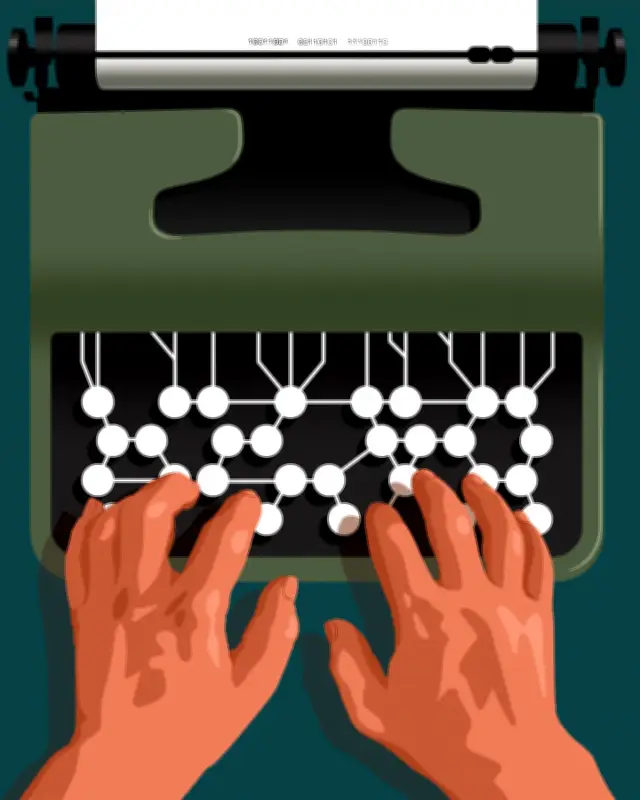
Most people can correctly identify AI-generated text only about 60% of the time, according to Claire Hardaker, a professor of forensic linguistics at the University of Lancaster. Her online test, Bot or Not, asks users to spot fakes among 15 hotel reviews, revealing that common assumptions about AI tells—such as clichés, dashes, and the rule of three—are also hallmarks of human writing, from Charles Dickens to Julius Caesar.
The Challenge of Detection
Hardaker notes that people rely on simplistic rubrics that fail because large language models (LLMs) are trained on human text. In one example, only the first of three hotel reviews was authentic, yet many guessed wrong. Suspicion now pervades the literary world: debut horror novel Shy Girl was withdrawn by Hachette after AI rumors, and Steven Rosenbaum’s The Future of Truth contained hallucinated quotes. Media organizations, including the Guardian, field increasing complaints about supposed AI text, often based on typos or phrases that could be human errors.
Commercial AI detectors are unreliable, says Hardaker. “Given that some of us naturally write in a way that would be seen as AI-like… that will be detected as AI.” She is “extremely sceptical” about their efficacy. The detector Pangram, with a claimed false positive rate of 1 in 10,000, was fooled on the first attempt by mimicking a bombastic register—a style that could be human or AI-influenced.
How AI is Changing Language
LLMs generate text that is slightly different on average, with overused words like “delve,” “showcase,” and “boast.” The “delve” spike may stem from human feedback workers using it as a proxy for quality, not the models themselves. LLMs prefer nouns and attributive adjectives over pronouns and predicative ones, and they flatten global English toward an Anglo-American standard—a process called “cultural ghosting.”
Evidence shows LLM-speak has escaped into human language. One study found “delve” and “boast” spiked in unscripted conversations after ChatGPT’s release. Another noted “delve” dropped in academic abstracts after social media scrutiny, indicating complex influences.
Literary Perspectives on AI
Novelist Gary Shteyngart describes a visceral reaction among students when a peer used AI in a piece. “Reading literary fiction is this incredible Vulcan mind meld with another human being,” he says. “With AI I’m entering the simulacrum of another person’s consciousness… How sad is that by comparison?”
Peter Stockwell, professor of literary linguistics at the University of Nottingham, argues AI excels at lower language levels but fails at higher ones like narrative arc. “If you want something that’s very familiar and very mediocre and entirely functional, it’s amazingly good at that.” Great writing requires embodiment and social nature—things AI lacks. “The current AIs don’t have a body… they don’t know what it feels like to be in the world as a human.”
Originality and Resistance
Jennifer Egan, whose novels were used without permission to train Anthropic’s Claude, avoids AI entirely. “I feel a danger of infection,” she says. She now interrogates her own use of em dashes and trios, common AI tells. Her advice to young writers: “Stay the fuck away… learn to write.”
Jeanette Winterson takes a different view: “Humans are tool-using animals… Would I work with an LLM? Of course!” But she warns that machines lack a limbic system. “Humans cannot have a thought without a feeling… literature is brilliant at revealing these layers.”
Stockwell believes human innovation will ultimately distinguish literature. “The whole point of an LLM is that it’s trained on existing language. So it’s always retro.” Originality arises from social irritation, eccentricity, or isolation—forces impossible to program. As he notes, “AI works on an existing large body of material. It’s the embodiment of the conservative-with-a-small-c status quo.”