An artificial intelligence model called Darmok has beaten all human competitors in the Times's annual cryptic crossword championship, solving the final puzzle about three minutes faster than the human winner, Liam Hughes, 29, who became the contest's youngest (human) winner. This marks a significant milestone in AI's ability to handle the complex wordplay and visual elements of cryptic crosswords.
Darmok's Victory in the Times Championship
Earlier this month, Darmok solved the final puzzle of the competition, a feat that had eluded it the previous year when it gave up after 18 minutes. Its triumph this year was partly due to successfully solving a clue that stumped three of the five finalists, including 14-time champion Mark Goodliffe: "Wolf trap missing its lowest crosspiece? (5)". The pattern S_A_F was filled in from other clues, and the answer was SNARF, a synonym for "to eat greedily" (like a wolf), with the wordplay relying on removing the bottom line of the E in "SNARE" (a trap) to make an F.
The Evolution of AI in Crosswords
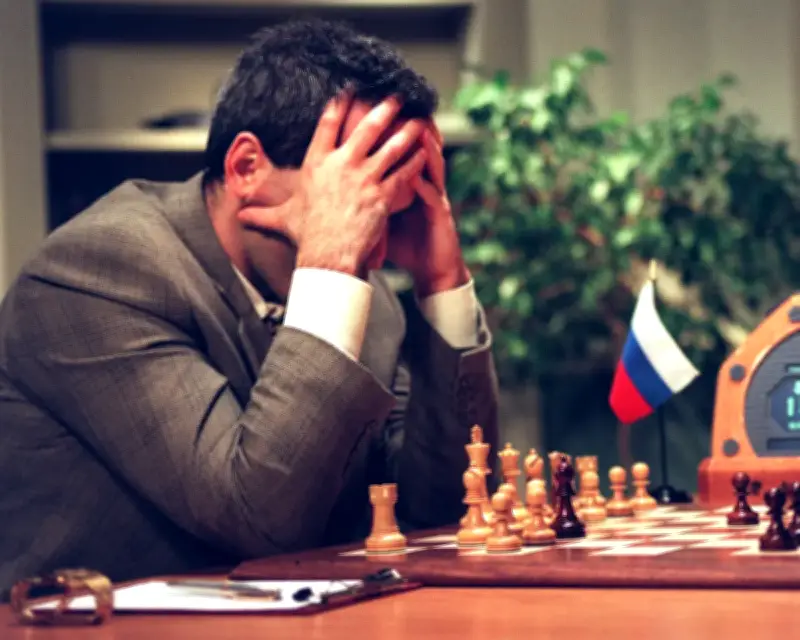
This achievement follows a history of AI successes in crosswords. After Deep Blue beat Garry Kasparov at chess in 1997, the New York Times's puzzle editor, Will Shortz, challenged engineers, writing: "Is the computer going to be able to solve the clues involving puns and wordplay? I don't think so. In a much more wide-ranging and, frankly, complex game like crosswords, we humans still rate just fine." Less than a decade later, a computer named WebCrow beat 75 human crossworders at an AI conference, and by 2021, Dr Fill "won" the American crossword puzzle tournament. However, cryptics remained a tougher challenge, as Alan Connor asked in 2024: "Will the cryptic crossword remain the last thing AI can't conquer?"
How Darmok Works
Dr Sid Chatterjee, a computer scientist at the University of Texas in Austin, began work on Darmok in 2025, naming it after a Star Trek episode. Darmok is based on four AI models: Gemini 3.1 Pro, Claude Fable 5, GPT-5, and GPT-6 Astra, with the first two doing most of the solving and the others joining if needed. Chatterjee attributed Darmok's improvement to the extra power of these frontier models and his refinements, such as making Darmok wait until it had attempted all clues before inserting answers. He noted that visual clues like the one above are not necessarily harder for the AI, though it does find puzzles by John Henderson (Enigmatist) more difficult than most.
The Next Frontier
Chatterjee said the next challenge is setting a satisfying cryptic puzzle, which he called "a very, very difficult problem because you have got to make a sentence that parses both in normal English and in cryptic English smoothly, and those two grammars are very, very different." He added: "If [beating humans at cryptic crosswords] was the Mount Everest challenge, I call this next one the Olympus Mons challenge."