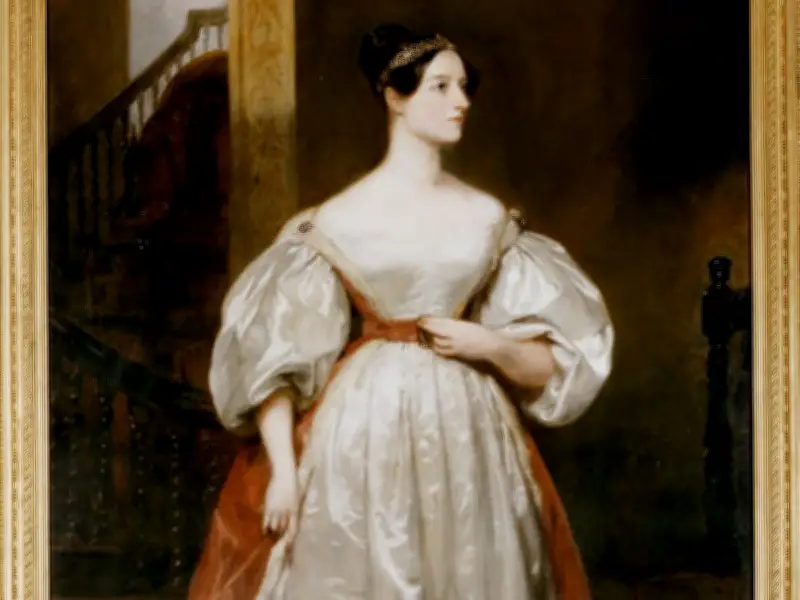
To mark Ada Lovelace Day, the Daily Star has enlisted artificial intelligence (via Google Gemini) to "resurrect" the world's first computer programmer and seek her verdict on modern Britain. Born in 1815, Lord Byron's brilliant daughter envisioned the potential of computing over a century before the first microchip. Now, using advanced AI, journalists prompted the technology to step into her Victorian shoes and analyse the 21st century.
Digital Lovelace's Astonishment
The digital Lovelace was astonished to find that her theories of steam-powered analytical machines have evolved into the smartphones we use every day. She noted that her boldest prediction—that machines would one day create music, art, and language alongside complex mathematics—has finally become a reality.
Crucially, the AI-generated pioneer expressed immense pride in seeing women actively leading the charge in today's tech industry, celebrating a modern society where female intellect is freely championed rather than hidden away.
Her Full Response
"The first thing that would strike me is not the noise—though the hum of rubber on tarmac and the roar of the skies is deafening—but the astonishing realization of my most fragile, fiercely held dream. You have built the Engine, and you have made it small enough to hold in the palm of your hand.
"When Mr. Babbage and I dreamt of brass cogs and steam-driven calculation, we were dismissed by many as eccentric dreamers. Yet, looking around Britain today, I see a world entirely governed by the principles we sketched on parchment. Your pocket devices, your glass screens, the invisible webs of information crossing the air—these are the Analytical Engines of my imagination, multiplied a billionfold.
"But what thrills me most is not that you have achieved automated arithmetic. It is that my most audacious prophecy has been vindicated: the machine has stepped beyond numbers. I once wrote that if the fundamental relations of pitched sounds could be adapted to the Engine, it might compose elaborate and scientific pieces of music. Today, I see your machines weaving music, generating art, and translating languages. The Engine is weaving algebraic patterns just as the Jacquard loom weaves flowers and leaves, exactly as I knew it could. The 'poetical science' I championed is no longer a paradox; it is the very foundation of your modern era.
Social Fabric and Caution
"If I were to look beyond the glowing screens, the social fabric of your Britain would leave me utterly breathless. To see women striding into laboratories, leading universities, and writing the very codes that breathe life into your machines is a triumph that brings tears to my eyes.
"In my time, my passion for mathematics was viewed by my mother as an antidote to the 'dangerous' poetic madness of my father, Lord Byron, and by society as an unnatural pursuit for a woman of my station. To see women celebrated for their intellect, free to pursue the poetry of numbers without hiding behind pseudonyms or male patrons, is a revolution far greater than any technological marvel.
"Yet, I would also see the ghosts of my own era. The great industrial heartlands—the cotton mills of Manchester and the surrounding northern towns that inspired the Jacquard looms of my computing metaphors—have traded the choking black soot of coal for the silent, invisible hum of data centers. The physical toil has shifted, but the relentless drive of British industry remains, albeit running on silicon rather than steam.
"I would, however, harbor a quiet caution. You have built an empire of data, a world where the Engine touches every waking moment. But I would ask you: in your rush to quantify everything, have you remembered the poetry? A machine can follow the most complex of rules, but it has no pretensions whatever to originate anything. It can only do whatever we know how to order it to perform. I would marvel at your Britain, but I would urge you to remember that the human imagination must always remain the master of the loom, not its servant."