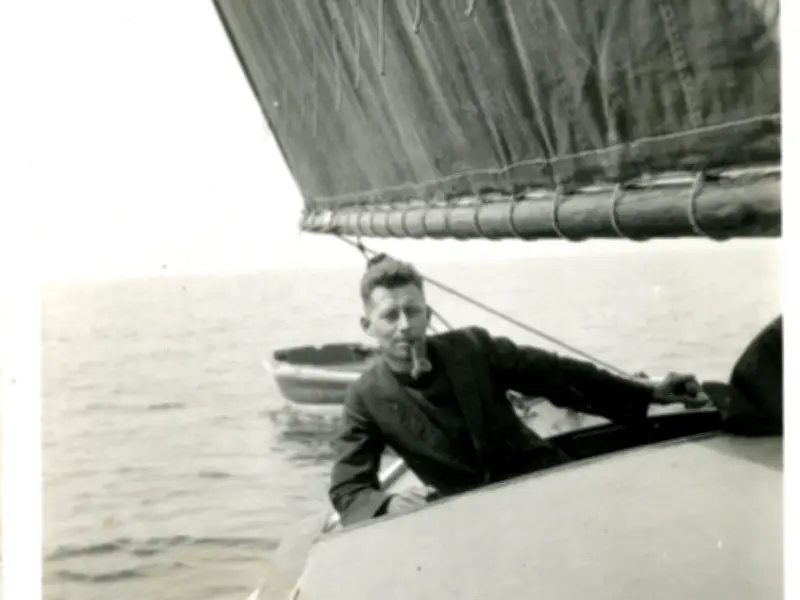
Just days before the outbreak of World War I, a yacht racing on the River Mersey capsized and disappeared beneath the water. For 13 years, Severn lay forgotten on the riverbed, another casualty of the tides that have shaped Liverpool's maritime story for generations.
Now, more than a century later, the historic yacht is sailing once again after an extensive four-year restoration project costing around £160,000. Built in Cumbria in 1912 by boatbuilders Crossfields of Arnside, Severn was one of 10 Rivers Class yachts raced by the Royal Mersey Yacht Club.
In 1914, Severn capsized and sank close to the Liverpool shore while being sailed by Captain Harvey Broadbent of HMS Conway and two naval cadets. HMS Conway was a Nelsonian ship of the line moored off Rock Ferry that was used to train merchant navy officers. The accident happened only days before Europe descended into war.
While the conflict transformed the world above the water, Severn remained on the bed of the Mersey below it. The yacht was eventually rediscovered in 1927 and raised from the river. She was sold on by the Receiver of Wrecks for £25 to Joe Wallace of New Brighton, a member of West Cheshire Sailing Club.
Over the following decades, she sailed the waters around North Wales, Essex, and Kent, quietly carrying her Merseyside origins with her.
Restoration and New Chapter
Her latest chapter began in 2018 when Arnside Sailing Club acquired the vessel because of her connection to Crossfields, who were leading builders of Morecambe Bay Prawners and yachts, including Arthur Ransome's Swallow from the 1840s to 1940s.
Alasdair Simpson of Arnside Sailing Club hopes the yacht will one day return to the waters where her story began. He said: "It would be lovely to bring Severn to Merseyside in 2028, the hundredth anniversary of her sailing again after her rediscovery."
A major restoration project was carried out between 2022 and 2026 at David Moss Boatbuilders in Skippool, on the Wyre Estuary near Poulton-le-Fylde. Moss is among the last traditional wooden boatbuilders in northern England, preserving skills that once supported maritime communities around the coast.
The project was supported by The National Lottery Heritage Fund alongside grants from the Barnes Trust, Headley Trust, Garfield Weston Foundation, Cumbria Community Foundation and Arnside Silverdale Grant Fund.
Significance and Future Plans
Helen Featherstone, director of England, North at The National Lottery Heritage Fund, said: "It is wonderful to see Severn given a new lease of life and back on the water following the restoration project made possible by National Lottery players.
"The craft serves as a symbol of the maritime history of the Northwest, having connections with Arnside and Merseyside. She is sure to be a talking point that will inspire people to share their heritage for years to come."
For the Royal Mersey Yacht Club, founded in 1844 and one of Britain's oldest yacht clubs, Severn's return represents more than the restoration of a historic vessel.
Carys Jarvis, Commodore of the Royal Mersey Yacht Club, said: "It is wonderful to see Severn sailing again, particularly in support of a charitable cause which is appropriate with her heritage.
"It stands as a true tribute to all who worked so hard to make it possible. The Rivers Class is part of our heritage.
"The Royal Mersey Yacht Club has a remarkable history. It was set up in 1844 making it today one of the country's oldest yacht clubs. Most of Liverpool's leading shipowners were members of the club including Bruce Ismay, chairman of White Star Line, who sketched out ideas for the Titanic at the Club.
"Today we are based at Rock Ferry. We sail one-design keelboat with fleets of Etchells, Squibs and Mylnes. We aim to keep the traditions of the Club alive, whilst still be welcoming and supporting of the local community."