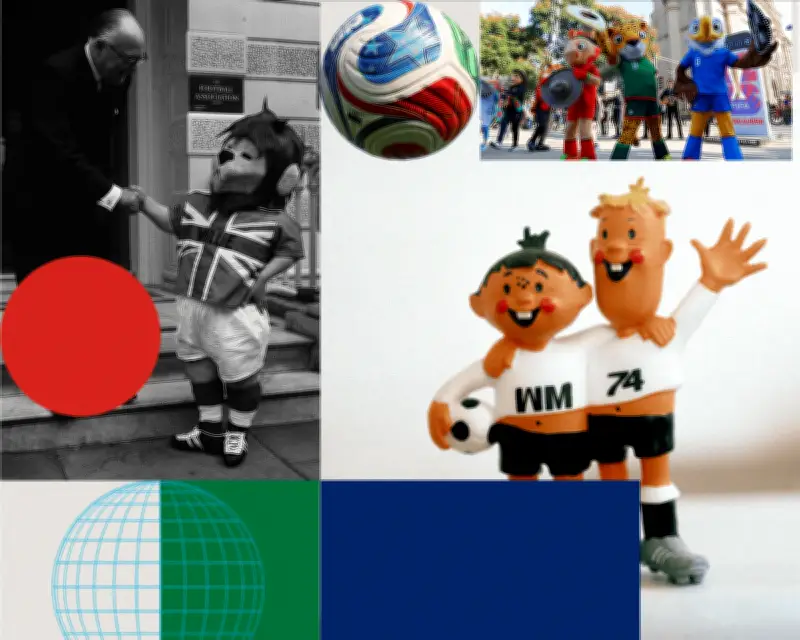
The FIFA World Cup has long been associated with memorable mascots that capture the spirit of the tournament and the host nation. From the iconic World Cup Willie in 1966 to the modern trio of Maple, Zayu, and Clutch for the 2026 World Cup, these characters have become symbols of football's global appeal.
The Origins of World Cup Mascots
The first official World Cup mascot was introduced in 1966 when England hosted the tournament. World Cup Willie, a lion wearing a Union Jack jersey, set the standard for future mascots. Designed by artist Reg Hoye, Willie became an instant hit, appearing on merchandise, posters, and even as a plush toy. His success paved the way for a tradition that continues to this day.
Evolution Through the Decades
Over the years, World Cup mascots have reflected the culture and identity of the host countries. In 1970, Mexico introduced Juanito, a boy wearing a sombrero and carrying a football. 1974 saw West Germany's Tip and Tap, two boys representing friendship. 1978's Gauchito from Argentina was a gaucho boy, while 1982's Naranjito from Spain was an orange, a nod to the country's citrus industry. Each mascot brought a unique flavor to the tournament, engaging fans of all ages.
The 2026 World Cup Mascots: Maple, Zayu, and Clutch
For the 2026 FIFA World Cup, which will be hosted jointly by the United States, Canada, and Mexico, the mascots are a trio representing each host nation. Maple, a beaver, symbolizes Canada; Zayu, a jaguar, represents Mexico; and Clutch, a bald eagle, embodies the United States. These characters were unveiled to celebrate the diversity and unity of the three countries. Each mascot has its own personality: Maple is cheerful and industrious, Zayu is energetic and proud, and Clutch is determined and ambitious.
Design and Reception
The mascots were designed by a team of artists from all three host nations, incorporating elements of each country's heritage. Maple's design features a maple leaf pattern, Zayu's includes motifs from Mexican art, and Clutch's design incorporates stars and stripes. The reception has been largely positive, with fans praising the inclusive approach. However, some critics argue that the trio lacks the simplicity of earlier mascots like World Cup Willie.
Impact on Popular Culture
World Cup mascots often transcend the tournament itself, becoming cultural icons. They appear in video games, animated series, and social media campaigns. For example, 2014's Fuleco, the armadillo from Brazil, was featured in a popular mobile game. Similarly, 2018's Zabivaka, a wolf from Russia, became a meme sensation. The 2026 mascots are expected to have a similar impact, with plans for a animated series and interactive experiences.
Merchandising and Marketing
Mascots are a significant part of World Cup merchandising. From plush toys to clothing and collectibles, they generate substantial revenue for FIFA and host countries. The 2026 trio is already available in various forms, with special editions for each host nation. Marketing campaigns often feature the mascots engaging with fans, promoting the tournament's values of unity and sportsmanship.
Challenges and Controversies
Not all mascots have been universally loved. Some have faced criticism for being too commercial or lacking cultural sensitivity. For instance, 1994's Striker, a dog from the United States, was seen as generic. 2002's Ato, Kaz, and Nik from Japan and South Korea were criticized for being overly complex. The 2026 mascots have avoided major controversy, but some fans have questioned the choice of a beaver for Canada, suggesting a moose might have been more iconic.
Conclusion
World Cup mascots have evolved from simple characters to sophisticated marketing tools. They not only entertain but also educate fans about the host countries' cultures. As the 2026 World Cup approaches, Maple, Zayu, and Clutch are poised to join the pantheon of beloved mascots, continuing a tradition that began with World Cup Willie nearly 60 years ago.