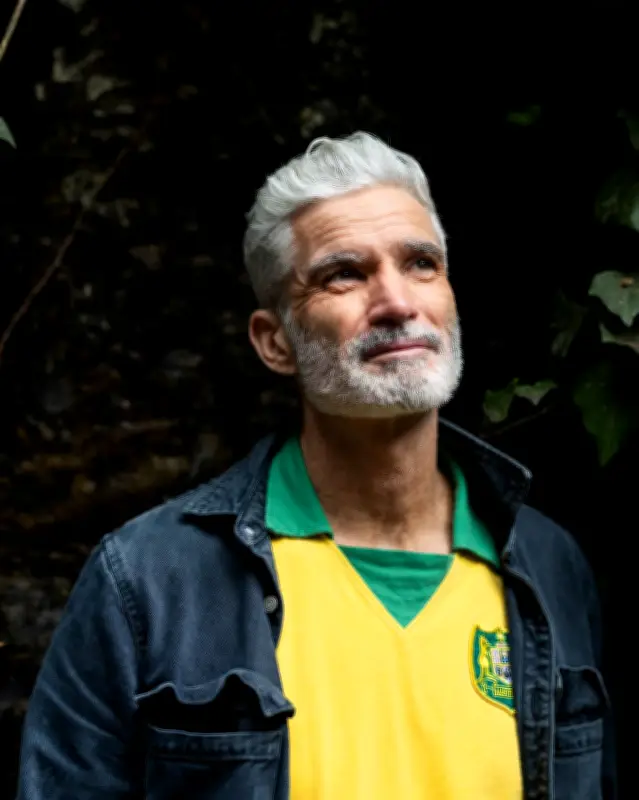
On a drizzly Tuesday morning at Sydney Harbour, former Socceroo and commentator Craig Foster shared his unfiltered views on the 2026 World Cup, the state of Australian football, and the sport's deep ties to politics and multiculturalism.
Foster's World Cup Predictions and Pet Peeves
Foster, who has been a fixture of Australian football commentary for decades, predicted Spain or France would win the 2026 trophy now that Australia is out. He called Belgium's shock victory over Senegal the best match so far and defended penalty shootouts against critics who dismiss them as a lottery. 'They are the best test of nerve in all of world sport,' he said.
He also voiced a strong opinion on modern football stars: 'I don't like Messi as much as Maradona, because he never opens his mouth. He's like Beckham or Ronaldo – they're the modern athletes who don't say anything about anything. It's as if the world outside of football doesn't exist.' Foster praised 18-year-old Spain player Lamine Yamal for waving the Palestinian flag and speaking out against racism, calling him 'the type of athlete that the world needs.'
Football as a Mirror of Society
Foster, long an outspoken critic of Australia's treatment of asylum seekers, argued that football cannot be separated from politics. 'Football is the largest game in the world, and therefore it always reflects the world,' he said. He chose to meet at the First Fleet Memorial to highlight the contrast between the Socceroos' role as a symbol of multiculturalism and Australia's colonial past. 'The Socceroos have become a vitally important face of Australian multiculturalism,' he noted.
When Foster started playing professionally for Sydney Croatia in the late 1980s, clubs were divided along ethnic lines and football was derided as a sport for European migrants. Despite this, he became a Socceroo in 1996, scoring nine international goals and serving as captain. After retiring in 2003, he became a beloved commentator on SBS alongside Les Murray and Johnny Warren, using the platform to showcase different cultures to Australians.
A Different World Cup Experience
For the first time in 24 years, Foster is not part of SBS's World Cup commentary panel. Instead, he appears as an interviewee in the documentary Wog Ball, which traces football's journey from a marginalised sport to one that unites Australians. He recalled how football was once called 'wog ball' and ranked below cricket, NRL, and AFL. The turning point came with the 2005 World Cup qualifier against Uruguay, which ended a 32-year drought, and the 2023 Women's World Cup, which drew record audiences for the Matildas.
Despite Australia's round-of-32 elimination, Foster sees progress. 'I am pleased to see that all of Australia cares about the result and the performance,' he said. 'That used to not be the case.'
The Need for Domestic Investment
Foster warned that support for the World Cup does not translate to support for domestic leagues. 'There are millions of Australians who watch the English Premier League who don't go into the stadium to watch Sydney FC or Melbourne Victory,' he said. 'If you want more success in the World Cup, we need you in the stadiums. We need you to buy the jersey.'
When asked if the Socceroos could win a World Cup in our lifetimes, Foster was unequivocal: 'Yes, but we need to invest now.' He called for a national, government-funded football program in primary schools for children ages six to 12, citing the examples of France and Spain. 'Without that, we're not going to win World Cups.'
Football as a Force for Unity
Foster sees World Cup success as more than a sporting achievement. 'We shouldn't only invest in football just to win World Cups, but to win the World Cups to the benefit of Australian society,' he said. 'It's an investment in Australian social cohesion, in Australian multiculturalism, and in our sense of national identity.'
He pointed to current Socceroo Awer Mabil, who recently called claims that Australia is not a successful multicultural society 'bullshit.' Foster echoed that sentiment, noting that football brings people together at a time when many forces seek to divide them. 'Australians collectively support the Socceroos and Matildas in a way that doesn't happen with any other sport,' he concluded. 'It brings us together in a way that we need now – and we'll need in 25 years maybe even more.'