Premiership Rugby's 'Big Match Bonanza' Provides Glimpse of Future Amid Expansion Plans
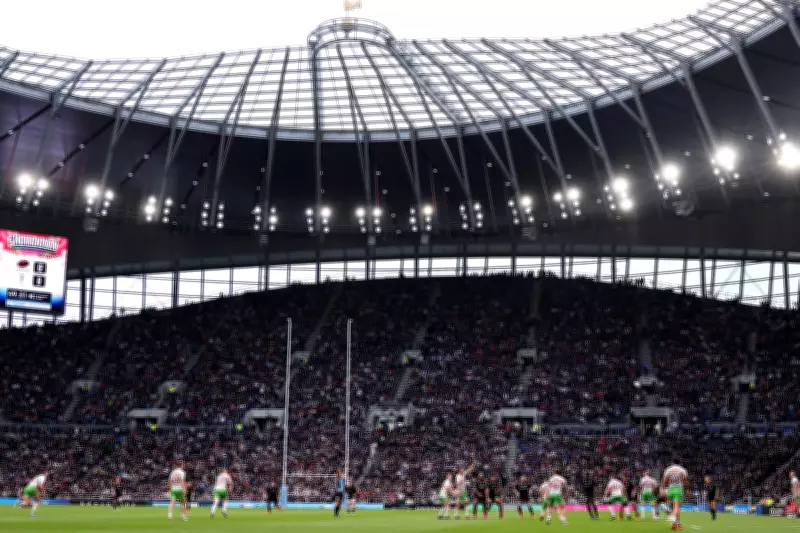
Premiership Rugby's "Big Match Bonanza" this weekend offers a tantalising preview of the league's potential future under an expansion model, with fixtures hosted at three major stadia: Tottenham Hotspur Stadium in London, Villa Park in Birmingham, and the Principality Stadium in Cardiff. This initiative, despite a minor spelling error in promotional materials as "bonanaza," underscores a strategic push to grow the league's footprint during a period of radical transformation.
Strategic Shift and Executive Vision
The timing of these large-scale events is particularly significant following recent announcements by Premiership Rugby executives. The league has confirmed the removal of promotion and relegation, adopting a franchise-style expansion model that effectively severs the top flight from the rest of the English rugby pyramid. Simon Massie-Taylor, the Premiership's chief executive, described this weekend as a "statement of intent for the league," marking a shift from earlier firefighting efforts after the loss of three clubs to a more declarative, optimistic tone.
Massie-Taylor emphasised the importance of big games in appealing to a wider fanbase, with ambitions to reach over 100,000 attendees across the three fixtures and expand to ten major events by 2030, including the final and potential neutral playoffs. "Our ambition is to have 10 big games by 2030, and that includes the final and the potential for neutral playoffs," he stated, highlighting plans to enhance the league's narrative and scale through increased marketing support.

Growth Pillars and Investment Confidence
The Premiership's growth strategy is built on four key pillars: full stadia, star players, premium assets, and strategic expansion. Early indicators show promise, with average television audiences rising by 21 percent year-on-year. The introduction of a "salary floor," or minimum spend requirement, reflects growing confidence in club finances, bolstered by investments such as James Dyson's involvement at Bath and the Newcastle Red Bulls' energy.
Active discussions with additional investors are ongoing, with more news expected soon. Further expansion plans include exploring neutral venues for semi-finals by 2029 and potential fixtures abroad, such as at Chicago's Wrigley Field next year to mark sponsor Gallagher's centenary. Massie-Taylor articulated the league's vision: "Our vision is to be the best league in the world... There are other aspects in terms of how we can define ourselves as the best league in the world for fans and players."
Persistent Challenges and Competitive Concerns
Despite these bold ambitions, three key challenges threaten to undermine the Premiership's progress. Firstly, the current season is one of the least competitive in recent memory, with four teams already out of playoff contention and Saracens facing elimination if they lose to Northampton Saints. Teams like Harlequins, Sale, and Gloucester have underperformed, raising concerns about league balance.
Secondly, player availability issues persist due to an increasingly crowded calendar, exacerbated by last year's British and Irish Lions tour and the new Nations Championship. While England internationals like Maro Itoje and Ellis Genge return this weekend, many high-profile club games lack full star power, as seen with Bath's heavy rotation for their trip to Sale. This complicates marketing efforts, as selling the league becomes harder without guaranteed appearances from top players.
Thirdly, attendance hurdles remain. While Bristol's move to Cardiff and Gloucester's fixture in Birmingham are commendable, neither venue is expected to be full, with Villa Park's redevelopment reducing capacity. Saracens may also fall short of last year's record attendance at Tottenham. Massie-Taylor acknowledged the need for better scheduling and a collective ticketing approach, to be reviewed by an "expansion review group" as expressions of interest are welcomed next season.

Future Prospects and Broader Context
In an ever-more crowded attention economy, Premiership Rugby faces stiff competition not only from football but also from emerging sports leagues and potential rebel entities like R360. The league's efforts to define itself as the world's best must navigate these challenges while prioritising player welfare and fan engagement.
As the Premiership embarks on this expansion journey, the "Big Match Bonanza" serves as a critical test case. The outcomes of this weekend's fixtures will provide valuable insights into whether the league can successfully leverage large stadia to drive growth, or if underlying issues will continue to pose significant obstacles. These are indeed intriguing times for English rugby, with the balance between ambition and reality hanging in the balance.