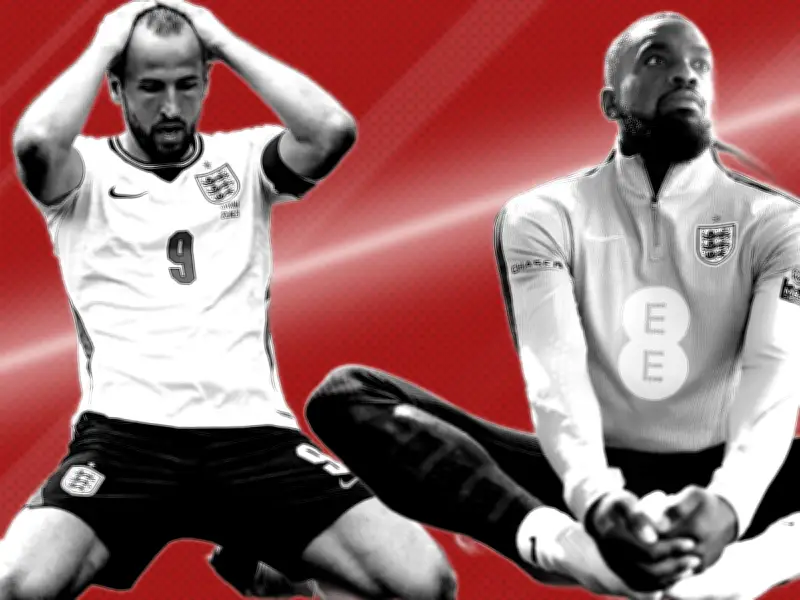
Ghana executed a near-perfect defensive plan to neutralise Harry Kane, holding England to a 0-0 draw in Boston. The West African side's strategy, led by Thomas Partey's relentless marking, kept England's captain without a clear sight of goal until the 87th minute, when he blazed over from eight yards after Nico O'Reilly's header hit the crossbar. That chance summed up an afternoon where Kane, despite intelligent movement, was reduced to a facilitator rather than a finisher.
Partey's Shadow Stifles Kane's Influence
Thomas Partey tracked Kane closely whenever he dropped into deeper areas, preventing him from dictating play. Against Croatia, Kane recorded seven touches inside the penalty area; against Ghana, he managed just two. He also registered zero key passes and zero completed link-up plays. Partey's aggressive shadowing forced Kane to adapt by dragging the Ghana midfielder out of position, creating space for runners behind him. However, England rarely exploited that space effectively.
Jude Bellingham finished with 0.01 xG and 0.03 expected assists, while Anthony Gordon managed one shot worth 0.02 xG. England's attacking players were active individually—Gordon completed three dribbles and won six duels, and Noni Madueke completed all six of his dribble attempts—but their efforts failed to translate into sustained pressure. England's total xG of 1.36 reflected a lack of incision despite territorial control.
Structural Disconnect in Attack
The clearest evidence of England's structural problem came on the right flank. Madueke attempted six crosses, three times as many as against Croatia, but with Kane dropping deeper, Ghana's centre-backs were left defending space rather than a physical target. Bellingham, Gordon, and Madueke all failed to register a single completed link-up combination. Tuchel introduced Eberechi Eze and Morgan Rogers from the bench—Eze ranks in the top 9% of attacking midfielders globally for creativity, and Rogers in the top 7% for dribbling—but neither altered the pattern of the game.
According to Machine Football's analysis, the issue was structural as much as individual. England reached advanced positions repeatedly but lacked the connection to turn them into high-quality chances.
Why Toney Was the Obvious Plan B
The argument for Ivan Toney becomes compelling here. Tuchel had described Toney as part of a "specialty team" when announcing his 26-man World Cup squad, but against Ghana, no change was made to take advantage of the gaps Kane's movement created. Toney ranks in the top 12% globally for aerial finishing and the top 7% for defensive heading, according to Machine Football. His physical profile would have given Madueke's crosses a genuine target and forced Ghana's centre-backs into direct contests.
Ollie Watkins, who has performed at a higher level than Toney in recent years, relies on exploiting space behind defences—space Ghana refused to offer. Toney, comfortable operating with his back to goal and competing for crosses, was the complementary profile England needed. Instead, Tuchel persisted with the same attacking structure for 102 minutes, leaving the pitch with a point that felt increasingly inevitable.
Blueprint for Defending Against Kane
Ghana have set a blueprint for how to defend against Kane, and England now need an effective Plan B—fast. The draw was not the result of Kane being neutralised; he was doing exactly what elite forwards should: recognising pressure and adapting his movement. The spaces he created appeared throughout the match, but England lacked a player willing to occupy them consistently. With Toney available on the bench, Tuchel had an alternative profile capable of changing the contest but chose not to use it.