The Augusta National Experience: Where Golf, Power and Networking Converge
Moving Day at Augusta National unfolds at either a leisurely crawl or in a state of controlled panic, depending entirely on where patrons are permitted to spend their morning. The atmosphere is distinctly stratified between the clubhouse elite and the eager spectators below.
The Clubhouse Veranda and the Patron Rush
Upstairs in the historic clubhouse, where tables have been meticulously rearranged following the annual Champions Dinner, green-jacketed members and their distinguished guests gradually filter onto the veranda. They settle in for an al fresco breakfast, observing the scene with calm detachment. Meanwhile, down at ground level, the day officially commences with a 7:30 am gunshot, signaling the opening of the course.
This triggers an immediate, though strictly walking-only, race among patrons towards the prime viewing banks overlooking the iconic 18th green. The objective is simple: secure the best possible seat by parking a chair early. Running is explicitly forbidden, even in this initial dash for position.

A Walk Through Sporting History
The journey from the clubhouse door to the edge of the 18th green is precisely 159 steps—a brief stroll of barely a minute when the foot traffic allows. Yet this short path cuts directly through the very heart of Augusta National, a revered cradle of golfing power, deep history, and sporting nirvana.
This iconic walk guides patrons past the legendary Big Oak Tree, a living monument dating back to the 1850s. It serves as the premier gathering spot where members, influential power brokers, and past champions mingle and network. The route continues between the practice putting green and the first tee, passes the historic Eisenhower Cabin, skirts beyond the 10th tee, and finally approaches the hallowed green where Rory McIlroy secured his immortal status. Nowhere else in sport are so many significant landmarks and legendary names compressed into such a compact, hallowed space.
The Mecca of Networking
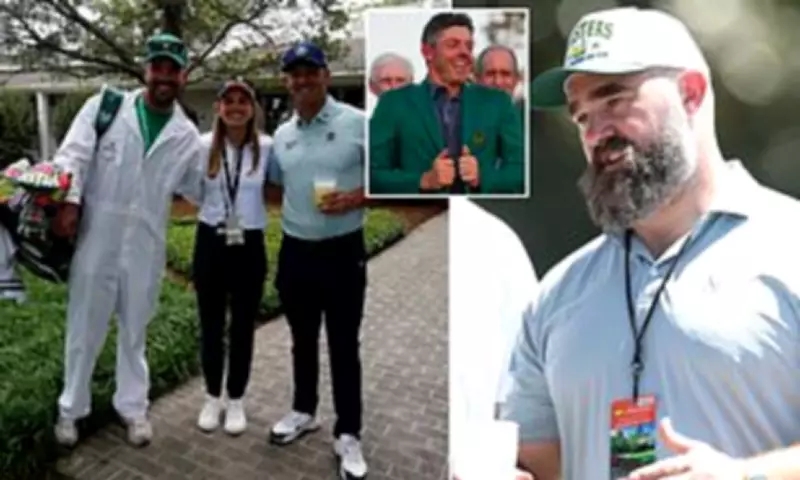
As one observer aptly noted on Saturday morning, 'This is the mecca.' The area under and around the Big Oak Tree becomes a bustling hub of high-profile interaction. This week alone, the gathering included tennis superstar Rafael Nadal, golf legend Sir Nick Faldo, former US Secretary of State Condoleezza Rice, and NFL icon Jason Kelce—soon to be brother-in-law of global pop sensation Taylor Swift.
Also present was Kai Trump, granddaughter of former President Donald Trump, who was seen chatting with television executives while sporting a green windbreaker. The location functions as a crucial meeting point, offering one of the few shaded areas and acting as a dynamic networking hub where significant deals are frequently initiated. 'This is the spot,' Faldo has famously remarked. The atmosphere is palpable; as one nearby fan remarked with a sniff, 'I can't get over the smell. All I can smell is money!'
Convergence of Sport and Global Influence
Few individuals better symbolize the convergence of sport, immense wealth, and global power at Augusta than Ana Botin. As the executive chair of Santander and one of the world's most well-connected women, Botin is among the select few female members of the club. She learned the game from her late brother-in-law, the legendary Seve Ballesteros, and was observed this week engaging in discussions with Nadal and other influential figures.
The networking extends down to the 18th green itself. By 10 am on Saturday, camping chairs were already stacked twenty deep along the bank—a full four hours before the first tournament group was scheduled to arrive. By 8:45 am on Sunday, that number had swelled to thirty-five rows of chairs ascending the slope. Almost every chair bore a business card, with names representing corporate giants like Boeing, football clubs such as Arsenal FC, and niche brands proclaiming to be the 'Home of the Maine Lobster Roll.'

The Unique Spectator Experience
In this prime viewing zone, the experience is refreshingly analog. No mobile phones are permitted, and there are no towering grandstands. Instead, fans follow every twist and turn of the tournament through the giant manual leaderboard and the echoing roars that sweep across the course. There is also no anxiety about losing a coveted spot. Once a chair is placed, its owner can come and go freely throughout the day. The only strict rule is that chairs cannot be left overnight, or they will be promptly removed.
Working the Masters: A Privileged Position
Even among the casual staff hired for the Masters, the opportunity to make valuable connections is a prized perk. Consider one of the officials maintaining order around the 18th green. After years of unsuccessful attempts to secure a ticket as a patron, he realized he could gain access by working the event instead.
His colleagues now include a practicing lawyer and a former television cameraman who spent decades in the broadcast tower just yards away. For them, this role is the next best thing to being a guest. They will work approximately sixty hours over the tournament's four rounds. Assignments could have been far less glamorous—managing restroom facilities or meticulously hand-picking flowers at 5:30 am. However, through a connection of a connection, this official landed what he calls 'Position A' in Zone 1. He witnessed McIlroy's historic winning putt and finds the patrons generally agreeable. 'It's like working security at Chuck E. Cheese,' he quipped.
Every few minutes, the pathway from this area back to the clubhouse is temporarily cleared to allow players and their caddies to pass through. In one memorable moment this week, as Sergio Garcia headed out for his opening round, Rafael Nadal offered encouragement with a friendly slap on the back. It was a small, human gesture in an environment otherwise defined by immense prestige, history, and the relentless pursuit of both sporting excellence and influential connection.