Russia and Belarus Banned from Winter Olympics, AIN Athletes Explained
The Winter Olympics in Milano Cortina, starting on 6 February 2026, will feature athletes from 92 nations, but Russia and Belarus will be notably absent as countries. Both nations remain suspended by the International Olympic Committee (IOC) due to violations of the Olympic Charter, stemming from Russia's invasion of Ukraine in 2022 and Belarus's support of the conflict. This ban prevents them from competing under their national flags or anthems, but a select group of individual athletes are permitted to participate under a neutral banner known as AIN, or Individual Neutral Athletes.
Why Are Russia and Belarus Banned from the Winter Olympics?
In March 2022, the IOC recommended banning Russian and Belarusian athletes from international sports events as a consequence of Russia's invasion of Ukraine. Belarus has acted as an ally throughout the war. The formal suspension occurred in October 2023 after the Russian Olympic Committee took over sporting organisations in Ukrainian territories, including Donetsk, Kherson, Luhansk, and Zaporizhzhia, which the IOC deemed a breach of the Olympic Charter by violating Ukraine's territorial integrity. This suspension cut off Olympic funding and barred athletes from representing their countries at the Paris 2024 Games and now the Milano Cortina 2026 Winter Olympics.
What Are AIN Athletes?
AIN stands for athlètes individuels neutres, or Individual Neutral Athletes. This system allows a limited number of Russian and Belarusian athletes to compete in the Winter Olympics under strict neutrality conditions. They do not represent their countries, compete under a neutral teal flag with an AIN emblem, and use an instrumental anthem instead of their national anthems. At the Paris Olympics, AIN athletes were excluded from the Opening Ceremony, and their medals did not count toward the overall medal table, a policy expected to continue in Milano Cortina.

Which AIN Athletes Are Allowed to Compete?
AIN athletes are restricted to individual sports only, as the IOC rules that a group of neutral athletes cannot form a team, barring them from events like ice hockey or curling. To qualify, athletes must be approved by their sport's governing body and vetted by an IOC panel, ensuring they have no links to the Russian military or expressed support for the war in Ukraine. Notably, high-profile Russian skater Kamila Valieva, who returned from a doping ban in late 2025, did not qualify in time for these Olympics.
Which AIN Athletes Have Qualified for the Winter Olympics?
For the Milano Cortina 2026 Winter Olympics, 13 Russian and 7 Belarusian athletes have accepted IOC invitations to compete as AIN participants. The list includes:
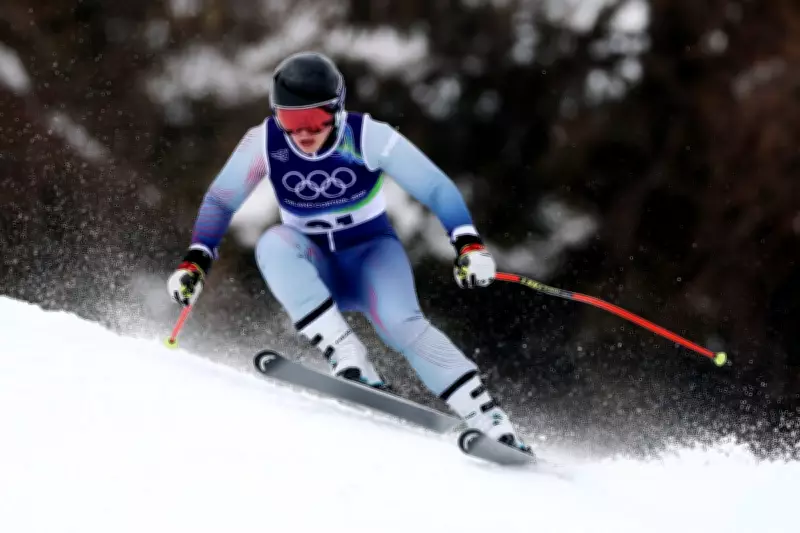
- From Russia: Yulia Pleshkova and Simon Efimov in Alpine skiing, Savelii Korostelev and Daria Nepriaeva in cross-country skiing, Petr Gumennik and Adeliia Petrosian in figure skating, Daria Olesik and Pavel Repilov in luge, Ivan Posashkov and Alena Krylova in short-track, Nikita Filippov in ski mountaineering, Kseniia Korzhova and Anastasiia Semenova in speed skating.
- From Belarus: Marina Zueva in speed skating, Hanna Karaliova in cross-country skiing, Viktoriya Safonova in figure skating, Maria Shkanova in Alpine skiing, Anastasiya Andryianava, Anna Derugo, and Hanna Huskova in freestyle skiing.
These athletes will compete under the neutral AIN system, reflecting the ongoing geopolitical tensions and the IOC's efforts to maintain Olympic integrity while allowing individual participation.