Lindsey Vonn's Olympic Injury Recovery Timeline and Comeback Prospects Analysed
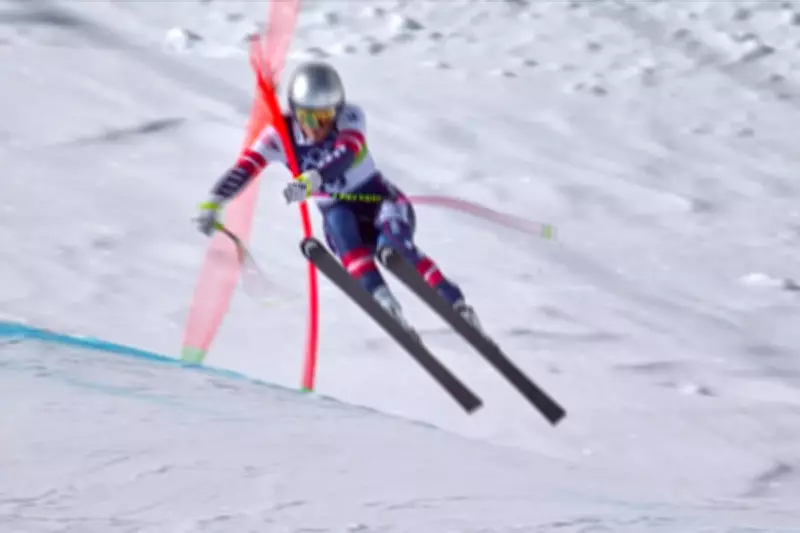
Lindsey Vonn, the celebrated American alpine skier, could potentially make a return to elite ski racing within approximately one year following a severe displaced tibia fracture sustained during a high-speed crash at the Milano Cortina Winter Olympics. This assessment comes from a panel of orthopaedic specialists, who emphasise that her age and psychological fortitude will be decisive in determining whether she can compete at the highest level once more.
Medical Assessments and Recovery Framework
The 41-year-old athlete has been receiving hospital treatment in Treviso since Sunday's dramatic incident during the women's downhill race. Vonn confirmed via an Instagram post that she suffered a "complex tibia fracture" requiring multiple surgical interventions for repair. Four Italian medical experts consulted by Reuters provided general insights, frequently referencing the case of Federica Brignone, Italy's most successful female skier, who returned to competition just ten months after sustaining multiple leg fractures and a torn anterior cruciate ligament at age 35.
"It's always difficult to give an assessment without seeing the X-rays," stated Andrea Panzeri, head of the Medical Commission of the Italian Winter Sports Federation (FISI). "It's a complex fracture that, regardless of age, can limit an athlete's career. But Brignone also had a serious fracture and she recovered." Panzeri was part of the surgical team that operated on the Italian skier, lending weight to his comparative analysis.

Recovery Timelines and Critical Factors
Recovery timelines for a complex tibial fracture are well-documented, with elite athletes typically benefiting from specialised medical teams and advanced rehabilitation centres. "From a displaced tibia fracture, it is possible to return to the ski slopes in eight to 11 months, as Brignone has shown, if there are no complications," explained Filippo Pierfrancesco Calanna, an orthopaedic surgeon at Milan's Gaetano Pini Orthopaedic and Trauma Centre.
Calanna further elaborated that the prospects of a successful comeback are heavily contingent on age and motivation. "It's obvious that the older you are, the slower the recovery," he noted. "Even though Vonn has exceptional physical qualities, physical recovery takes longer at her age. But much also depends on motivation, on the mindset."
Long-Term Health Considerations and Unique Challenges
A significant concern for any athlete's long-term health arises when a fracture extends into the joint. "There is a risk that arthritis develops earlier which, over time, can lead to reduced joint function, stiffness and pain," Calanna warned. Vonn's medical history includes major knee procedures throughout her storied career, including a partial implant, and she suffered an ACL rupture in the same left leg at the end of January, just days before deciding to race at the Olympics.
Arturo Guarino, former head of the sports traumatology department at Milan's Pini Institute and a former doctor for Inter Milan, highlighted that Vonn's partial knee replacement surgery on the right knee adds another layer of complexity. "It will also be necessary to check whether the prosthesis suffered any consequences from the fall in Cortina. If it did, then the implant will also require intervention, and recovery time could be extended," Guarino noted.
Panzeri confirmed that Vonn is currently the only top-level skier competing with a partial knee prosthesis. "It's unclear how long the implant will continue to tolerate the forces generated in competition at this level," he concluded, underscoring the unique and formidable challenges Vonn faces in her potential return to the slopes. The coming months will be a rigorous test of both her physical rehabilitation and her unwavering determination to overcome this latest setback.