US Winter Olympic Success Shifts from Snowboarding to Cross-Country Skiing
The United States has achieved a historic milestone in the Winter Olympics, setting a new national record for gold medals and surpassing the 30-medal mark for the first time outside North America. This remarkable performance, however, comes with a surprising twist: the bulk of these medals were secured in disciplines where American athletes are not traditionally dominant, notably cross-country skiing.
Record-Breaking Achievements in Italy
In the 2026 Winter Olympics held in Italy, the USA broke its previous national record by winning 12 gold medals, eclipsing the 10 golds achieved during the 2002 Games in Utah. Additionally, the team amassed over 30 total medals, marking the first instance of such success on foreign soil. While Norway claimed the overall medal table with 18 golds, the American performance underscored a significant evolution in the country's winter sports landscape.
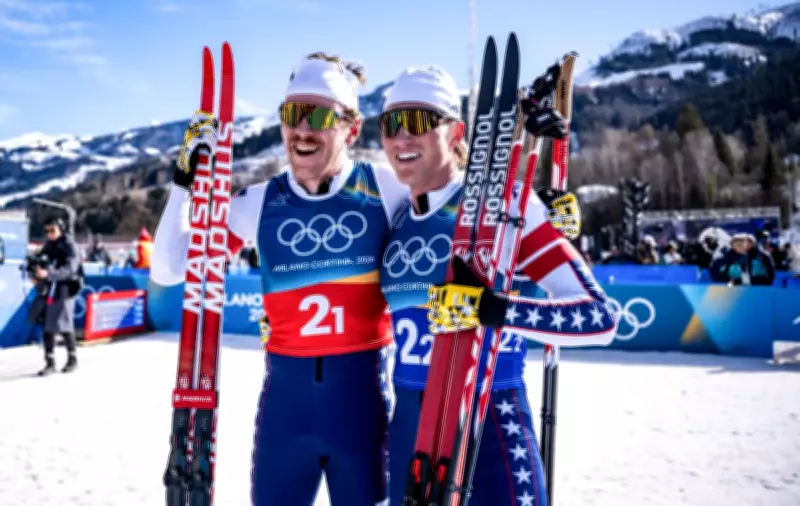
Many of these medals were earned by athletes who are not household names, such as Ben Ogden and Gus Schumacher, who secured silver in cross-country skiing events. This shift is highlighted by a stunning statistic: the USA won more medals in cross-country skiing than in snowboarding, a sport long considered an American stronghold.

The Decline of Snowboarding Dominance
Snowboarding, once a cornerstone of US Winter Olympic success, yielded only two medals in 2026. Chloe Kim, the two-time defending halfpipe champion, took silver, while Jake Canter earned bronze in slopestyle. This represents a stark contrast to 2002, when US snowboarders swept the men's halfpipe podium alone.
Freestyle skiing events, which have similarly been embraced by the International Olympic Committee to attract younger audiences, also saw a reduced American haul. Alex Ferreira, Alex Hall, and Mac Forehand secured medals, but the total of three was down from five in the previous Games. This trend suggests that American athletes in extreme sports are facing heightened global competition.
Global Growth and American Influence
The diminishing US dominance in snowboarding and freestyle skiing can be interpreted as a consequence of the sports' global proliferation, largely driven by American innovation and influence. Similar to basketball, where the NBA's international talent pool has challenged US supremacy, snowboarding has expanded worldwide due to the pioneering efforts of American athletes.
For instance, Chloe Kim's silver medal loss to South Korea's Gaon Choi, whom Kim mentored, exemplifies how US athletes have evangelized the sport. This global growth reflects the enduring export of American sports and entertainment, even as it complicates the competitive landscape for US contenders.
Resilience Across Other Disciplines
Despite the challenges in snowboarding, the US team excelled in other areas. Alpine skiing rebounded with four medals after a single medal in 2022, while long-track speedskating achieved its best performance since 2006 with five medals. Additional successes came in ice hockey, figure skating, and even less traditional sports like luge and curling.
This diversified medal haul demonstrates the depth and adaptability of American winter sports programs, ensuring that the nation remains a formidable force in the Olympic arena.
Looking Ahead: The Future of Extreme Sports
Snowboarding and freestyle skiing continue to thrive globally, with athletes from around the world pushing the boundaries of performance. The increased competition, while challenging for US athletes, signifies the health and expansion of these sports. As new generations innovate with flips and spins, the Olympic stage will likely see even more diverse medal distributions in future Games.
In summary, the US Winter Olympic team's record-breaking performance in Italy highlights a strategic shift from traditional strengths to emerging opportunities. While snowboarding medals have declined, successes in cross-country skiing and other disciplines underscore the evolving dynamics of winter sports on the global stage.