For most athletes, securing a place in their first Olympic final would represent the pinnacle of excitement for any single evening. However, for Ukrainian freeskier Kateryna Kotsar, that achievement was merely the beginning of a truly remarkable night at the Winter Games.
A Night of Dual Celebrations
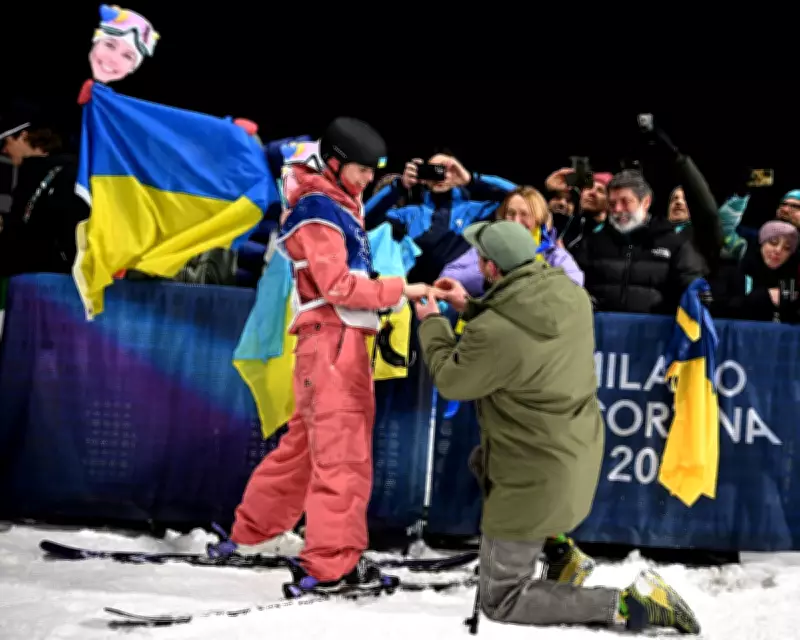
After successfully qualifying for the big air final, Kotsar's Valentine's Day took an unexpectedly romantic turn. Her boyfriend, Bohdan Fashtryha, dropped to one knee on the snow and proposed marriage immediately following her third qualifying run. The emotional moment was captured by photographers, creating an iconic Olympic memory.
"He said in Ukrainian, do I want to marry him, nothing else," Kotsar revealed afterward. "He was nervous. It was so cute. I'm still excited and can't understand what happened tonight, because it's two really huge things for me."

Protest and Personal Triumph
Earlier in the evening, Kotsar had already made a political statement by writing "freedom of memory" on her glove. This gesture served as a protest against the ban imposed on her compatriot Vladyslav Heraskevych, who was disqualified for wearing images of slain athletes on his helmet during competition.
The 25-year-old skier from Kyiv finished 11th in the qualifying round, which proved sufficient to advance to Monday's final where she will compete against defending Olympic champion Eileen Gu and ten other elite athletes. Despite her success, Kotsar admitted she hadn't anticipated the marriage proposal.
"Usually I have some feelings that something great will happen," she explained. "Today I had the feeling, but I thought it was about making the finals. I had a bad feeling yesterday, I felt sick. For today, my biggest goal was to complete and make clean runs, but they were clean enough to be in the final. Now I am full of energy."
Overcoming Challenges On and Off the Snow
Kotsar's journey to the Olympics has been marked by significant challenges beyond athletic competition. She spoke candidly about the difficulties facing Ukrainians back home, noting the harsh realities of daily life during wartime.
"You live without electricity, without heating, without the opportunity to wash your clothes and do some pretty simple things," she said. "Usually, most of our training on snow, we do abroad, in Austria, Italy, Switzerland, but I still have enough time in Ukraine to do some gym and trampoline training."
Just last week, Kotsar found herself at the center of another controversy when the International Olympic Committee barred her from using a custom helmet bearing the inscription "Be Brave like Ukrainians" at the Milano Cortina Games.
"About a week before the Olympic Games, I received an email saying that the International Olympic Committee considers this helmet to be propaganda, which means I cannot compete in it at the Games," she disclosed. "Due to a lack of certain experience, knowledge, and probably confidence, I simply changed the helmet, and now it just has a small Ukrainian flag on it."
As she prepares for the big air final, Kotsar will carry with her not only the hopes of her nation but also the sparkling diamond engagement ring she proudly displayed to reporters. Her story represents a powerful blend of athletic achievement, personal joy, and national pride during extraordinarily challenging times.