Ukrainian Skeleton Athlete Appeals Olympic Disqualification Over Helmet Design
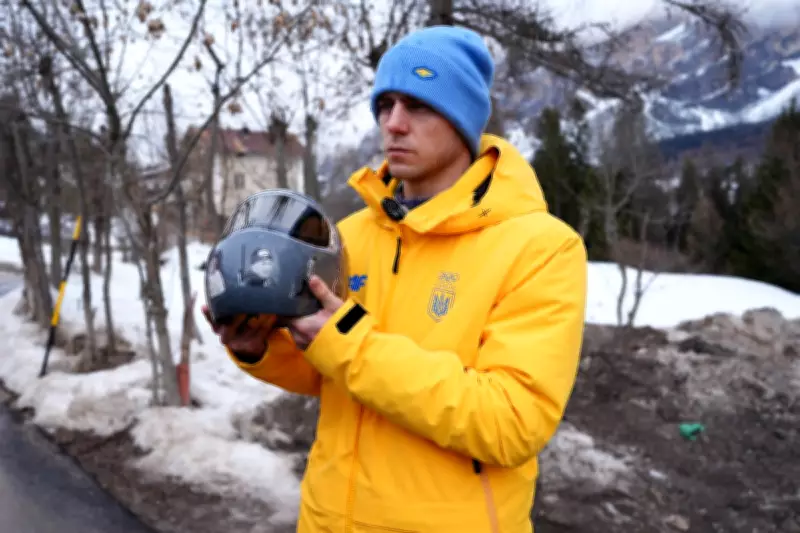
Vladyslav Heraskevych, a Ukrainian skeleton athlete, has formally lodged an appeal with the Court of Arbitration for Sport (CAS) following his disqualification from the Winter Olympics. The International Olympic Committee (IOC) barred Heraskevych from competing after ruling that his helmet, which displayed images of individuals killed in the ongoing conflict with Russia, violated regulations prohibiting statements on the field of play.
Dispute Unresolved Despite High-Level Meeting
The disqualification was enforced before the skeleton competition commenced on Thursday, despite a personal meeting between Heraskevych, his father, and IOC President Kirsty Coventry at the Cortina Sliding Centre. Heraskevych recounted the encounter, stating, "Yesterday we had a formal meeting and today we had one just before the race with Mrs Coventry here, at the venue." The discussions failed to resolve the issue, leaving the athlete sidelined as the first two runs of the event concluded.
With the final two heats scheduled for Friday evening, Heraskevych has urgently requested either immediate reinstatement or a supervised run to preserve his Olympic participation pending CAS's final decision. The sports arbitration body noted that Heraskevych argues the exclusion is disproportionate and unsupported by any technical or safety violation, causing him irreparable sporting harm.

Heraskevych Criticises IOC Handling and Propaganda Concerns
Heraskevych expressed frustration over the IOC's decision, emphasising that he believes no rules were broken. "In Ukraine now, we also have a lot of tears and I don’t want to downsize her feelings, but I believe that we should be controlled by the rules and I believe that we didn’t violate it," he said. He further suggested that the IOC's actions inadvertently align with Russian propaganda, adding, "This situation again plays along with Russian propaganda, and it does not look good."
In an attempt to find a compromise, Heraskevych proposed to the IOC that he be allowed to use the helmet while the organisation demonstrates solidarity with Ukraine by providing generators for the country. He criticised the handling of the situation, stating, "I believe because of IOC actions, that Olympic moment was stolen not only for me, but also from others from this venue." He highlighted that media attention has shifted away from the competition due to the scandal.
IOC Defends Decision Based on Athlete Commission Guidelines
IOC President Kirsty Coventry insisted the disqualification was not politically motivated, citing guidelines established by the IOC Athletes' Commission in 2020-2021. "We’re not making a judgement on whether the message is political or not political, or has a statement or doesn’t make a statement. It’s any messaging, any form of messaging," Coventry explained. She clarified that while messaging is prohibited on the field of play, podium, and Olympic village, athletes are free to express themselves in mixed zones, press conferences, and after leaving the field.
Prior to the disqualification, IOC spokesman Mark Adams indicated the organisation had urged Heraskevych to reconsider, suggesting a black armband as an alternative. Heraskevych, however, remains unconvinced, arguing that Rule 50 of the Olympic Charter is irrelevant to his helmet and that similar cases have been treated differently without sanctions. "I believe it’s totally wrong to do this decision today," he asserted, noting that the news has been favourably received in Russia.
Accreditation Maintained Despite Disqualification
Despite being disqualified from competition, it was confirmed that Heraskevych's accreditation will not be withdrawn following Coventry's intervention, allowing him to remain at the Games even if he cannot participate. This gesture permits the athlete to stay involved in the Olympic environment while his appeal is processed by CAS, which will determine whether his Olympic hopes can be revived.