Team GB's Historic Winter Olympics: Triumph and Heartbreak in Italy
At the conclusion of the Milano-Cortina Winter Olympics, the Olympic magic has unmistakably returned for Team GB, yet a series of agonising near-misses will undoubtedly fuel the fire as preparations begin for the French Alps in 2030. The Italian Alps provided a breathtaking backdrop to what can confidently be described as Britain's most successful Winter Games ever, but the celebrations are tinged with reflection on what might have been.
A Record-Breaking Medal Haul
From a purely statistical standpoint, Team GB's performance was groundbreaking. A fifteenth-place finish in the medal table represents the nation's best ever at a Winter Olympics. The total of five medals matches the record hauls from Sochi 2014 and Pyeongchang 2018, but the three gold medals secured mark a significant breakthrough. Historically, GB had never won more than a single gold on any single day at a Winter Games.
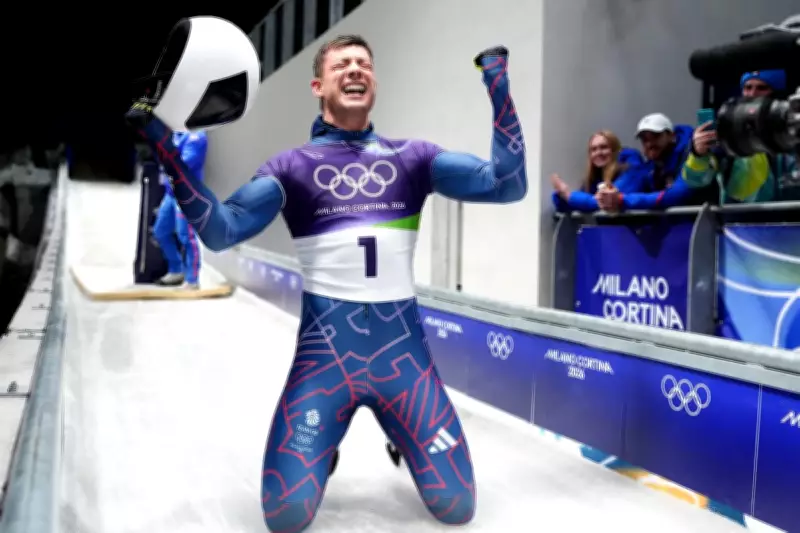
These gold medals showcased the full spectrum of winter sports. Matt Weston entered the men's skeleton as the overwhelming favourite and delivered under immense pressure, a feat that eluded other favourites like Ilia Malinin and Mikaela Shiffrin. Weston later replicated this success in the mixed skeleton event with Tabby Stoecker, overturning a deficit to claim victory through formidable self-belief and unmatched sliding skill.

On the snow, Charlotte Bankes overcame crushing disappointment from two previous Games to win mixed snowboard cross gold with Huw Nightingale, revitalising her Olympic journey. Dr Kate Baker, UK Sport's performance director, hailed Milano-Cortina as "far and away our most successful Games ever, both in terms of total medals achieved but also the number of Olympic champions."
The Agony of Near-Misses
However, the record three golds were accompanied by a record five fourth-place finishes, highlighting the fine margins of winter sport. The GB curling quartet of Bruce Mouat, Grant Hardie, Bobby Lammie, and Hammy McMillan, dominant globally for two years, had to settle for silver after an edgy final against Canada, leaving them feeling they had lost gold rather than won silver.
Freeskier Kirsty Muir, just 21, endured heartbreak with fourth-place finishes in both Big Air and slopestyle, missing a bronze medal by a mere 0.41 points in the latter. Her teammate Mia Brookes faced similar disappointment in snowboard Big Air, despite attempting a groundbreaking jump. These results underscore a frustrating gap between consistent season performances and Olympic outcomes.
Team GB's chef de mission Eve Muirhead, a veteran of Olympic heartbreak herself, empathised: "We always speak about jeopardy in sport... It is incredibly hard to win Olympic medals. Not getting your Olympic dream is really difficult. It will hurt for a while."
Funding Questions and Future Talent
Beyond the athletes' efforts, questions persist about the effectiveness of UK Sport's £25 million funding allocation. Notably, £3 million invested in bobsleigh over four years failed to yield competitive results, while less than £2 million supported figure skating, short track, and speed skating—disciplines where nations like the Netherlands and Italy excelled. Comparatively, Australia achieved six medals with £8 million less funding.
Dr Baker acknowledged the challenges: "There's a finite envelope of money, so we have to make some really difficult choices... The days of there being low-hanging fruit as medals are completely gone." UK Sport's funding review for the next cycle is scheduled for summer, with long-term potential being a key criterion for investment.
The Return of Olympic Magic
Despite the financial and competitive complexities, these Olympics recaptured a sense of magic absent from recent Games affected by Covid-19 and unfriendly time zones. The stunning Italian Alps and Dolomites provided a dreamlike setting for feats of athleticism and courage. The Winter Olympics, perhaps even more than their summer counterpart, demand extraordinary mental and physical strength, with athletes dedicating years to niche pursuits without the glamour or financial rewards of summer sports.

The inspiring performances have already sparked public interest, with 3,500 people signing up for UK Sport's Talent ID days, motivated by successes on the sliding track. As Team GB looks ahead to the French Alps in 2030, the blend of historic achievement and lingering heartbreak ensures that the fire for future glory burns brighter than ever.