Ilia Malinin Makes Olympic History with Backflip, But Debate Over Bonaly's Legacy Erupts
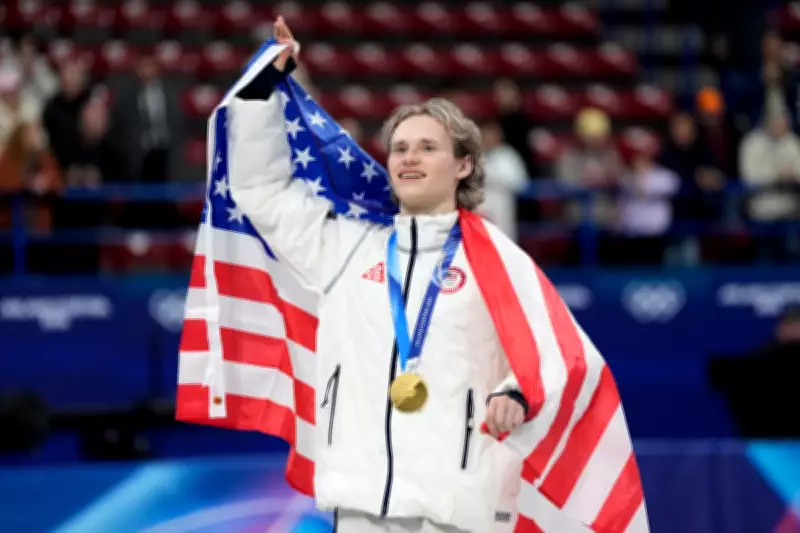
U.S. figure skater Ilia Malinin, known as the "Quad God," has achieved a groundbreaking milestone by becoming the first person to legally land a backflip on one skate at the Olympics. The 21-year-old from Virginia executed this daring move during a gold medal-winning free skate for the American team, punctuating his performance with a single-blade landing that captivated audiences worldwide.
The Bonaly Flip: A Pioneering Move Overshadowed?
Despite Malinin's historic achievement, many on social media and within the skating community are lamenting that the glory should rightfully be attributed to Surya Bonaly, the French skater who pioneered the backflip decades ago. The move is officially named "the Bonaly flip" in her honour, yet it is Malinin who is receiving widespread praise, sparking discussions about potential racial biases and the erasure of Black athletes' contributions.
In a telephone interview from Minnesota, Bonaly expressed mixed feelings, stating it was great to see the backflip performed on Olympic ice but reflecting on the criticism she faced during her career. "I broke ice for other skaters," she said, noting that she was born too early in an era less open to innovation. "Now everything is different. People welcome anyone as long as they are good and that is what life is about."

A History of Backflips and Bans
The backflip has a contentious history in figure skating. Terry Kubicka first performed it at the 1976 Olympics, landing on two skates, leading the International Skating Union (ISU) to ban the move due to safety concerns. Over twenty years later, at the 1998 Nagano Games, Surya Bonaly defied the rules by executing a backflip and landing on a single blade, marking her final professional performance. Though the crowd cheered, judges penalised her, cementing her legacy as a trailblazer in a sport lacking diversity.
It was not until two years ago that the ISU lifted the ban, aiming to make figure skating more exciting for younger fans. This rule change allowed Malinin to incorporate the backflip into his competitive routines, culminating in his Olympic success on Sunday.
Double Standards and Racial Dynamics in Skating
Ari Lu, a 49-year-old TikTok user, voiced strong criticism, arguing that the figure skating world owes Bonaly an apology. "Something a Black person used to be derided for is now celebrated when done by a white person," Lu said, highlighting how Bonaly was judged more harshly for her appearance and style rather than her skills. This sentiment underscores a perceived double standard, where Bonaly was punished for her innovation while Malinin is celebrated.
The lack of diversity in professional figure skating remains stark. While pioneers like Mabel Fairbanks and Debi Thomas paved the way for representation, there are currently no Black skaters competing for the U.S. team this year, with popular skater Starr Andrews failing to qualify. The team does include five Asian-American skaters and Amber Glenn, an openly vocal LGBTQ+ supporter.
Modern Recognition and Unresolved Issues
In recent years, organisations like the ISU and International Olympic Committee have begun to embrace Bonaly's backflip, featuring it in social media posts that celebrate her legacy. However, critics like Lu argue that this promotional use falls short of providing the redemption Bonaly deserves. "To use her backflips from the 90s in promotion for the Olympics without offering her a simple public apology is heinous," Lu stated.
As figure skating evolves, the debate over Malinin's achievement versus Bonaly's pioneering role highlights ongoing issues of race, recognition, and fairness in sports. While Malinin's backflip marks a new chapter in Olympic history, it also serves as a reminder of the barriers broken by athletes like Bonaly, whose contributions continue to inspire future generations.