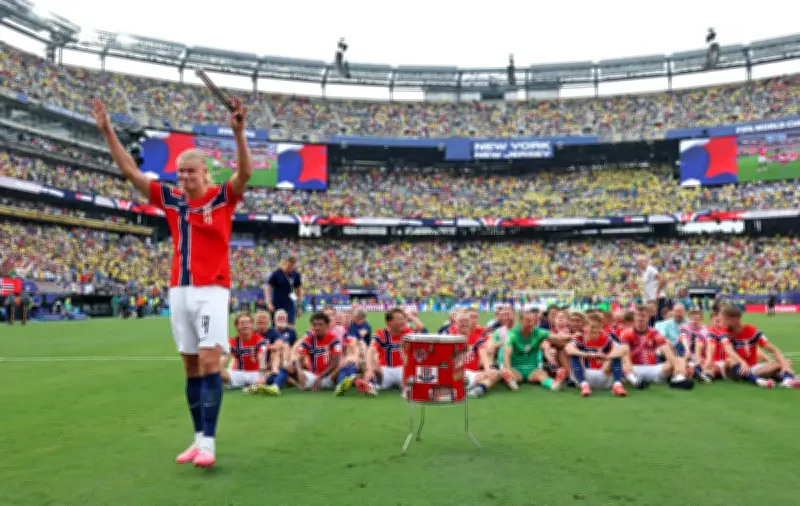
Norway's victory over Brazil in the World Cup round of 16 on Sunday was a testament to a unique sports development model that prioritizes children's joy over early competition. The team, from a country of 5.5 million people, reached its first quarter-final in 28 years by defeating the five-time champions.
Norway's Eight Rights for Children in Sport
In 2007, the Norges idrettsforbund (NIF), Norway's governing body for sport, revised eight mandatory rights for all coaches and clubs. These rules protect participation, safety, and joy for every child playing sport. Under the age of nine, children play only local club matches with no results lists, league tables, or trophies. Regional competition starts at 11, but scores and rankings remain off limits. Only at 13 can athletes participate in national championships.
Erling Haaland: Product of a Multisport Childhood
Erling Haaland, the most famous graduate of this system, spent his childhood playing handball, athletics, and cross-country skiing alongside football before choosing football at age 14. His father, Alf-Inge, told Manchester City's website that Haaland was involved in multiple sports until he was 14. Norway's handball setup reportedly wanted him before he chose football. Haaland's aerial prowess, evident in his header against Brazil, owes something to his handball background, while his powerful striking technique reflects the efficiency learned from skiing.
Other Multisport Athletes on the Team
Alexander Sørloth, who partners Haaland up front, grew up playing football, handball, and speed skating in Trondheim. Like Haaland, he is the son of athletes: his father played for Norway at the 1994 World Cup, and his mother competed in handball. Goalkeeper Ørjan Håskjold Nyland, 17 when the rules were introduced, grew up with handball and alpine skiing alongside football. Against Brazil, he saved a penalty with the lateral spring of a skier and made a contorted, mid-air save from a deflection, reminiscent of a handball player.
Comparison with Brazil's Talent-Funnel Model
Brazil's system prioritizes prodigies, spotting talent early and fast-tracking it through single-sport academies. In contrast, Norway's model emphasizes mastery and freedom to choose, allowing children to try multiple sports before specializing. This approach has produced physically imposing forwards like Haaland and Sørloth, who learned to move in different ways before focusing on football.
Broader Success of Norway's Sports Philosophy
Norway's approach extends beyond football. In February, they topped the Winter Olympics medal table for the fourth consecutive Games, with a record 18 golds, outperforming countries 60 times their size. The rights were never written to win a World Cup but to protect a child's right to play without pressure. As former Norway and Tottenham goalkeeper Erik Thorstvedt said, "To enjoy football and make it the thing you like to do most in life. The most important thing is don't put too much pressure on the kids."
Upcoming Quarter-Final Against England
Norway will face England in the quarter-finals on Saturday. England is known for its academy prodigies, but Norway's model, which prioritizes joy and choice, has produced a team that beat Brazil and now aims for the semi-finals. The Viking row chant from fans after the Brazil victory symbolizes a nation that let its children choose their own sport, in their own time, and cheered them on regardless.