Muslims Navigate Ramadan During Italy's Catholic-Hosted Olympic Games
This year's Winter Olympic and Paralympic Games are being held in Italy, a nation with deep Catholic roots. The sporting event coincides with Ramadan, the Muslim holy month dedicated to dawn-to-dusk fasting, spiritual reflection, and communal gatherings. The two host cities, Milan and Cortina d'Ampezzo, present contrasting environments for Muslim residents and visitors observing this sacred period.
Milan's Multicultural Embrace
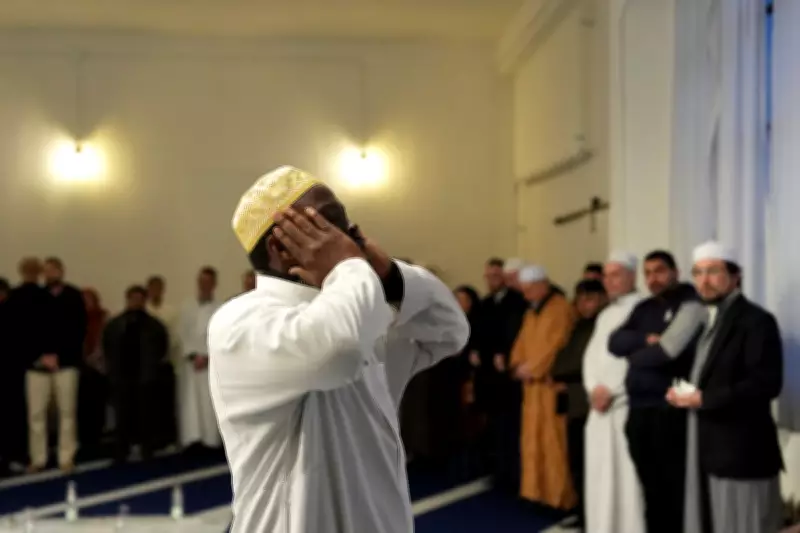
Milan, a cosmopolitan hub, offers numerous Islamic centers and mosques for worship and community activities. The Al-Wahid mosque, officially recognized as a place of worship since 2000, is opening its doors during Ramadan, inviting people of all faiths to share in iftar dinners and evening prayers. Located near the Navigli district, the mosque hosts interfaith iftars on Fridays, attracting guests from municipal institutions, the Catholic Church, and other religious communities.
Imam Yahya Pallavicini, vice president of the national Islamic association COREIS, emphasized the symbolic importance of the Olympics. "Sport, culture and art can help reduce prejudice and fear toward a particular culture or religious identity," he told The Associated Press. Recent gatherings have seen worshippers breaking fast with dates before sharing meals of lentils, rice, and meat.

According to a 2025 report by the Milan-based migration research institute ISMU, nearly 400,000 Muslims reside in Lombardy, the region including Milan. The community includes individuals from Morocco, Egypt, Bangladesh, Pakistan, and Bosnia, among others.
Challenges in the Mountainous Cortina
In contrast, the mountain town of Cortina d'Ampezzo, at an elevation of 1,220 meters, presents significant challenges for Muslims seeking prayer spaces. With a population of just over 5,000, including a large Ladin minority, the area lacks accessible mosques. Rabah Boubegtiten, a driver working with Qatari security during the Games, described an hour-long drive on poor roads to reach the nearest mosque in Brunico.
"There are many nationalities here, many Muslims from various countries: Algerians, Tunisians, other Africans, and many Qataris," said Boubegtiten, 52, originally from Algeria. "They look everywhere to find a place to pray, but it’s almost impossible." While interfaith prayer rooms are available in athletes' villages, they are not open to the public.
In Brunico, a town of about 17,000, local Muslims have created makeshift prayer spaces, with around 120 attendees at recent Friday prayers. The community relies on donations to cover rent and utilities. Kreem Wardi, a 20-year-old student with Moroccan and Italian heritage, noted that while Ramadan observance is possible, interfaith engagement is limited. "They maybe don’t want to talk about Islam. It’s not that they hate us Muslims, but it’s just that they are maybe not interested," he said.
A Shifting Religious Landscape
Italy's population of 59 million is predominantly baptized Catholic, though regular church attendance has declined. Muslims now number 1.7 million, accounting for over 30% of the foreign resident population, according to ISMU. Migration trends have fueled right-wing, anti-immigrant sentiment in parts of Europe, with Italian Premier Giorgia Meloni pledging a crackdown on migration since taking office in 2022.
Despite political tensions, Italy's Muslim community is diversifying, including second-generation Italian Muslims, converts, and native-born individuals. At Al-Wahid mosque, worshippers like Amina Croce, 28, who was raised Muslim by converted Italian parents, find deep personal and cultural significance. "We believe this diversity is part of Italy’s broader cultural heritage," said Croce, who leads COREIS's youth division. "It may still be underappreciated, but we hope it will be recognized more in the future."
As the Olympics unfold, the juxtaposition of global sport and religious observance highlights both the challenges and resilience of Muslim communities in Italy's evolving social fabric.