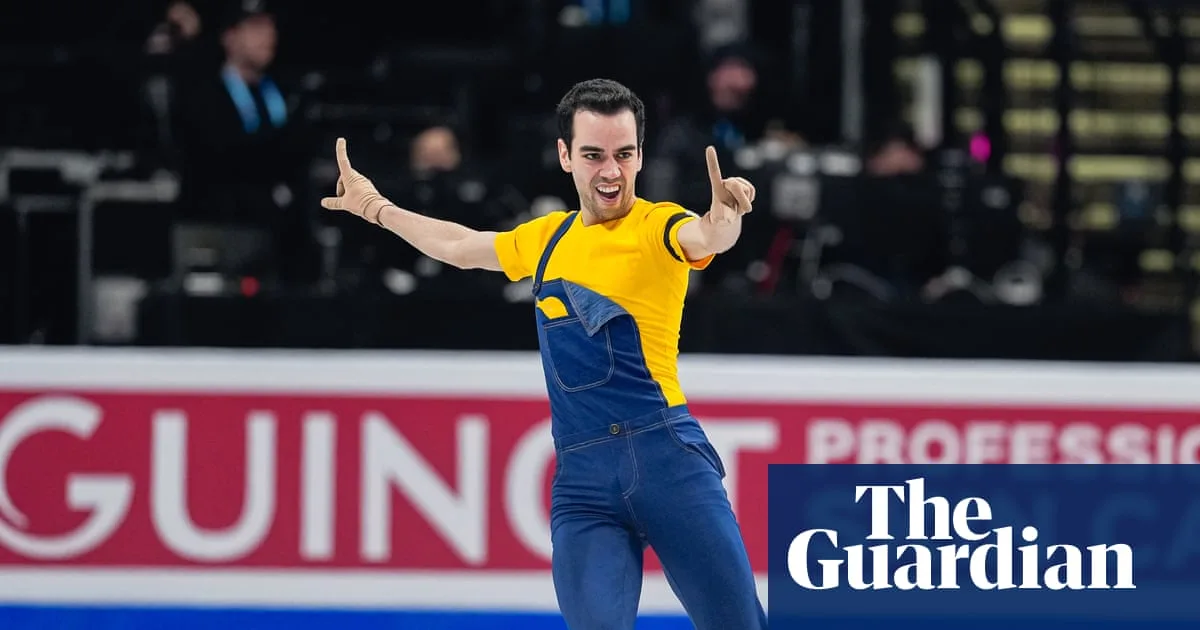
Spanish figure skater Tomàs-Llorenç Guarino Sabaté has been spared a last-minute overhaul of his Olympic short programme after Universal Studios granted permission for him to use music from the Minions franchise at the Milano Cortina Winter Games. The 26-year-old, who will make his Olympic debut in the men's singles event, had feared he would be forced to discard choreography he had refined throughout the 2025-26 season.
Guarino Sabaté, a six-time Spanish national champion from Barcelona, said he had submitted the music through the International Skating Union's recommended rights-clearance process months ago and had competed with the programme without issue, including at last month's European championships in Sheffield. However, he learned late last week that the routine would not be cleared for Olympic use. After a public appeal, Universal reconsidered, and on Tuesday he thanked fans on Instagram for their support. He noted that two other tracks in the programme were still pending clearance but that a resolution was close.
The routine, built around the animated film franchise, has become a signature for Guarino Sabaté, who performs in a yellow shirt and blue overalls reminiscent of the Minions characters. He has said the playful style demonstrates that men's figure skating can balance technical difficulty with humour and personality.
The case highlights the increasingly labyrinthine nature of music licensing in figure skating. Colin Smith, the ISU's director-general, told the Guardian at last year's world championships in Boston that the sport faces a structural problem because the music industry lacks a common clearance platform. Smith, formerly a senior FIFA executive, said he had held direct talks with major rights-holders about building a more workable system, adding that they agreed the current process was strange and were determined to help find a solution.
Other elite skaters have faced similar complications. Canadian ice dancers Marie-Jade Lauriault and Romain Le Gac learned late last year that two Prince songs for their 1990s-themed rhythm dance could not be cleared for Olympic use. At the Beijing 2022 Games, American pairs champions Alexa Knierim and Brandon Frazier were hit with a copyright lawsuit over a cover of House of the Rising Sun; the case was settled privately for around $1.4m, and Knierim later described the dispute as casting a 'bittersweet' shadow over their performance.