Matt Weston's Remarkable Rise from Injury to Olympic Champion
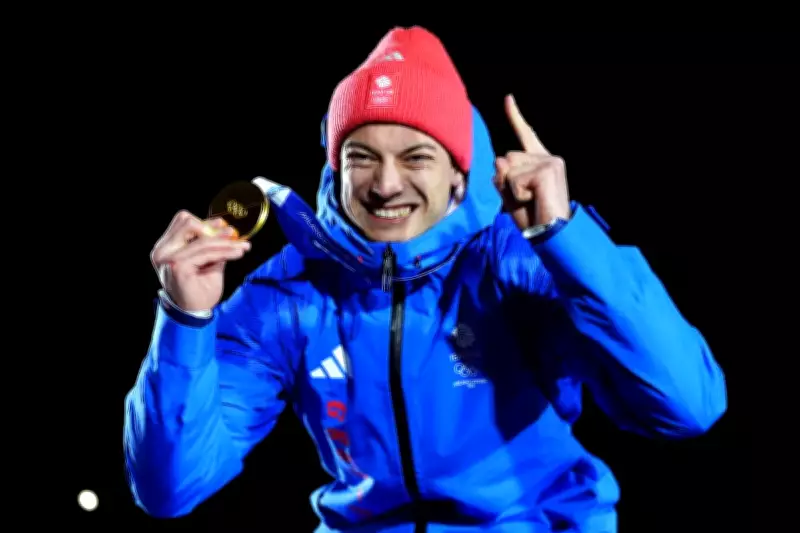
Matt Weston has captured Team GB's first gold medal at the Winter Olympics with a dominant performance in the men's skeleton event, and now stands on the brink of making British Olympic history. The 29-year-old slider from Tunbridge Wells broke the track record in all four heats in Cortina d'Ampezzo, displaying remarkable consistency under immense pressure as the overwhelming favourite.
A Champion's Dominant Performance
Weston's victory was nothing short of commanding. He improved with each successive run, demonstrating why he enters the mixed event on Sunday as a strong contender for a second gold medal. Should he succeed, he would become the first British athlete to win two gold medals at the same Winter Games.
The reigning world and World Cup champion has enjoyed an exceptional season, winning five of seven World Cup races this year. His teammate Marcus Wyatt claimed victory in the remaining two events, highlighting Britain's strength in the sport.

From Multiple Sports to Skeleton Stardom
Weston's athletic journey is particularly remarkable given his background in other sports. As a teenager, he competed at national and European levels in taekwondo, earning international honours for England before a stress fracture in his back at age 17 forced his retirement from the sport.
Simultaneously, he excelled as a rugby player, representing Kent and Sevenoaks RFC while also being part of the Saracens Academy college programme. His transition to skeleton came in 2017 when his weightlifting coach suggested he try UK Sport's talent identification programme called Discover Your Gold.
Rapid Ascent to World Dominance
After training with the Royal Marines during his transition to skeleton, Weston made his competitive debut in 2019, immediately winning two Europa Cup titles in his first three races. His World Cup breakthrough came with a silver medal in Innsbruck in 2020, followed by Britain's first World Cup gold in 14 years in November 2021.
Despite a disappointing 15th place finish at his first Olympics in Beijing 2022, where Team GB failed to win a skeleton medal for the first time since the sport's inclusion, Weston persevered. His determination paid off with his first world championship title in 2023, making him Britain's first skeleton world champion since Kristan Bromley in 2008.
Building an Impressive Legacy
Weston has since established himself as a dominant force in world skeleton. He is a two-time world champion in the individual event, having first won in 2023 before reclaiming the title in 2025, and a three-time world silver medallist in the mixed event. Additionally, he is a double European champion and three-time overall World Cup winner, becoming the first British man to achieve this triple World Cup victory.
In January of this Olympic year, he secured his second overall World Cup title, further cementing his status as Britain's most decorated slider at world championship level.
Historic Ambitions and Personal Reflections
"The chance to be a double Olympic champion – I think we do have a pretty good chance as well," Weston said after his individual gold medal victory. "The girls are some extremely fast starters, so that really, really helps in the team event. I think we're going to be one of the strongest set of teams out there."
His post-victory celebration was characteristically modest – three slices of margherita pizza in the athletes' village food hall. He has been carefully protecting his gold medal, keeping it wrapped in a sock while awaiting the official presentation box.
"I'm terrified of it falling off the end of the ribbon like I've seen some people," Weston admitted. "I'm like cradling it half the time, it's like my little baby, but it's amazing, I love it."
As he prepares for Sunday's mixed event alongside teammate Tabby Stoecker, Weston carries not just the hopes of adding to his medal collection, but the opportunity to secure a unique place in British Olympic history.