IOC Announces Sweeping Ban on Transgender Athletes in Women's Olympic Events
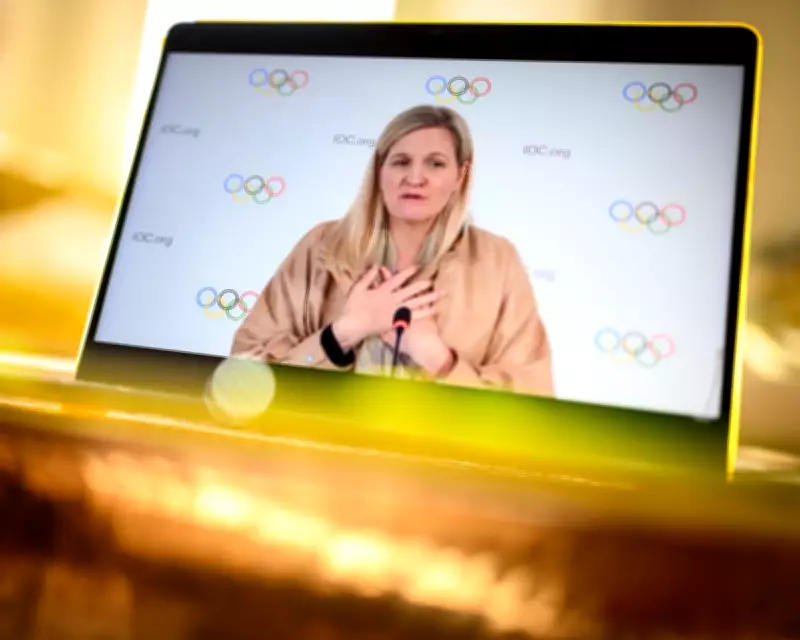
The International Olympic Committee has made a landmark decision to exclude transgender women and most athletes with differences of sex development from competing in women's Olympic events. IOC President Kirsty Coventry announced the controversial policy at a press briefing in London on 26 March 2026, marking a significant shift in Olympic eligibility rules.
The Science Behind the Decision
Central to the IOC's new policy is the scientific consensus that male physical advantage in sports is substantial and enduring. According to IOC documentation, men typically maintain a performance advantage of 10-12% in most running and swimming events, with advantages exceeding 20% in throwing and jumping disciplines. In explosive sports like boxing and weightlifting, this advantage can surpass 100%.
The IOC states clearly: "Males have larger and stronger skeletal muscle and bone, larger and stronger hearts, larger lung size, more red blood cells, and lower body fat than females trained to the equivalent level. Together these attributes afford males individual sex-based performance advantages in sports and events that rely on strength, power and/or endurance."

Closing the Door on Previous Policies
This decision represents a dramatic reversal from previous IOC policies that attempted to balance inclusivity with competitive fairness. The committee now acknowledges that even transgender women who have reduced their testosterone levels, and nearly all athletes with XY-DSD who have undergone testosterone reduction, retain significant advantages from male puberty.
The evidence has become increasingly clear over recent years, leading the IOC to conclude that their previous approach could not adequately protect the integrity of women's sports. This scientific understanding has fundamentally reshaped their position on elite competition leading up to the 2028 Olympic Games.
New Screening Requirements
A crucial component of the new policy involves mandatory SRY gene screening for anyone wishing to compete in the female category at the 2028 Olympics. This screening, described as "a segment of DNA that is almost always on the Y chromosome, initiates male sex development in utero and indicates the presence of testes/testicles," will be required once in an athlete's lifetime.
The testing procedure involves a simple cheek swab, blood test, or saliva sample - far less intrusive than the regular doping controls that Olympic athletes routinely undergo. This approach aims to eliminate speculation based on athletes' physical appearance while establishing clear, objective eligibility criteria.
Addressing Previous Controversies
The new policy directly affects athletes like South Africa's Caster Semenya, Kenya's Margaret Wambui, and Burundi's Francine Niyonsaba - all medal winners in the 800m at the 2016 Olympics. As XY-DSD athletes, they would now be excluded from women's competition under the updated rules.
The IOC emphasizes that the SRY screening applies universally to all athletes seeking to compete in women's events, regardless of nationality or background. This standardized approach aims to address concerns about potential discrimination while maintaining competitive fairness.
Athlete Support and Implementation
According to the IOC, athlete feedback played a significant role in shaping this decision. An online survey receiving 1,100 responses revealed a "strong consensus" that fairness and safety in the female category "requires clear, science-based eligibility rules." This echoes historical data showing that 82% of female athletes surveyed after the 1996 Atlanta Games supported continued sex screening.
The committee has committed to implementing these screening procedures with discretion and sensitivity, while prioritizing athletes' "dignity, physical and psychological health." They acknowledge the need for appropriate support for athletes whose Olympic dreams may be affected by these changes.

Looking Forward
While this decision represents a significant shift in Olympic policy, the IOC stresses the importance of welcoming transgender athletes and those with DSD into sports at all levels. The committee emphasizes that gender identity and personal presentation should be respected, while acknowledging that competitive categories must be maintained for sports to function fairly.
The science is clear: athletes who have undergone male puberty must compete in male categories to preserve competitive integrity. By establishing these boundaries, the IOC believes it is restoring dignity and fairness to women's Olympic sports while creating clearer pathways for all athletes to participate in appropriate competitive environments.