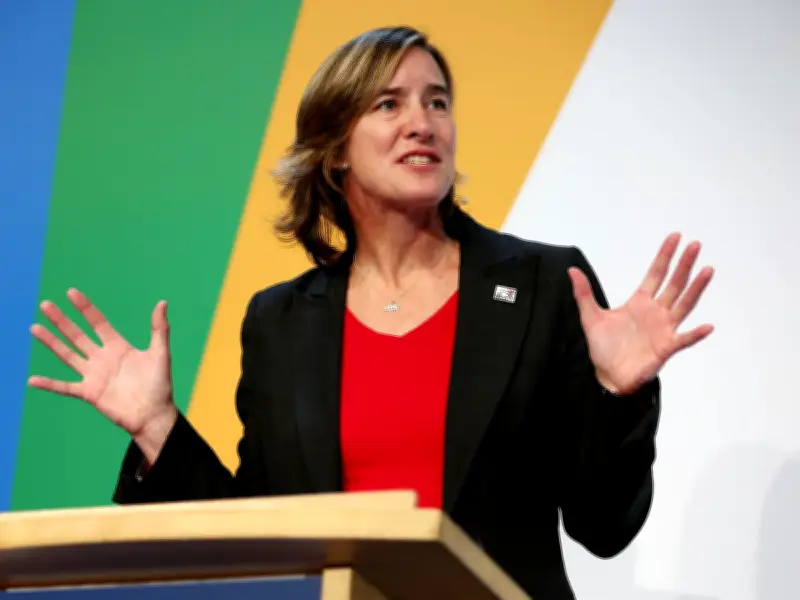
The British Olympic Association chair, Dame Katherine Grainger, has cited the home nations' strong showing at Glasgow 2026 as proof that Team GB is on track for the Los Angeles 2028 Olympics. The London 2012 gold medallist spoke as athletes from the home nations had already combined to win more than 120 medals at the Commonwealth Games ahead of the final weekend.
Coming midway through the Olympic cycle, she believes a home-soil multisport event offers valuable preparation for the British team.
A vital competitive environment
She explained:
“A strong Commonwealth Games is important to our Olympic success as a nation. It provides an important moment of global multi-sport competition which assists us in our journey as Team GB.
“It is often the first chance than many athletes, coaches and medical staff have to compete in this environment which only stands them in good stead for performing at an Olympic Games.
“And coming at the mid-point of an Olympic cycle means it is an invaluable opportunity to demonstrate performance and potential.
“Team GB is meticulous in its planning and preparations to give the athletes the very best chance of maximising their potential, but it is the day-to-day support of coaches, nutritionists, physiologists, physiotherapists, administrators and many more, that create the opportunity for Team GB to soar.
“The Home Countries and Dependencies come together every four years at an Olympic Games as Team GB and the unity that exists in competing for Britain at an Olympic and Paralympic Games is something to behold. It is one of our strengths.”
Familiar faces and new talent
Among the standout performers in Glasgow were Duncan Scott, who claimed Team Scotland’s first gold medal of the Games, and Emily Campbell, who successfully defended her weightlifting title for Team England.
Emerging prospects have also made their mark. Filip Nowacki, aged 18, won Jersey’s first Commonwealth gold in 36 years courtesy of his 200m breaststroke triumph, while 19-year-old Henry Hobbs was instrumental in England’s men’s team pursuit victory at the Velodrome.
National Lottery’s impact
With the Olympic Summer Games returning to the United States for the first time in 32 years, Grainger also emphasised the importance of The National Lottery in Team GB’s elevated ambitions. At Atlanta 1996, Britain managed just one gold medal and finished 36th in the medal table, a far cry from the expectations for 2028.
She added:
“None of this success and inspiration would be possible without The National Lottery. Before the introduction of The National Lottery, our Olympic fortunes were not what they are now.
“In 1996 at the Games in Atlanta, we won one solitary gold medal and finished 36th place in the medal table. Something needed to change if we wanted to be a truly competitive sporting nation.
“Fast forward 30 years following the introduction of National Lottery funding into sport and we will go to Los Angeles as one of the best Olympic nations in the world.
“Team GB has won an incredible 92 gold medals in the last four Summer Games. This turnaround is one of the greatest success stories in global sport.
“Our small, sports-mad, island now matches the global superpowers, and this is all down to the athletes, who have been given the best environment to perform thanks to committed people within sport making smart decisions all underpinned by National Lottery investment.”
Thanks to National Lottery players, more than £33million is raised every week for good causes. The funding supports sport, arts, heritage and community projects across the UK, as well as athletes competing at the Glasgow 2026 Commonwealth Games.