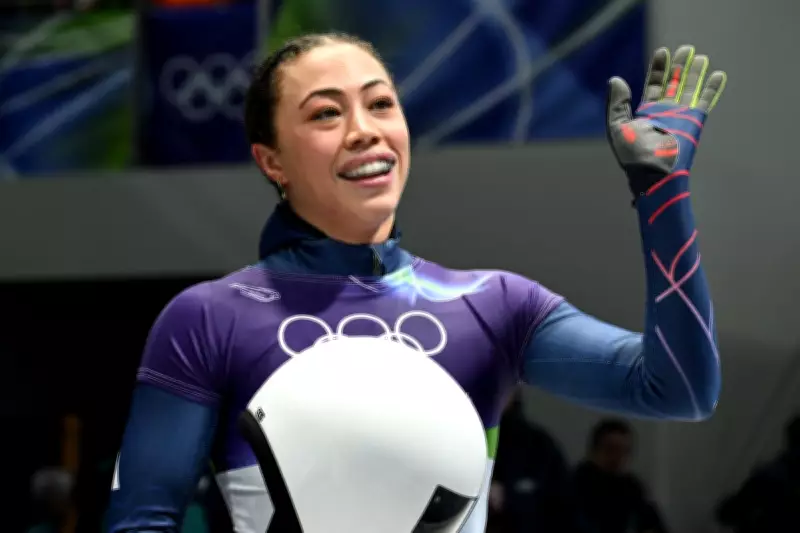
GB Skeleton Trio Shine in Cortina Heats, Eye Olympic Medal Glory
Great Britain's skeleton sliders have delivered impressive performances in the opening heats at the Milano Cortina 2026 Winter Olympics, positioning themselves strongly for potential medal success. Tabby Stoecker, Freya Tarbit, and Amelia Coltman all find themselves inside the top 10 heading into the decisive final runs, with each athlete capable of challenging for a podium finish in this thrilling and perilous sport.
Stoecker Leads British Charge in Women's Event
Tabby Stoecker, the 25-year-old Londoner who once trained as an acrobat dreaming of Cirque du Soleil, currently occupies fifth place at the halfway point of the women's skeleton competition. After a solid first day at the Cortina Sliding Centre, Stoecker believes she can soar to Olympic glory despite the immense pressure of her debut Games.
"The women's field is anyone's on any day, it's really exciting," Stoecker remarked. "It's definitely not over. It's a four-heat race, so if you take just what you do on day one and let that defeat you, the race is already over, right? I'm still feeling good. You've got to keep your mindset sharp."

Stoecker, who has emerged as a genuine force on the World Cup circuit this season, demonstrated her potential during training sessions throughout the week, regularly finishing in the top three. Her competitive runs saw her initially holding third position after the first heat before slipping slightly in her second run, now sitting 0.53 seconds off gold and 0.40 seconds off bronze.
Tarbit and Coltman Maintain Strong Positions
Freya Tarbit currently occupies sixth place, just one position behind her teammate Stoecker, while Amelia Coltman sits in ninth position. All three British sliders have demonstrated particular affinity for the Cortina track, which has proven challenging for some competitors.
Tarbit expressed particular satisfaction with her second run, describing it as "one of the runs of my life" and noting it was the joint fourth fastest overall. "It's really exciting, we are all in it and anyone can bring back a medal," she added, highlighting the collective strength of the British team.
The trio's diverse backgrounds add fascinating context to their Olympic journeys. While Stoecker brings acrobatic training that provides "body awareness, fearlessness and adrenaline tolerance," Tarbit previously pulled pints at the White Swan pub in Upbrook, Derbyshire, and Coltman once worked at McDonald's before discovering her sliding talent.
Medal Prospects in a High-Stakes Discipline
Skeleton represents one of winter sport's most extreme disciplines, with athletes hurtling headfirst down icy tracks at speeds reaching 125 kilometers per hour on what essentially resembles a high-tech tea tray. The slightest error can cause dramatic plunges down both the standings and the physical track itself.
While gold may prove challenging for Stoecker given the current standings, a medal remains firmly within reach in a competition where margins are measured in hundredths of seconds. The British women face stiff competition from Austria's overnight leader Janine Flock, a four-time European champion seeking her first major championship gold in what may be her final Olympic appearance.
Germany's Susanne Kreher sits just 0.04 seconds behind Flock, while her teammate Jacqueline Pfeifer trails by 0.13 seconds, creating a tightly packed leaderboard where any of the top contenders could emerge victorious.
Broader Context and Venue Controversy
The skeleton success comes as welcome news for Team GB, whose early medal prospects have struggled across various Alpine and Dolomite venues. In the men's event, Matt Weston has been virtually unstoppable, while the mixed team competition still awaits, offering additional medal opportunities.
The Cortina Sliding Centre itself has generated some local controversy, with residents of the town of just 5,000 people questioning the utility of a new £110 million track that snakes around their community's northern perimeter. Part of an ancient woodland was felled to construct the facility, which hosts a sport that remains relatively niche compared to more mainstream winter disciplines.

For now, however, the focus remains squarely on competition, with Stoecker, Tarbit, and Coltman poised to write another chapter in Britain's proud skeleton history when they take to the ice for the decisive final heats.