Broccoli Juice Emerges as Unlikely Performance Enhancer at Winter Olympics
Broccoli Juice: Winter Olympics' Bizarre Performance Trend

Broccoli Juice Emerges as Unlikely Performance Enhancer at Winter Olympics

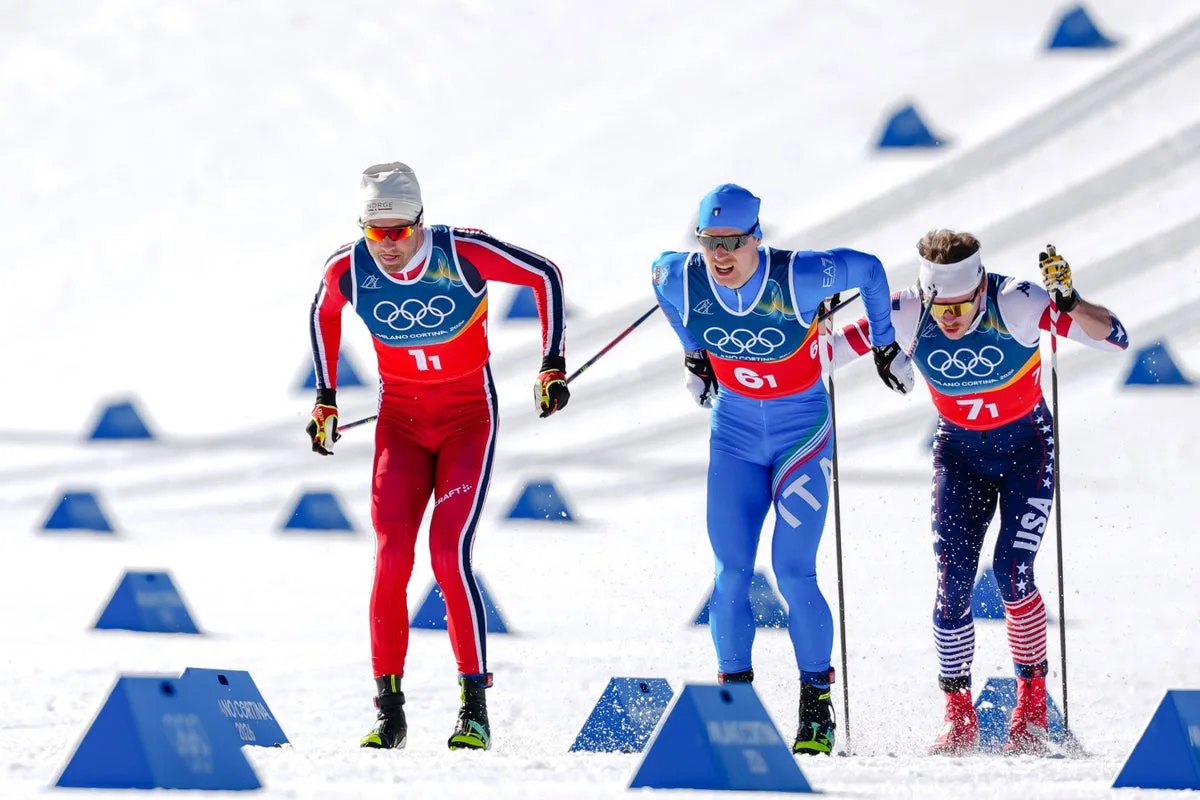
The never-ending pursuit of marginal gains at elite sporting events has taken a bizarre turn at the 2026 Winter Olympics in Milano-Cortina, where athletes are embracing a highly concentrated broccoli juice supplement to gain a competitive edge. This unconventional trend is proving particularly popular among endurance competitors, including cross-country skiers and cyclists, despite its notoriously unpalatable taste that has been compared to a combination of wood and Dijon mustard.

The Science Behind the Supplement

Swedish company Nomio has pioneered this market with a liquid shot containing the equivalent of six pounds of broccoli per dose, with only minimal lemon and sugar added to make the drink slightly more tolerable. The premise centers on a compound within broccoli that reportedly helps lower blood lactate levels during intense exercise, potentially delaying the point at which athletes experience the debilitating "burn" associated with lactic acid buildup.

After eight years of research conducted by scientists at the Swedish School of Sport and Health Science and Stockholm's renowned Karolinska Institute, this broccoli concentrate has joined the legal supplement arsenal alongside more established options like sodium bicarbonate, beetroot juice, and caffeine. The supplement's mechanism targets an athlete's lactate threshold—the critical juncture where the body switches from aerobic to anaerobic energy systems.

Elite Athletes Embrace the Trend

Olympic and world champions across multiple sports have already incorporated broccoli juice into their training and competition routines. Norwegian cross-country skier Einar Hedegart, who won two gold medals this month in the men's 4 × 7.5 kilometre relay and men's team sprint events, attributes part of his success to the supplement. "The amount of good races I've had with Nomio and the amount of good hard sessions, I definitely think it's working," Hedegart stated according to reports.

His teammate Emil Iversen, who combined with Hedegart to secure relay gold, has pinpointed the juice's impact on recovery during competitions. "We are maybe one minute uphill and maybe 10 seconds downhill," Iversen explained. "I think maybe it helps me just recover faster in the small breaks we have." The Norwegian skier even offered a surprising comparison, noting: "It's better than Jägermeister, for sure."

Mixed Reactions and Placebo Considerations

While athletes like Danish cyclist Mads Pedersen credit the juice with breakthrough performances—including achieving a 90-minute all-time best at 400W during Gent-Wevelgem—some experts maintain that its impact could be partially attributed to placebo effects. Renowned performance coach and author Steve Magness acknowledges the supplement's potential while noting research limitations. "There's bio-plausibility, meaning there's been enough research where this is now a legitimate hypothesis," Magness states. "The problem is, there's only been a handful of studies."

The broccoli juice trend represents just one of several unconventional developments at the 2026 Winter Games, which have also witnessed controversies including 'penis-gate' and anti-doping concerns surrounding ski jumpers' use of hyaluronic acid injections. Technological advances have similarly made headlines, with Great Britain's special skeleton helmet being banned despite failing to prevent Matt Weston from achieving a golden double.

As athletes continue pushing physiological boundaries, diet, nutrition, and supplements increasingly represent the fine margins separating gold, silver, bronze, and despair. For those willing to endure its challenging flavor profile, broccoli juice has emerged as an unlikely contender in this high-stakes arena of performance enhancement.