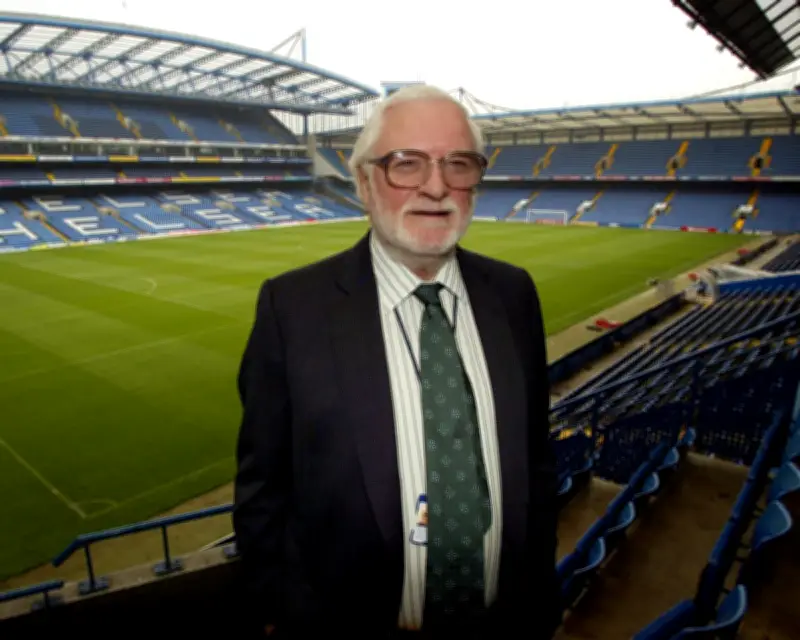
Ken Bates, the former owner and chairman of Chelsea Football Club, has died at the age of 94. Bates bought the debt-ridden club for £1 in 1982 and oversaw its transformation into a top-flight English side before selling it to Russian billionaire Roman Abramovich in 2004. He later owned Leeds United.
Bates' Chelsea era
Bates acquired Chelsea from the Mears family, who had built the west stand but lost control of the club. At the time, Chelsea was haemorrhaging money, heavily in debt, and on the verge of dropping into Division Three. Over two decades, Bates steered the club through financial turmoil, eventually selling it for £97m in debt but with a £17m personal profit. Upon his departure, he made a cordial speech to the board, but later lodged a writ claiming an additional £2m for lost expenses and benefits, a claim the club disputed.
Known for his pugnacious style, Bates once said: “I’ve always said what I felt, and some people along the way haven’t liked it.” He sacked nine managers during his chairmanship, many controversially. He banned former players Ron Harris and Peter Osgood for criticising him and used matchday programme notes to attack individuals. He invested £100,000 in Partick Thistle as a nursery club but banned employees from wearing anything but black shoes. Sir Alex Ferguson compared him to Chairman Mao.
The electric fence and stadium development
In 1985, without council or FA permission, Bates erected a high electric fence around parts of Stamford Bridge to deter hooligans, inspired by a similar fence on his dairy farm. The experiment was short-lived. Despite such controversies, he saved the stadium from property developers, developed the ground with a hotel, apartments, a megastore, and media ventures, and as a League chairman pushed for fairer TV revenue distribution and parachute payments.
Early life and business career
Born in Ealing, west London, and raised on a council estate, Bates was 16 when he discovered the couple he knew as parents were his grandparents. His mother died when he was 18 months old, and his father left. Born with a club foot, he endured four failed operations before a successful fifth at age 7. He dreamed of professional football but a trial with Chase of Chertsey revealed his limitations. At 18, he worked at Paddington station, then trained as an accountant. He made his fortune in ready-mix concrete, selling the business for over half a million pounds by his early 30s. He later built a dairy farm in Buckinghamshire that he claimed made the best ice-cream in England.
Ownership of Chelsea and later years
After buying Chelsea in 1982, Bates spent a decade battling property developers Marler Estates for the Stamford Bridge freehold. He won in 1992 and formed Chelsea Village Ltd, appointing Glenn Hoddle as manager. Financial crises persisted; in 1994, he appointed Matthew Harding as a new investor but soon feuded with him, banning him from the directors' box. Harding died in a 1996 helicopter crash; Bates later called him “an evil man”.
Bates relished media attention. As a grammar school boy who sent his sons to Eton, he often told reporters: “I’m off to my 300-acre farm. You lot can bugger off back to your council houses.”
Leeds United and retirement
After leaving Chelsea in 2004, Bates moved to Monaco but was “bored stupid”. In 2005, he bought a 50% stake in Leeds United, another financially troubled club. He accused Chelsea of poaching starlets, calling its directors “a bunch of shysters from Siberia”. Chelsea filed a complaint for alleged racism. Bates retorted: “I haven’t laughed so much since Ma caught her tits in the mangle.” He became sole owner in 2011, sold to GFH Capital in 2012, and was stripped of the presidency after a dispute over payment for his private jet. He returned to retirement in Monaco.
Bates is survived by his third wife, Suzannah, three daughters and two sons from his first marriage. He once said: “It’s easy to sit on your backside and moan that nothing happens to you. Make it happen. And then fight for it. Fight for what is yours.”