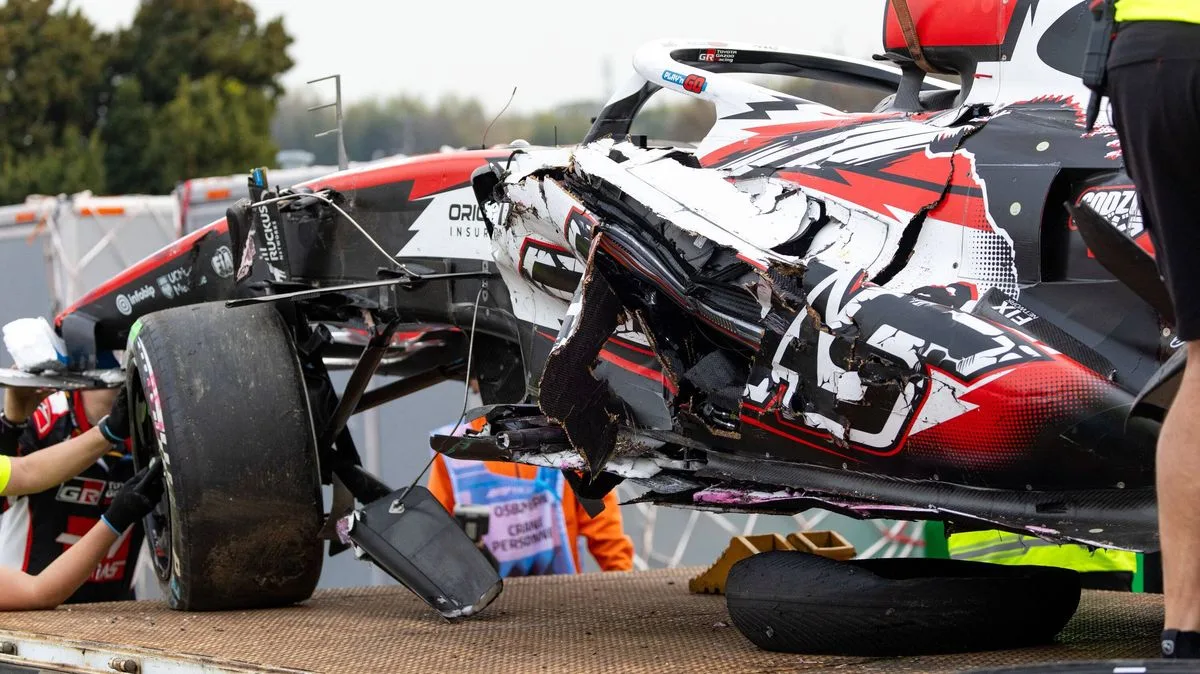
Carlos Sainz has attributed Oliver Bearman's crash at the Japanese Grand Prix to the FIA's new Formula 1 regulations, warning that drivers had cautioned officials about the dangers of closing speeds. The Haas driver left the track at Suzuka midway through Sunday's race, spinning before striking a barrier at high speed.
The 20-year-old was immediately seen signalling for marshals before exiting his car and hobbling to the side of the advertising hoardings, collapsing to the ground while clutching his leg. Following the incident, Bearman was transported to the medical centre for further assessment, where an X-ray revealed he had not suffered any fractured bones. However, Haas confirmed the driver had sustained a knee contusion from a 50G impact.
In the wake of the race, Sainz challenged the FIA's new rules and regulations concerning engines for the 2026 season, arguing that Bearman's crash exemplifies the hazards of the new configuration. He told Sky Sports: 'I'm excited to see what FOM and FIA come up for the new regulations. I am hopeful they will come up something a bit better for Miami. Given the fact that the accident with Oli that we saw today, we've been warning them about this kind of [thing] happening, this kind of closing speeds and these kind of accidents were always going to happen.'
Sainz explained that drivers have warned that an accident was inevitably going to occur, highlighting how races on particular high speed circuits could be more concerning. He added: 'We've been warning that this kind of accident was always going to happen. Here, we were lucky there was an escape road. Now imagine going to Baku or going to Singapore or going to Vegas and having these kind of closing speeds and crashes next to the walls. We, as the GPDA, we've warned the FIA these actions are going to happen a lot with this set of regulations and we need to change something soon if we don't want them to happen.'
The FIA released a statement in the aftermath of the Japanese Grand Prix, confirming that a series of meetings will be held in April. It read: 'Since their introduction, the 2026 regulations have been the subject of ongoing discussions between the FIA, Teams, Power Unit Manufacturers, Drivers and FOM. By design, these regulations include a number of adjustable parameters, particularly in relation to energy management, which allow for optimisation based on real-world data. A number of meetings are therefore scheduled in April to assess the operation of the new regulations and to determine whether any refinements are required.'