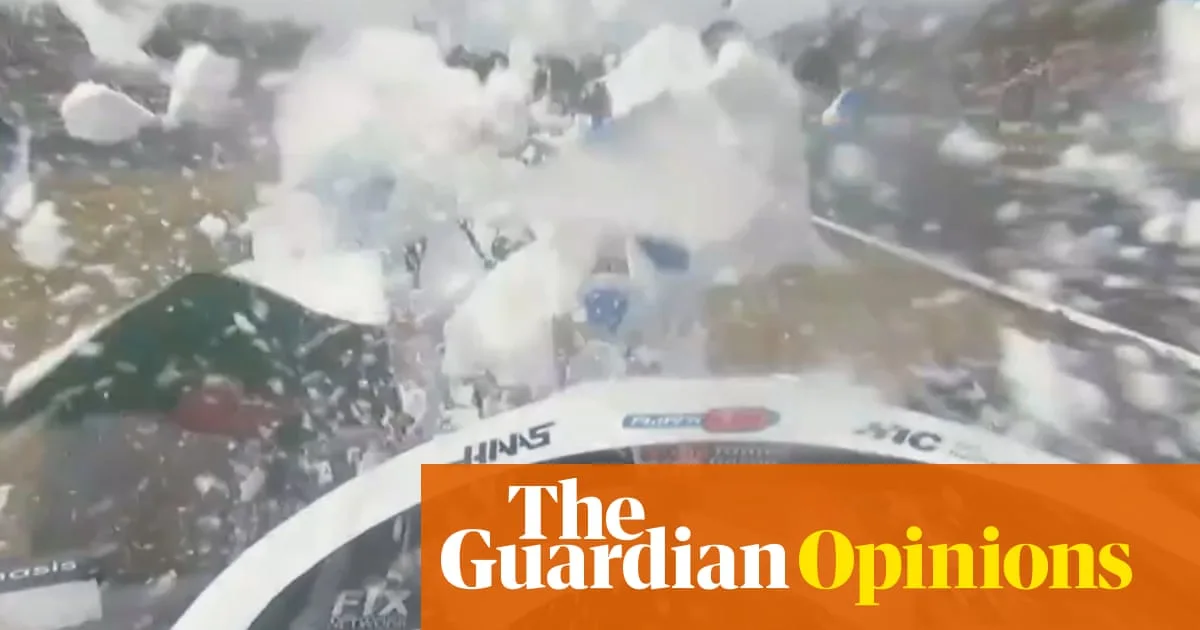
Formula One has five weeks before the next race in Miami to address a significant safety issue highlighted by Oliver Bearman's crash at the Japanese Grand Prix. The Haas driver escaped with only bruising after a 50G impact, but his car was destroyed. The incident occurred when Bearman, travelling at 307kph, came up behind Franco Colapinto's slower Alpine, which was recovering electrical energy. The closing speed of 50kph forced Bearman to veer off-track to avoid a collision.
Team principal Ayao Komatsu described it as a lucky escape, noting that a direct hit could have caused a far more violent crash. Carlos Sainz of Williams pointed out that the outcome might have been far worse on tighter circuits like Baku or Monaco, where barriers are closer. The FIA has acknowledged the issue and is monitoring the situation closely, with safety as its top priority.
The problem is rooted in the new engine regulations, which involve complex energy deployment and recovery. Drivers can use boost mode while others recover energy, creating dangerous speed differentials. McLaren's Andrea Stella stated that no simple solution exists, and Komatsu agreed, calling for calm discussion across the F1 community. Potential changes, such as adjusting energy recovery rates, could slow cars further, while increasing internal combustion engine output would require major redesigns.
The FIA, teams, and engine manufacturers will use the five-week break to analyse data and seek a solution. The complexity of the issue means that any fix will require careful balancing of performance, safety, and technical regulations.