F1 Champions Unite in Criticism of New Regulations After Australian GP Qualifying Chaos
Three world champions have delivered a scathing verdict on Formula One's recent regulations overhaul following a dramatic and controversial qualifying session for the Australian Grand Prix. Lewis Hamilton, Max Verstappen, and defending champion Lando Norris were unanimous in their condemnation, labelling the new cars as among the worst in the sport's history and criticising the complex energy management systems as fundamentally flawed.
Norris Leads the Charge with Blunt Assessment
McLaren's Lando Norris, who secured his first title last season but could only manage sixth on the grid in Melbourne, did not mince his words. "We've come from the best cars ever made in Formula One and the nicest to drive, to probably the worst. It sucks," he stated emphatically. Norris highlighted the 50-50 power split between the combustion engine and electrical energy as a core issue, arguing that the regulations cater more to manufacturer interests than sporting integrity.
When questioned on whether this direction benefits Formula One, Norris was unequivocal. "Not really, no," he replied. "As drivers, we have the interest of the sport in our minds better than others. The rules have been changed because that's what manufacturers want. But if you have 20 other drivers complaining, I don't know what's better for the sport or not."

Hamilton Echoes Concerns Over Racing Principles
Seven-time world champion Lewis Hamilton echoed Norris's criticisms, focusing on how the new energy recovery requirements detract from pure racing skill. "The power's good when you've got it, it's just it doesn't last," Hamilton explained. He described drivers having to use partial throttle through corners and straights to manage energy, a practice he believes contradicts Formula One's essence.
"It's completely against what Formula One is about– flat-out, full attack – and you're lifting and coasting and stuff. That element is not very good and I don't think the drivers particularly like it," Hamilton added, underscoring the frustration shared across the paddock.
Verstappen's Crash Highlights Adaptation Struggles
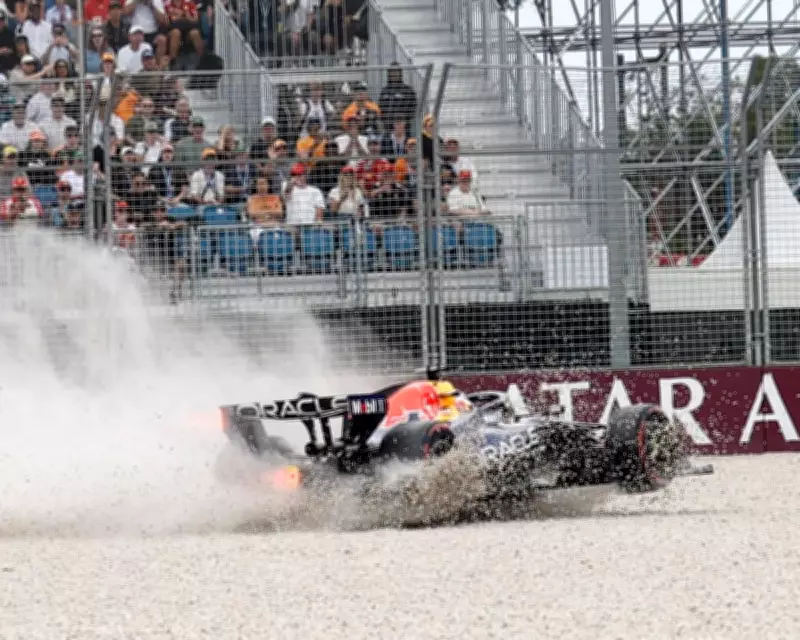
The challenges posed by the new regulations were starkly illustrated by Max Verstappen's qualifying incident. The Red Bull driver spun into a barrier at turn one after the rear of his car locked up under braking, a direct consequence of the energy regeneration process. This left him stranded in 20th place, with Red Bull launching an investigation into the cause.
Verstappen, a four-time champion, has been vocal about his dissatisfaction, even hinting at potential retirement if the enjoyment factor diminishes. In Australia, he joined his peers in disapproval. "I'm definitely not having fun at all with these cars. You can make up your mind, but if you look at the onboard, you see enough, right?" he remarked, referring to the need for throttle lift-off on straights.
"The formula is just not correct, and that is something that is a bit harder to change, but we need to. It's going to be a long season, that's all I'm telling you," Verstappen warned, suggesting a turbulent year ahead if issues persist.
Russell Secures Pole Amidst Controversy
Despite the widespread criticism, Mercedes's George Russell delivered a dominant performance to secure pole position for the season's opening race. He finished more than eight-tenths of a second quicker than McLaren's Oscar Piastri, who qualified fifth. However, Russell's achievement was overshadowed by the broader discontent regarding the regulatory changes, which many drivers argue prioritise technical complexity over competitive racing.
The Australian Grand Prix qualifying has thus set a contentious tone for the 2026 season, with champions and contenders alike calling for urgent revisions to restore the sport's core principles of speed, skill, and spectacle.