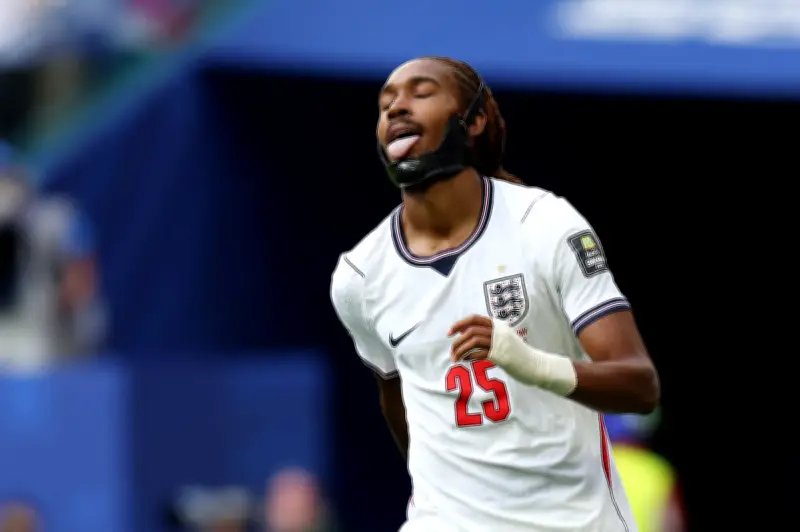
Thomas Tuchel, speaking at Wembley in May, emphasized the importance of players knowing and buying into their roles as he explained his World Cup squad selections. The England manager sought to foster a collective spirit, avoiding the individualistic approach that had previously hindered the team. Tuchel's philosophy has paid off, with his substitutions proving effective throughout the tournament.
Spence's Impact Off the Bench
Djed Spence has become a key figure for England, consistently called upon by Tuchel to close out games. His energy and pace have revitalized the team, while his versatility allows him to play both full-back positions. In the opening match against Croatia, Spence's deep runs from right-back created the opportunity for Marcus Rashford's decisive goal in a 4-2 win. Against Mexico, he was deployed at left-back with England down to 10 men, helping defend crosses in a tense 3-2 victory.
Growing Importance
Spence's display in the quarter-final against Norway further highlighted his value. He set the tone for England's comeback, nearly forcing a mistake from goalkeeper Orjan Nyland and winning a penalty that was overturned by VAR. His persistent running culminated in Jude Bellingham's extra-time winner. Despite a difficult season at Tottenham, the World Cup has transformed Spence's reputation.
Club Complications
Interest in the 25-year-old is growing, but his future at Spurs remains uncertain. Roberto De Zerbi, who likes Spence, may not guarantee regular playing time. Destiny Udogie is first-choice left-back, with Andy Robertson providing cover. On the right, Pedro Porro recently signed a five-year contract. Spence's World Cup performances might alter De Zerbi's plans, but a supporting role seems likely. A good World Cup may not be good for Tottenham, as Spence evaluates his options ahead of next season.