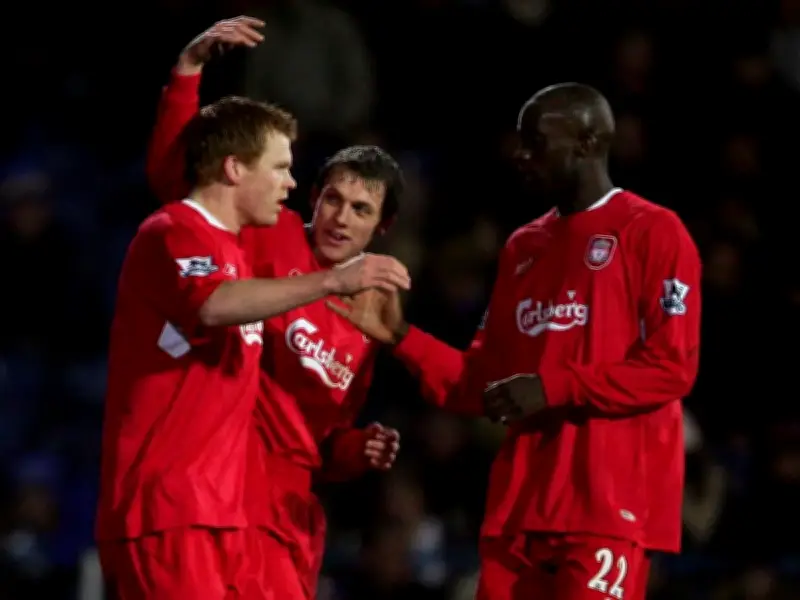
Stephen Warnock has revealed he concealed a childhood health condition from Liverpool coaches because he feared it would end his football career. The former full-back, who made 67 appearances for the Reds after coming through the academy before playing for Blackburn, Aston Villa and Leeds, suffered epileptic fits as a child.
Warnock, now 44, recalls his first seizures happening while he was still at school. He told the BBC: "I was at a computer and then I woke up in a hospital bed. And I was like, 'Wow, how have I got here?' I didn't remember anything, I completely blacked out."
"My friends told me I started having a seizure. Obviously, an ambulance was called, and I was taken to a hospital bed. I was embarrassed, to be honest, because no-one else had it, no-one knew about it, I didn't know about it until it happened."
Fear of being released
Warnock suffered another seizure at home, which led to CT and MRI scans. But he was determined to keep his condition secret from Liverpool because he believed it would result in his release.
"I was petrified of telling Liverpool because I was worried of being released," confessed Warnock, now a pundit. "Because I was thinking, 'If they think I've got a condition they will release me.'"
"I was worried about being on the pitch and it happens. There were no triggers for me, I never knew what triggered it. That was what petrified me."
Growing out of the condition
Warnock, who retired from playing in 2018, has not had a seizure since the age of 14 but remains alert that one could happen again.
"I was in a fortunate position where I grew out of it," he said. "I didn't have to go on medication or worry about driving a car or things like that. It's the first time I've ever really spoken about it."
Epilepsy in children is typically identified following one or more seizures, according to the charity Epilepsy Action. While medication can reduce or prevent epileptic episodes, the condition requires careful and ongoing management.
Sporting success despite epilepsy
Living with the condition need not prevent sporting achievement. England rugby international Tommy Freeman, who also featured on the British and Irish Lions tour to Australia in 2025, began experiencing seizures at 14 and was diagnosed with epilepsy at 19.
He takes daily medication to manage his condition. Last year, he became the first England player to score a try in all five matches of a single Six Nations Championship.