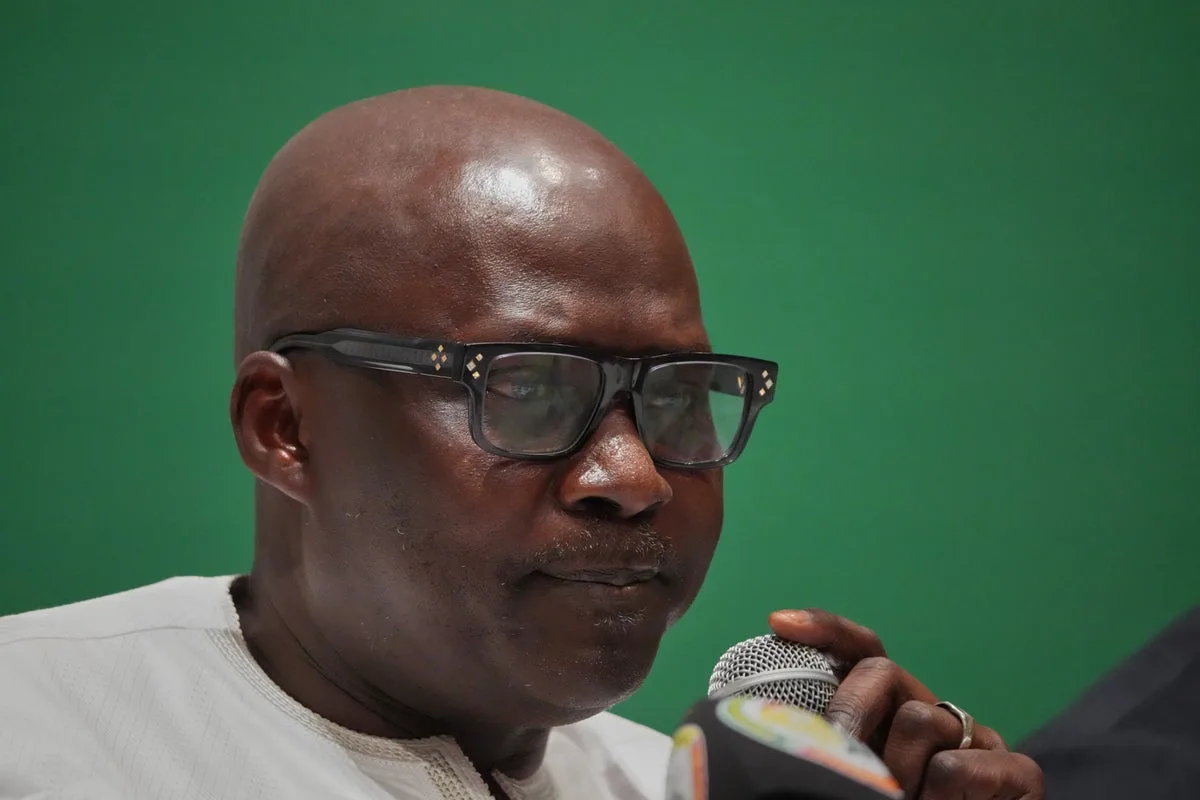
Senegal has vowed to fight the Confederation of African Football's (CAF) decision to strip the country of its Africa Cup of Nations title, describing it as a “grossly unfair administrative robbery”. Senegalese Football Association president Abdoulaye Fall made the comments at a press conference in Paris on Thursday.
Lawyer Seydou Diagne said Senegal suffered a “betrayal” and has assembled a team of international lawyers from Switzerland, Spain, France and Senegal to plead the case at the Court of Arbitration for Sport (CAS). The Senegalese FA is challenging the surprise ruling by CAF to award the title to host nation Morocco after a chaotic final in January.
Senegal's legal team said the country still considers itself the champion of Africa. “If CAS let this situation happen, the winner of the next World Cup could be decided within a lawyers’ firm,” Diagne said. Senegal is in France this week to play a friendly against Peru at the Stade de France on Saturday as part of its World Cup preparations.
Senegal's appeal was registered by CAS on Wednesday, but no timetable has been set for a verdict. The appeal was promised by the Senegalese government, which also called for an international investigation into suspected corruption within CAF. CAS said the Senegal federation asked for extra time to file an appeal brief because CAF has not yet provided detailed written reasons for its decision.
CAF appeal judges took the title from Senegal two months after the final in Rabat as punishment for players walking off in protest after Morocco was awarded a penalty. When Senegal returned to the field, the penalty was saved, and Senegal scored the only goal in extra time to win 1-0. CAF judges cited a tournament rule that any team refusing to play “shall be eliminated for good from the current competition.”
The verdict in Morocco's appeal has fuelled perceptions that the country, which will co-host the 2030 World Cup, has increasing influence in international soccer politics. CAF president Patrice Motsepe insisted “not a single country in Africa will be treated in a manner that is more preferential”. An appeal to CAS can typically take months to schedule a hearing and then weeks or months more to announce a verdict.