Ruby Walsh's Olympic Envy and Relentless Pursuit of Racing Excellence
While the amusing image of Sir Anthony McCoy tumbling from a rubber training device may provide light entertainment later, first, Ruby Walsh is eager to articulate the source of his consuming professional envy. What could possibly make the king of the Cheltenham Festival, a man who has scaled the highest peaks and commands eternal respect within jump racing, feel jealous? As a deep thinker perpetually seeking improvement, Walsh reveals that two weeks immersed in the Milano Cortina Winter Olympics had a profound impact on his perspective.
Winter Olympics Camera Technology Sparks Racing Envy
'You watch drones flying down the piste behind downhill skiers,' Walsh begins animatedly. 'I'm thinking: "Why can't we get them to keep up with horses?" There are brilliant camera operators and broadcasters in racing. Their enthusiasm and attention to detail is fantastic—they are also keen to improve coverage. But watching the action from the Winter Olympics, I was just so jealous of all the cameras and angles they had. If only we had that technology in racing.'
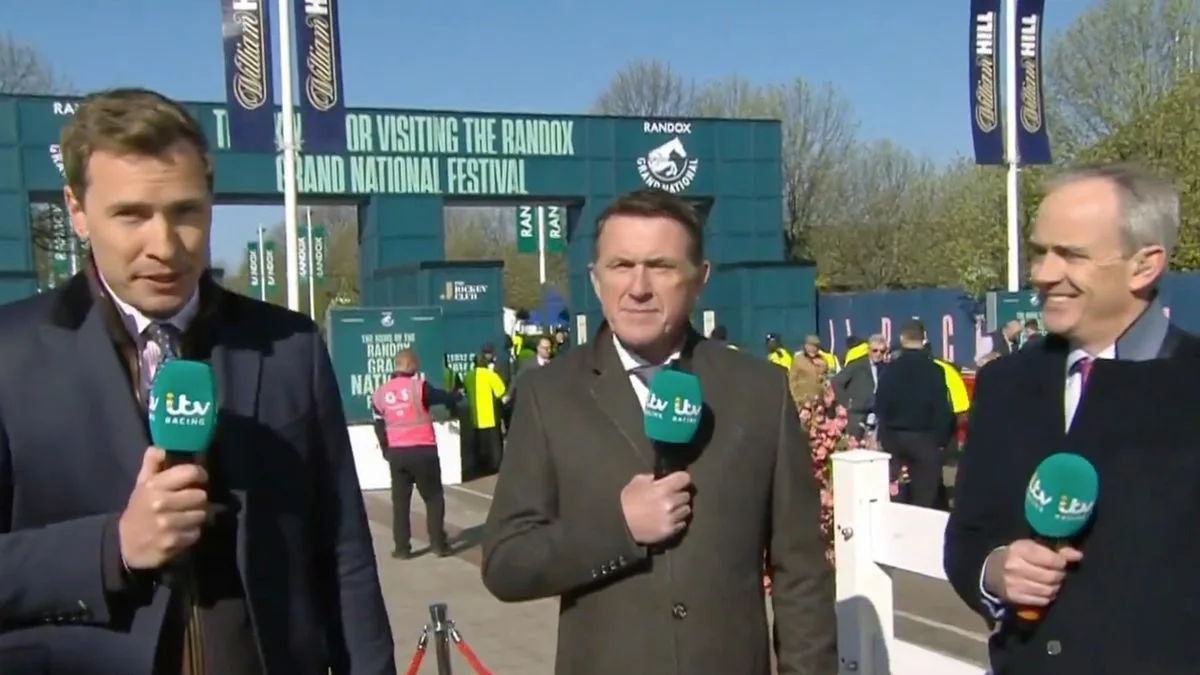
It would be simple to sit with Walsh and reminisce about old glories, from his legendary partnership with dual Gold Cup winner Kauto Star to his insider predictions for the coming week's Festival, drawing on his intimate knowledge of Willie Mullins' all-conquering stable. However, such conventional conversation would be wasteful. Walsh's mind operates in constant motion, unafraid to examine subjects from unconventional angles, which explains why he is widely regarded as one of sport's premier pundits—a quality viewers will witness firsthand during ITV's Cheltenham coverage.
The McCoy Rivalry and Cross-Sport Inspiration
Given his exceptional ability to perceive minute details, discussing the obvious with Walsh fails to penetrate his analytical mind. Instead, a question about McCoy's relentless obsession with self-improvement opens floodgates to how Walsh managed his own career and continues seeking advancement. 'I always played rugby, and rugby players like Ronan O'Gara certainly had a big influence on my career,' Walsh explains. 'I lived with AP when I was stable jockey to Paul Nicholls, so I know what he was doing to learn from other sports.'
'He'd return from Arsenal's training ground attempting to balance on some cushioned contraption and kept falling off. But then I realised if he was trying to enhance his core fitness, then I'd have to do the same. I spent considerable time at the sports surgery clinic in Santry working with physio Enda King. I probably managed to ride until age 40 because of the work he did with me. If you're not observing what those around you are doing and striving to reach their level, you'll find competition difficult. And I belonged to a generation where you had to compete with AP.'
Attempting to match McCoy's pace felt, for many, like racing a motorcycle on foot. Yet Walsh—who retired in 2019 with 59 Festival victories—could accomplish this; their rivalry resembled Pep Guardiola versus Jurgen Klopp, a symphonic clash of styles that elevated jump racing to unprecedented heights.
Learning from Global Sports and Instinctive Decision-Making
'I've always watched numerous other sports and tried to learn from them,' continues the ardent Manchester United supporter. 'I recall David Rudisha winning 800m Olympic Gold in London 2012; I was captivated by how he attacked the race. It was so unlike typical 800m races to have someone surge ahead immediately. The fractions were so rapid that the first six finishers would have won gold at the previous ten Olympics with their times, because he pushed so hard. He forced them all to perform beyond themselves, yet he utterly dismantled the race.'
'Often people remark: "Oh, making the running is the hard way." If you're riding the best horse, making the running isn't difficult at all. You can maintain a pace the opposition cannot match. However, some sports also frustrate me. You observe teams constrained by tactics and think: "Jesus, lads! You're on the pitch... change something!" It's similar to riding. You receive a set of instructions, then suddenly the tape rises and what you anticipated doesn't occur. Then the instructions become worthless. I suppose I'd be too liberal for many Premier League and rugby managers, as I'd play what's in front of me rather than follow the team plan. But you must rely on instinct. And if you're placing a jockey on a horse, you must trust their instincts.'
Impeccable Instincts and the Business of Racing
His instincts were impeccable, contributing to his 2,756 career wins, and remain sharp today. His capacity to deconstruct a race within seconds and immediately highlight defining moments is why Ed Chamberlin, ITV's lead presenter, compares him to Gary Neville. 'I wouldn't say specific pundits have significantly influenced how I operate,' Walsh states. 'I'd rather examine different sports and immerse myself in what they do differently in their coverage compared to racing, and consequently consider how we can enhance our sport's presentation.'
This week, his sport demonstrates its essence. The Festival possesses a more competitive atmosphere than recent years, and accordingly, Walsh's excitement is acute. At 46, he finds it challenging to select one particular horse he would love to ride, but he understands what truly matters: it is not about fun. 'You could argue sport revolves around participation, and undoubtedly that is culturally vital for society,' he elaborates. 'But that applies when you're doing it for enjoyment. When you're treating it as a business—and racing is a business—there's a significant difference between first and second.'
'Cheltenham is magnificent, but there's a distinction between walking back into the winner's enclosure and turning left to dismount in second, third, or fourth, versus striding straight up the middle to number one. There's no comparison. Second has never held any value for me.' Perhaps now you comprehend why he will never rest as he persistently pursues excellence.