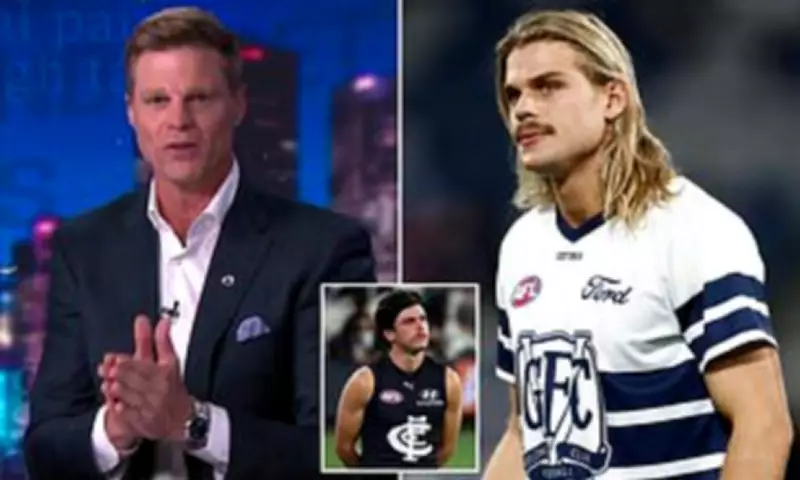
Australian football legend Nick Riewoldt has voiced concerns that the AFL is becoming overwhelmed by themed initiatives, as pressure mounts for the introduction of a dedicated Mental Health Round. The St Kilda icon's comments have ignited a passionate debate among supporters and players about how best to address psychological wellbeing within the sport.
The 'Cause Clutter' Controversy
Speaking on Channel Seven's The Agenda Setters program, Riewoldt first acknowledged Geelong star Bailey Smith's genuine passion for mental health advocacy before expressing his reservations about adding another themed round to an already crowded calendar. "We already have many themed rounds, be it Pride Round, ANZAC Day or the Big Freeze," Riewoldt stated. "As we know, many are run by clubs, not the AFL itself. Ultimately, it is a question of impact... what is the most important cause?"
The former Saints captain suggested that if a Mental Health Round were to be introduced, it would need to be "woven into the fabric of the game" rather than treated as another standalone event. His comments about "cause clutter" have resonated with many fans who believe the league's messaging risks becoming diluted.

Fan Reactions and Player Advocacy
Football supporters quickly took to social media to share their perspectives on Riewoldt's stance. One fan posted on X: "We don't need a 'game'... we need genuine action and a sincere message that indicates clubs care about the welfare of players." Another countered: "Having a Mental Health Round would be a great way to actually acknowledge and raise awareness," while a third added: "The more you can put mental health on the agenda, the better."
The debate has been fueled by Bailey Smith's recent criticism of the AFL, whom he labelled "clowns" after the league reportedly rejected his suggestion for a Mental Health Round. Following Geelong's round-six victory against the Western Bulldogs, Smith delivered an emotional post-match interview that went viral, in which he stated: "I don't know if I'm out of pocket saying it, but I think it's about time the AFL gets a men's mental health round."
Smith, who has openly discussed his own mental health challenges since his 2019 debut, referenced the recent tragedy involving Adelaide Crows captain Jordan Dawson's brother Jaryd, as well as Carlton young gun Elijah Hollands' on-field mental health episode during a match against Collingwood. "I think the footy world can be quite toxic at times, and it is (also) good at putting our arms around the people who need it most, when we need to," Smith urged.
Existing Initiatives and League Response
Despite Smith's passionate plea, AFL insiders suggest a dedicated Mental Health Round is unlikely to be added to the official calendar in the near future. Reporter Tom Morris commented: "I think the AFL hears that (Smith's request) but I don't think there's going to be one anytime soon. They'd prefer to do things like Spud's Game... they had a mental health forum in Adelaide during Gather Round – but it's not going to stop players like Bailey Smith pushing for it."
Spud's Game is an annual match organized by St Kilda in tribute to club great Danny Frawley, who died by suicide in 2019. The event raises both awareness and funds for mental health initiatives, representing one of several existing programs within the football community.
Former Players Add Their Voices
Former AFL star Tom Boyd, who retired at just 23 due to his own mental health struggles, has emerged as a prominent advocate for greater awareness. Boyd emphasized how high-pressure sporting environments can lead to players suffering "under the surface" with psychological issues.
Speaking on the ABC Sport Daily podcast, Boyd offered advice to Elijah Hollands and others experiencing similar challenges: "I think it's important to remember the magnitude of the suffocating nature of what's going on at the moment. This is a position that I personally have been in, when you don't feel like you can leave the house. You don't feel like you can have a conversation with anyone."

The former number one draft pick stressed the importance of maintaining a small circle of trusted confidants during difficult times, while shifting the conversation from individual cases to broader mental health topics. "We need to be talking about mental health as a topic... not spending time talking about the person or the club," Boyd concluded.
As the debate continues, the AFL faces the complex challenge of balancing meaningful mental health advocacy with an already crowded calendar of themed rounds and initiatives. With players like Bailey Smith advocating for formal recognition and legends like Nick Riewoldt warning against "cause clutter," the league must navigate how best to support player welfare while maintaining the impact of its existing awareness campaigns.