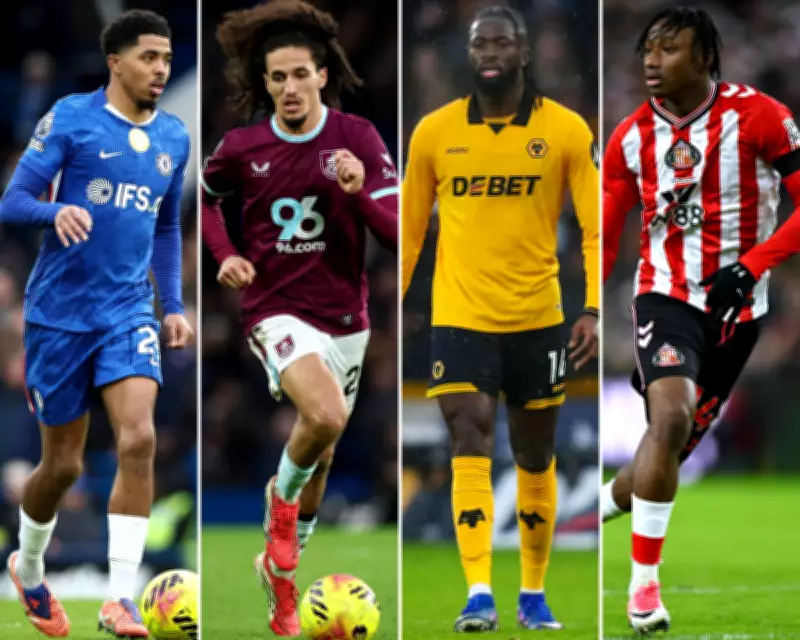
Premier League Players Confront Racist Abuse Online
Last weekend, four Premier League footballers—Chelsea's Wesley Fofana, Burnley's Hannibal Mejbri, Wolves' Tolu Arokodare, and Sunderland's Romaine Mundle—were targeted with online racist abuse following their matches. This incident has reignited urgent calls for stronger action against discrimination in football, with players demonstrating leadership by publicly highlighting these attacks.
Rising Reports of Discrimination
Kick It Out, football's anti-discrimination organisation, reports a significant increase in discrimination cases this season. Online abuse reports have surged by a third compared to the same period last year, while overall reports across the sport have risen by 45%. This trend underscores football's role as a focal point for societal issues, with abuse evolving from simple emojis to sophisticated AI-generated images and audio files.
The UK Football Policing Unit notes that perpetrators often use virtual private networks (VPNs) to mask their locations, complicating efforts to hold them accountable. Additionally, social media platforms have reduced monitoring networks, leading to slower removal of abusive content.

Leadership and Accountability in Football
Players like Jess Carter, who called out abuse during the Women's Euros, and Antoine Semenyo, who reported an incident at Anfield, have set a precedent for accountability. In these cases, legal actions are underway, with one abuser pleading guilty and another facing trial. Such outcomes are crucial for encouraging others to report discrimination.
Recent high-profile incidents, such as Sir Jim Ratcliffe's controversial comments about immigration and Vinícius Júnior's reporting of discrimination in a match against Benfica, have added layers to the debate. Ratcliffe's remarks have been criticised for potentially emboldening racists, while Vinícius's actions have inspired players to speak out.
Collective Efforts and Regulatory Action
Football bodies, including Kick It Out, the UK Football Policing Unit, and Ofcom, are forming alliances to tackle online abuse. Clubs are supporting players and collaborating with police to ensure accountability. Kick It Out has worked with Ofcom to highlight the unique challenges players face, advocating for fines against social media platforms that fail to protect users.
The new Independent Football Regulator could play a key role by holding clubs accountable for representation and diversity. Currently, only 3.2% of board and senior leadership positions at Premier League clubs are occupied by ethnically diverse individuals, raising questions about whether a more diverse leadership would prioritise anti-discrimination efforts.
Moving Forward: Words and Actions Matter
Comments from figures like José Mourinho, who downplayed Vinícius's claims, have been widely criticised, highlighting the need for unity in football. As Bayern Munich manager Vincent Kompany noted, there is an opportunity to learn and improve. Greater transparency in outcomes and increased representation at executive levels are essential for accelerating long-term change and ensuring players' concerns are addressed.
Players are bearing the brunt of abuse and taking a stand. Their leadership must be replicated at the highest levels of football to create a fair and equitable game for all.