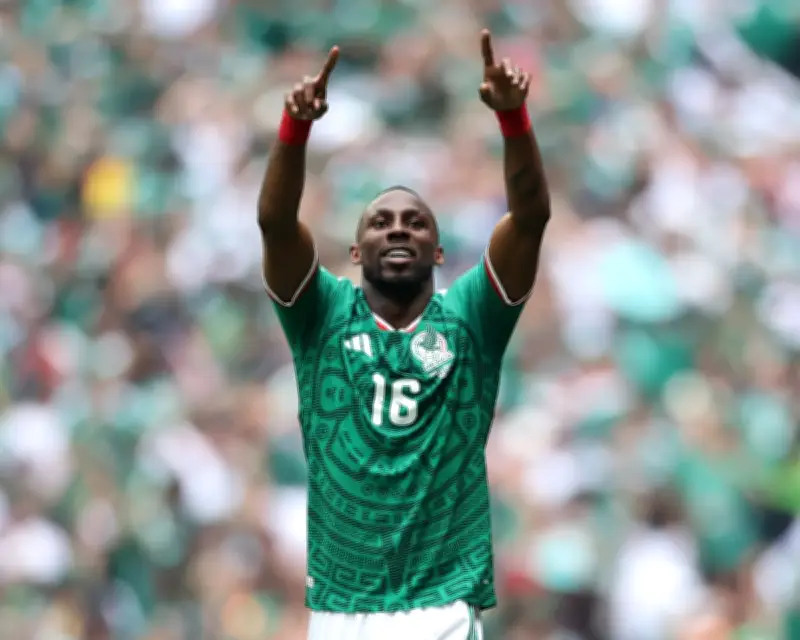
Mexico striker Julián Quiñones has become a focal point of discussions about race and national identity at the 2026 World Cup. Born in Colombia and naturalized as a Mexican citizen in 2023, Quiñones is one of the few Black players to represent El Tri on the global stage, prompting conversations about how Mexico perceives Blackness and belonging.
Quiñones’ Journey to Representing Mexico
Quiñones, 29, moved to Mexico as a teenager and built his career in Liga MX, playing for clubs like Atlas and América. After obtaining Mexican citizenship, he made his senior debut for Mexico in 2023. His inclusion in the World Cup squad has been celebrated by many fans but also met with scrutiny over his Colombian roots and racial identity.
“I feel Mexican, I have given everything for this country, and I am proud to wear this shirt,” Quiñones said in a press conference. “But I know that for some people, my skin color makes me different. I hope that my presence can help change that perception.”
Blackness and Identity in Mexican Football
Mexico’s national team has historically had few Black players, a reflection of the country’s demographics and racial dynamics. According to a 2020 study by the National Institute of Statistics and Geography, only 2% of Mexico’s population identifies as Black or of African descent. This underrepresentation extends to football, where Black players often face stereotypes and questions about their Mexican identity.
“Quiñones’ situation is emblematic of a larger issue,” said Dr. María Elena Martínez, a sociologist at the National Autonomous University of Mexico. “Mexico has a long history of denying its African heritage, and football is now a stage where that denial is being challenged.”
Impact on the Pitch and Beyond
On the field, Quiñones has been a key contributor for Mexico, scoring three goals in World Cup qualifying. His pace and physicality have added a new dimension to the attack, and he started in Mexico’s opening match against Saudi Arabia. Off the field, his presence has sparked debates in Mexican media about race, nationality, and what it means to be Mexican.
“I am used to people questioning my identity,” Quiñones said. “But when I step onto the pitch, I am just a footballer. I hope that one day, we can all see each other as just Mexicans, regardless of where we come from or what we look like.”
Broader Conversations on Race in Mexico
The discussion around Quiñones comes amid a broader reckoning with race in Mexico. Activists and scholars have long pointed to the erasure of Afro-Mexican history and the persistence of colorism. The 2020 census included a question on Afro-descendant identity for the first time, and the government has taken steps to recognize Afro-Mexican communities.
“Football has the power to bring these conversations to the mainstream,” said Alejandro Hernández, a sports journalist covering the World Cup. “Quiñones is not just a player; he is a symbol of a changing Mexico, one that is beginning to embrace its diversity.”
As the World Cup progresses, all eyes will be on Quiñones—not just for his performances, but for what his presence means for Mexico’s evolving identity.