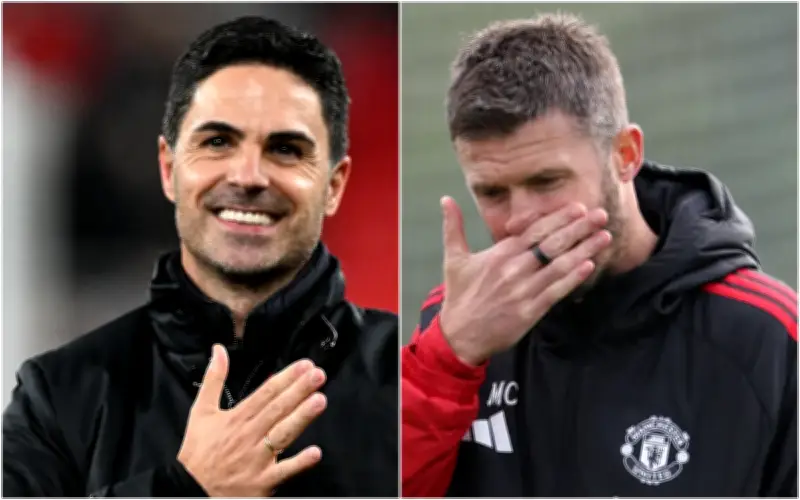
Manchester United's failure to address its rotten core means any manager is effectively a dead man walking, according to a new analysis that compares the club's approach unfavourably with Arsenal's backing of Mikel Arteta.
The argument draws on the example of Arteta, who was given time and decisive support at Arsenal to oversee a cultural reset. At Old Trafford, by contrast, the bad apples are rewarded time and again, with the desperation for results prioritised over fixing underlying problems.
The Arteta blueprint and its limits
The idea that Arteta's tenure at Arsenal is a blueprint has been regularly latched onto by those at rival clubs, the suggestion being that time and time alone is the answer to all problems. When his time in the Tottenham dugout was stumbling to an early conclusion, Thomas Frank pointed hopefully across north London.
“I think it is a good example of a club that sticks to the process,” Frank said. “It took probably three seasons for Arteta, so the fourth season, that is where he competed. Now he is in the seventh season. So he is really, really ready to compete in his fourth season.”
There was nothing in Frank's tenure to suggest he deserved to make it that far. No bold, ambitious thinking. No long-term vision to persuade supporters or the club's hierarchy that short-term pain was worth enduring. His authority was consistently eroded. Frank disciplined Yves Bissouma, a player already heading for the exit door, for lateness, but dissent from Cristian Romero, Djed Spence and Micky van de Ven all later went unpunished.
Michael Carrick is the latest to use Arteta as something of a shield in an attempt to cling onto his Manchester United job, despite the best efforts of his players. “It pains me to say, but the one that won the league in our country last season has been there for a long period of time,” Carrick said last month. “It’s seven years, and the first two seasons [they finished] maybe eighth or seventh.”
Arsenal's cultural reset
Whether they were given seven months, seven years, or seven decades, most managers would not have turned around the mess that Arsenal were in when Arteta took charge. The Spaniard possesses a unique character, an aura that brings people along with him. It was that intensity and force of character that persuaded Arsenal to take a punt on him. Within a year, he was promoted from head coach to manager.
Crucially, Arteta had people above him willing to go all in. He wanted decisive action and Arsenal backed him. Mesut Ozil, the club's highest-paid player, was cast aside and had his contract torn up. Willian, Henrikh Mkhitaryan, Sokratis, Sead Kolasinac and Shkodran Mustafi, all on big contracts, were among those to have their deals terminated as well.
Arsenal needed a cultural reset. Arteta had the personality to demand that but also the authority to enact it. Club captain Pierre-Emerick Aubameyang was stripped of his duties for repeatedly being late and ultimately had his contract ripped up. The impact? Mohammed Elneny said in 2022: "Everyone is scared with their position because this happened to Aubameyang. Of course if anyone is not the captain of the team, does a small mistake, they are going to have the same problem, and no one needs that problem."
Arsenal's hierarchy could very easily have sided with Aubameyang or Ozil, both on £350,000-a-week, over Arteta. That would have been less embarrassing from an optics and a financial perspective. Instead, a line was drawn in the sand. Player power would not usurp Arteta's authority. Everything since then, from the harmonious dressing room to the connection with the fans, from the extraordinary work-rate of his players to the pride in defending the cause, has been built on those foundations.
United's rotten core remains
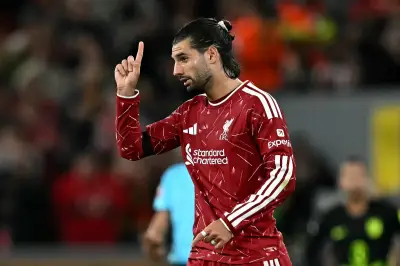
Time will not help Carrick at United when he has been given no other tools. Lisandro Martinez, who should have been moved on a long time ago, slagged off the club's executives but was not dropped. Two matches later, he displayed remarkable stupidity in being sent off against Chelsea. Bruno Fernandes, the club captain, took aim at Carrick himself. He sat out for one match but then returned with the armband still in his possession.
The same players will get another manager sacked. Results will pick up and optimism will briefly return, but the underlying issues will remain. Nothing fundamentally will have changed. It is easy to throw out buzzwords like patience and process, just as it is easy to allow a manager to limp on towards an inevitable conclusion, hoping to hide from deeper failings and another major decision the hierarchy got wrong. Clubs want to believe in the Arteta model without signing up to the pain that comes with it. That is a blueprint, but only for further decline.